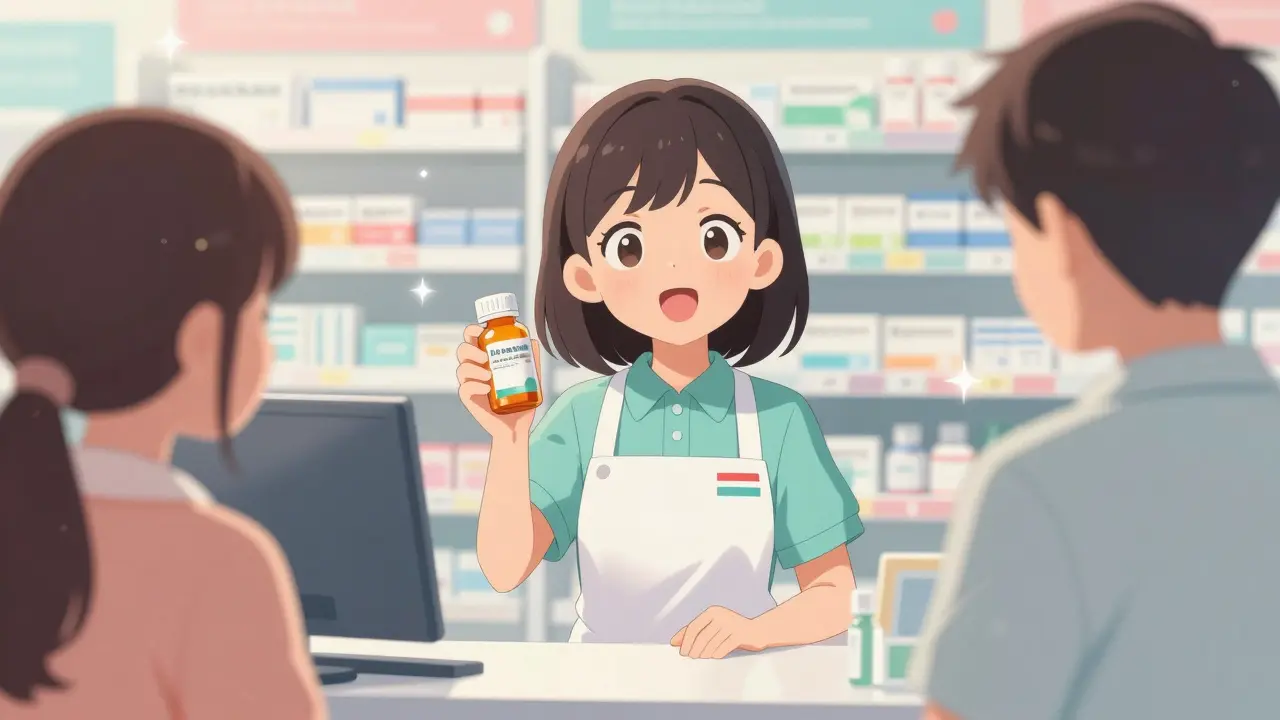
Imagine you're at the pharmacy and you notice that the price of your monthly medication has suddenly dropped by 70%. You might think it's a fluke or a special coupon, but it's actually the result of a calculated economic battle. When a brand-name drug loses its patent protection, the door opens for generic drug competition is the market dynamic where multiple manufacturers produce therapeutically equivalent versions of a brand-name drug. The more companies that enter this race, the less you pay at the counter.
But how does this actually work? It isn't just about having "another option." There is a direct, measurable link between the number of companies making a pill and the price of that pill. If only one company makes the generic, the price barely budges. If ten companies make it, the price crashes. Understanding this helps you realize why some medications remain expensive for years while others become incredibly cheap almost overnight.
The Magic Number: How Many Competitors Actually Matter?
It might seem like any amount of competition is good, but the data shows that the amount of competition is what drives the deepest discounts. Research from the University of Southern California, published in JAMA Network Open, tracked how prices dropped as more players entered the game. The results were stark: the first generic competitor typically brings a 17% price drop. That's a start, but not a revolution. The real magic happens when the crowd grows.
When two companies compete, the price drop jumps to nearly 40%. Three competitors push it past 50%. Once you hit four or more manufacturers, the price often plummets by over 70% compared to the original brand-name cost. Essentially, the first few entrants trigger the biggest price wars. After that, prices continue to slide, though the drops become smaller as the market reaches a baseline cost of production.
| Number of Generic Competitors | Average Price Reduction (%) | Price Impact Level |
|---|---|---|
| 1 Competitor | 17.0% | Low/Initial |
| 2 Competitors | 39.5% | Moderate |
| 3 Competitors | 52.5% | High |
| 4+ Competitors | 70.2% | Maximum |
The Rules of the Game: Patents and the Hatch-Waxman Act
To understand why this doesn't happen immediately, we have to look at the law. For years, the Hatch-Waxman Act is a 1984 U.S. law that balanced the need for new drug innovation with the need for affordable generic alternatives. This act essentially created the "rules of the road." It allowed brand-name companies to have a patent for a set time to recover their research costs, but then it created a streamlined path for generics to enter the market once that patent expired.
When a company wants to launch a generic, they don't have to redo every single clinical trial from scratch. Instead, they prove "bioequivalence"-meaning the drug works in the body the same way the original did. This lowers the barrier to entry, allowing more manufacturers to jump in and start the price war mentioned earlier. This system has been a massive win for the wallet; the FDA is the U.S. Food and Drug Administration, the regulatory body responsible for approving generic drug applications estimates that generics saved the U.S. healthcare system roughly $1.7 trillion over the decade ending in 2019.

Not All Drugs are Created Equal: Oral vs. Biologics
You might notice that some generics are dirt cheap (like Metformin, which often stays under $10 for a 90-day supply) while others, like advanced biologics, stay expensive. This is because the complexity of the drug changes the competitive landscape. Simple, small-molecule drugs (the kind you swallow as a pill) are easy to replicate. This leads to high competition and the 70-90% price drops we see.
Then you have Biosimilars is highly similar versions of complex biological medicines made from living cells. These aren't "generics" in the traditional sense because they are too complex to copy exactly. Because they are harder and more expensive to make, fewer companies try. This means less competition and higher prices. In fact, some studies suggest that if biosimilars were treated and adopted as easily as traditional generics, healthcare spending on biologics could have been nearly 27% lower.
The Danger of "Too Much" Competition
Here is the paradox: while we want low prices, if the price drops too far, manufacturers might stop making the drug altogether. If a company can't make a profit, they exit the market. When this happens, a drug that had five competitors might suddenly only have two. This consolidation can lead to "price spikes." Imagine a drug that cost $10 for years suddenly jumping by 300% because three of the five manufacturers decided it wasn't worth the effort to produce.
There's also a quality concern. When companies fight a "race to the bottom" on price, some may cut corners. Researchers from Indiana University have warned that extreme price pressure can put patients at risk, especially when the number of manufacturers is low. If the only remaining company has a quality failure or a factory shutdown, you don't just have a price problem-you have a drug shortage.

How to Navigate Your Pharmacy Costs
Knowing that competition drives prices gives you power as a consumer. You can take a few practical steps to ensure you're getting the most competitive rate. First, ask your doctor about "therapeutic substitution." This is when a pharmacist replaces a brand-name drug with a generic that is considered therapeutically equivalent.
To verify if a drug is truly equivalent, the FDA maintains the Orange Book is the official FDA publication listing all approved drug products with therapeutic equivalence evaluations. If a generic has an "AB" rating, it is considered therapeutically equivalent to the brand name. You can also use price aggregation tools like GoodRx to see which pharmacies are offering the best deal on a specific generic, as wholesale markups can vary wildly between stores.
Does a generic drug work exactly like the brand-name version?
Yes, if the FDA has rated the drug as "AB" equivalent in the Orange Book. This means the generic contains the same active ingredient, is the same strength, and delivers the same amount of the drug into your bloodstream in the same amount of time as the brand-name version.
Why are some generics still expensive?
This usually happens for two reasons: either the drug is a complex biologic (which requires a "biosimilar" rather than a simple generic) or there are very few manufacturers. If only one or two companies produce a drug, they have less incentive to lower the price.
Can a generic drug ever be more expensive than a brand-name drug?
While rare, it can happen if the brand-name company offers a high-value coupon or if the generic market experiences a sudden shortage, causing the remaining generic manufacturers to spike their prices.
What is the difference between a generic and a biosimilar?
Generics are copies of simple chemical drugs. Biosimilars are versions of complex proteins made from living cells. Because biologics are so complex, biosimilars aren't identical copies but are "highly similar" and have the same clinical result.
How do I know if my drug has multiple manufacturers?
You can check the FDA's Orange Book or ask your pharmacist. If your pharmacist tells you they have several different brands of the same generic available, it's a good sign that competition is high and prices should be stable.
What to Do Next
If you're currently on a brand-name medication, start by asking your healthcare provider: "Is there a generic version of this drug available?" If the answer is yes, check if there are multiple manufacturers. If you find that your generic price is suddenly spiking, it may be time to talk to your doctor about an alternative medication in the same class that has more competition and a more stable price point.
william wang
April 15, 2026 AT 04:42This is a really clear breakdown of how market dynamics affect our healthcare costs. It is interesting to see the specific percentages associated with the number of competitors, especially that jump between one and two players. I've noticed that for some of my maintenance meds, the price stays rock solid once there are a few options available, which aligns perfectly with the baseline cost theory mentioned here.
Agatha Deo
April 15, 2026 AT 11:10Oh, how precious. We're actually pretending that "bioequivalence" is some magic shield against corporate greed. Imagine believing the FDA just lets the "free market" work without a dozen backroom deals between the brand-name giants and the generics to keep the price from dropping *too* far. It's cute that you think a table of percentages explains the whole systemic failure of the US healthcare machine. Truly adorable.
Maggie Graziano
April 15, 2026 AT 18:08they just want us dependent on the pills they control the patents are a scam to hide the real cures
Jon lee
April 17, 2026 AT 11:20It's great to see this information being shared in such an accessible way. Navigating the pharmacy system can be incredibly overwhelming for many people, and having a guide that explains how to use the Orange Book or ask about therapeutic substitution can really empower patients to take control of their health and finances.
Nathan Berlin
April 17, 2026 AT 22:54India is the pharmacy of the world for a reason 🇮🇳 Generic manufacturing here is lightyears ahead of the west and we do it with way more efficiency 🚀 The US should just learn from us and stop overcomplicating things with their weird patents 💊💰🔥
Heer Malhotra
April 19, 2026 AT 17:42It is a matter of national pride that India provides high-quality pharmaceutical alternatives to the global population. The Western obsession with patent protections is a moral failure that prioritizes corporate profit over human survival. We must continue to champion the right to affordable medicine as a fundamental human right.
Colleen Tankard
April 21, 2026 AT 00:12GoodRx is a total lifesaver! 📱✨ I always check it before I even leave the house, otherwise I'm just guessing at the price lol.
Sophia Rice
April 22, 2026 AT 11:58I tried to ask my docter about this last month and he was super helpful!! I didnt even know about the Orange Book thing but it makes so much sense that there are diferent levels of equivalence. Its just nice when you find a provider who actually cares about your wallet too
Thanks for sharing this!
Anna BB
April 23, 2026 AT 07:33It's so fascinating how the balance between innovation and affordability is such a delicate dance...!!! I wonder if there's a way to encourage more competitors without hitting that "danger zone" where the market collapses entirely??? It's such a complex ethical dilemma, really...!!!
Michael Lewis
April 24, 2026 AT 02:50Stop overthinking it and just start asking your doctors the right questions! If you want lower prices, you have to be your own biggest advocate. Use the tools mentioned here, check the AB rating, and don't settle for the first price you're quoted. Get it done!