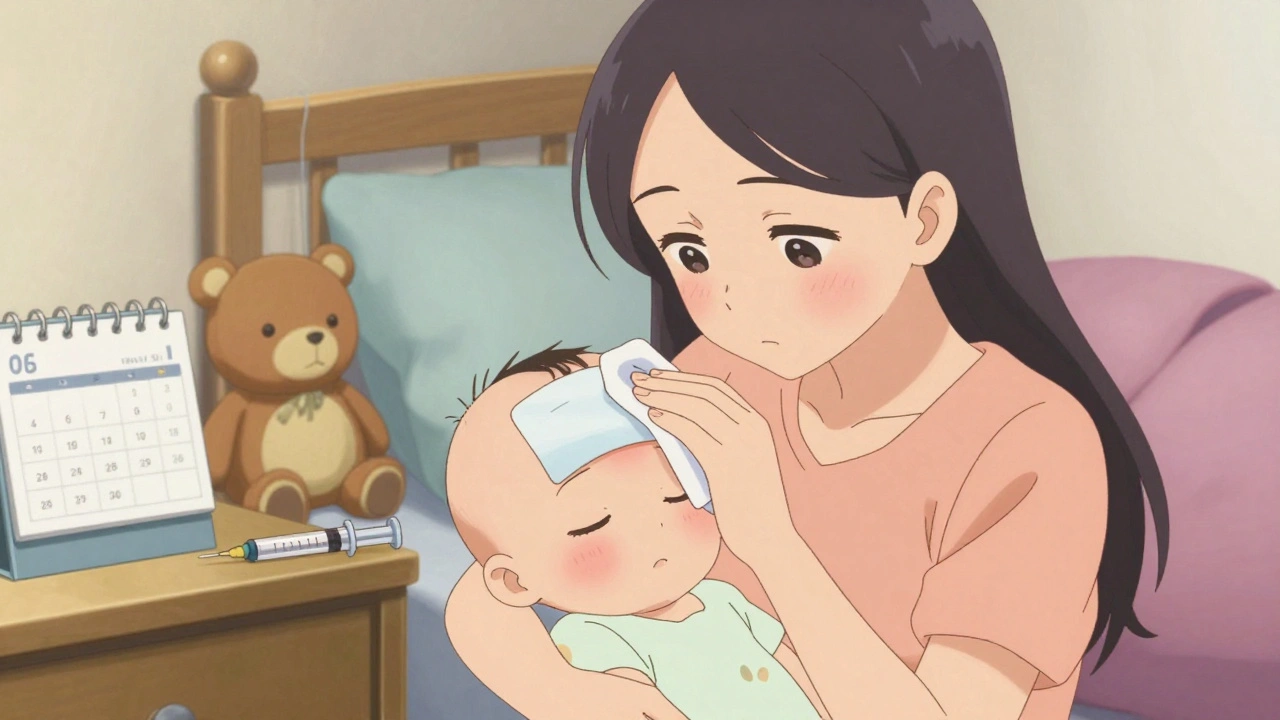
When your baby gets their shots, it’s normal to feel anxious about what comes next. Fever is one of the most common side effects - and it’s natural to want to reach for acetaminophen or ibuprofen right away. But here’s the thing: giving fever reducers before or too soon after vaccination might actually weaken how well the vaccine works.
Why Timing Matters More Than You Think
In the early 2000s, many parents and even some doctors gave fever reducers like Tylenol or Motrin before a vaccine visit, thinking it would make the child more comfortable. That changed after a 2009 study in The Lancet showed something surprising: kids who got fever medicine before their shots had lower antibody levels afterward. Antibodies are what your body makes to fight off diseases. If the vaccine doesn’t trigger enough of them, your child might not be as protected. Since then, the CDC, the American Academy of Pediatrics, and Children’s Hospital of Philadelphia have all updated their guidelines. The message is clear: don’t give fever reducers before vaccination. Not as a precaution. Not to prevent discomfort. Not even if your child usually runs a fever after shots. The reason? Fever is part of how the immune system learns. When your child’s body detects the vaccine, it raises its temperature slightly - not because something’s wrong, but because it’s working. Medications like acetaminophen and ibuprofen can calm that response down too early, before the immune system has had time to build a strong defense.Which Vaccines Are Most Likely to Cause Fever?
Not all vaccines cause fever the same way. Some are more likely to trigger a rise in temperature than others. Here’s what the data shows:- Prevnar 13 (pneumococcal): 24-35 out of every 100 babies develop a fever within a week.
- Pediarix (DTaP-IPV-HepB combo): 28-39 out of 100 babies get a fever within 4 days.
- MenB (meningococcal B): This one causes fever in up to 50% of infants - so high that the UK’s NHS recommends giving paracetamol after the 8-week and 16-week doses.
When Is It Safe to Give Fever Reducers?
The key window is at least 4 hours after vaccination. Multiple studies, including one from Poland in 2016, found that giving acetaminophen or ibuprofen more than 4 hours after the shot didn’t interfere with antibody production. But if you give it within the first 4 hours - even just one dose - the immune response can drop. So here’s the practical rule: wait. Watch your child. If they’re fussy, warm to the touch, or have a low-grade fever, don’t rush to the medicine cabinet. Offer water, keep them lightly dressed, and let their body do its job. If after 4 hours they’re still running a fever above 102°F, then it’s okay to give medicine.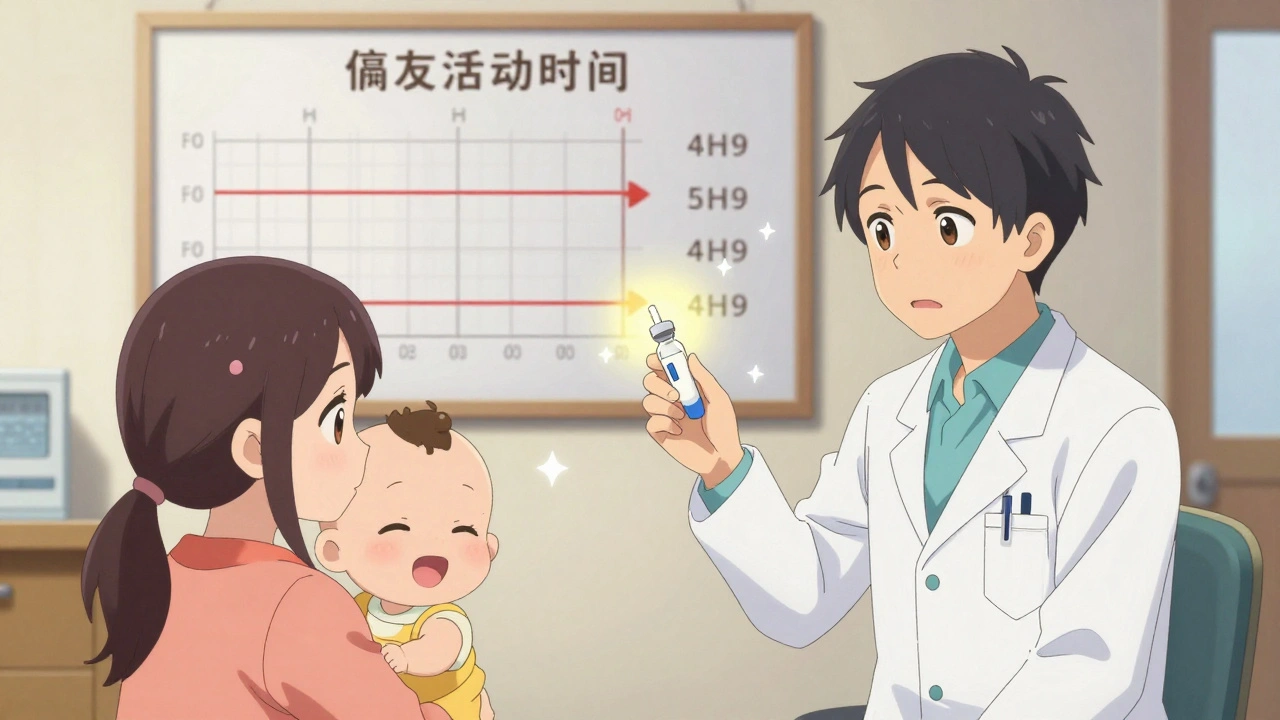
What About the MenB Vaccine? Why Is It Different?
The MenB vaccine is the big exception. It causes high fevers more often than any other routine vaccine in infants. In the UK, health officials looked at the risk: a high fever could lead to seizures or extreme distress in some babies. So they made a targeted exception - they recommend giving liquid paracetamol after the 8-week and 16-week MenB shots, even if the child isn’t feverish yet. This isn’t a blanket recommendation for all vaccines. It’s specific to MenB because of its unique profile. In the U.S., most pediatricians still follow the general rule - wait 4 hours - even for MenB. But if you’re in the UK or your doctor advises it, follow their guidance. The bottom line: this exception exists because the risk of a very high fever outweighs the small risk of reduced immunity.How to Dose Fever Reducers Correctly
If you decide to give medicine after the 4-hour window, dose it right. Too little won’t help. Too much can be dangerous.- Acetaminophen (Tylenol): Every 4-6 hours, no more than 4 doses in 24 hours.
- Ibuprofen (Advil, Motrin): Every 6-8 hours, no more than 4 doses in 24 hours.
- 1.25 mL of acetaminophen
- 2.5 mL of ibuprofen
What If My Child Already Has a Fever Before the Vaccine?
If your child has a low-grade fever (under 102°F) from a cold or minor illness, they can still get vaccinated. The CDC says mild illnesses don’t interfere with how well vaccines work. In fact, delaying vaccines just because your child has a sniffle can leave them unprotected longer. But if they’re running a high fever (over 102°F), have vomiting, or seem very unwell, call your doctor. They might recommend delaying the vaccine until your child is back to normal.
Non-Medication Ways to Help
You don’t always need medicine to help your child feel better. Simple steps can make a big difference:- Offer extra fluids - breast milk, formula, water, or electrolyte solution if they’re older.
- Dress them in one light layer. Over-bundling traps heat and makes fever worse.
- Use a lukewarm sponge bath if they’re uncomfortable - never cold water or alcohol.
- Let them rest. Sleep helps the immune system work better.
Michael Campbell
December 2, 2025 AT 07:18They’re lying to you. The CDC doesn’t care if your kid gets sick. Big Pharma owns them. Tylenol kills vaccines on purpose so you keep coming back for more shots. I saw a guy on YouTube with a lab report - it’s all a scam.
Victoria Graci
December 3, 2025 AT 20:11It’s beautiful, really - the body doesn’t need us to fix everything. Fever isn’t an enemy; it’s a conversation. The immune system whispers to itself in heat, and we interrupt it with pills like we’re turning off a radio mid-sentence. Maybe we’re not helping. Maybe we’re just scared of silence.
Saravanan Sathyanandha
December 3, 2025 AT 22:28In India, we’ve always trusted the body’s natural rhythm. Even in traditional Ayurveda, fever is seen as agni - the inner fire that burns away impurities. To suppress it too early is to deny the wisdom of our own biology. This post resonates deeply with our ancestral understanding of healing.
alaa ismail
December 4, 2025 AT 10:02Just let the kid be warm for a few hours. I used to panic every time my daughter got a temp after shots. Now I just hug her, give her water, and chill. She’s fine. The body knows what it’s doing.
Anthony Breakspear
December 5, 2025 AT 19:40Bro, I used to give Tylenol before every shot like it was a ritual. Then I read this and thought - why am I fighting my kid’s immune system? I waited 4 hours after the last round. She spiked to 102.5, slept for 6 hours straight, woke up laughing. No meds needed. My bad for doubting her body.
Zoe Bray
December 7, 2025 AT 03:05While the empirical evidence supporting delayed antipyretic administration post-vaccination is statistically significant, particularly with regard to seroconversion rates in pediatric cohorts, one must also account for the confounding variable of parental anxiety, which may induce suboptimal compliance with non-pharmacological interventions. A nuanced, evidence-based approach remains imperative.
Girish Padia
December 7, 2025 AT 23:00Parents these days think their kids are fragile glass dolls. Fever? Give medicine. Crying? Give medicine. Breathing too loud? Give medicine. Let them suffer a little. Builds character.
Saket Modi
December 9, 2025 AT 18:40bro i gave tylenol at 2 hrs and now my kid is a genius 😎
Chris Wallace
December 11, 2025 AT 08:11I’ve been reading a lot about immune modulation and cytokine dynamics since my son got his 12-month shots. It’s fascinating how prostaglandin E2 suppression via acetaminophen can downregulate Th1 responses - which are critical for intracellular pathogen defense. I’ve been tracking his antibody titers with a home ELISA kit (yes, I’m that guy) and the drop was measurable but not catastrophic. Still, I’m waiting 6 hours now just to be safe. The science is subtle, not black-and-white.
John Webber
December 12, 2025 AT 06:28i gave my kid motrin right after the shot and nothing happened so i guess its fine
Shubham Pandey
December 12, 2025 AT 15:19why are we even talking about this? just give the medicine.
Elizabeth Farrell
December 13, 2025 AT 16:14Watching my daughter sleep through her fever after the MenB shot - no meds, just cuddles and cool cloths - was one of the most peaceful moments of motherhood. I used to rush to the medicine cabinet like a firefighter. Now I sit. I breathe. I trust. And every time, she wakes up brighter, calmer, stronger. It’s not about being perfect. It’s about being present. You’re doing better than you think.
John Morrow
December 15, 2025 AT 00:09The 2009 Lancet study had a sample size of 147 infants. The 2016 Polish study? Retrospective, unblinded, underpowered. Meanwhile, the Cochrane meta-analysis on antipyretics and immune response shows no clinically significant difference in seroprotection rates beyond 48 hours. This post is fearmongering dressed as science. The real risk? Delayed care. If your child is uncomfortable, medicate. Don’t let ideology override pediatric common sense.