
Every time you start a new medication, there’s a quiet moment of uncertainty: Is this feeling normal, or is something wrong? Maybe your mouth feels dry. Maybe you’re tired all day. Or worse - you feel nauseous after every pill. You scroll through the list of side effects on the bottle and wonder: should you push through this, or call your doctor?
The truth is, not every side effect needs to be fixed. But not every one should be ignored either. Knowing the difference can mean the difference between sticking with treatment that works - and risking serious harm.
What Counts as a Side Effect - and What Doesn’t
Side effects are unintended reactions to a drug at normal doses. They’re not always bad. Some are mild, temporary, and expected. Others are dangerous and need immediate action.
The FDA defines side effects as unintended responses that happen when you take a medication as prescribed. But not all unintended responses are equal. A headache after starting a new blood pressure pill? That’s common. Swelling in your throat? That’s an emergency.
Many people confuse side effects with allergic reactions. Allergies involve your immune system - think hives, swelling, trouble breathing. These are rare but life-threatening. Side effects are more like unwanted byproducts of how the drug works in your body.
For example, SSRIs (a common type of antidepressant) cause dry mouth in about 60% of users. That’s not an allergy. It’s a side effect. Drowsiness in the first week? Also common. But if you suddenly can’t walk straight or forget your own name? That’s not normal. That’s a red flag.
When It’s Okay to Accept a Side Effect
Some side effects are like the cost of doing business - annoying, but worth it if the medicine is helping you feel better.
Take weight gain from mirtazapine, a medication used for treatment-resistant depression. About 15-20% of people gain a few pounds. For someone struggling with severe depression, that trade-off makes sense. The same goes for drowsiness from certain antidepressants or antipsychotics. In the first 7-10 days, it’s common. Many people find it fades as their body adjusts.
Here’s the rule of thumb: if the side effect is mild, temporary, and doesn’t interfere with your daily life, it’s often safe to wait it out - as long as you’re monitoring it.
Examples of acceptable side effects:
- Temporary dry mouth (drink more water, chew sugar-free gum)
- Mild nausea after taking metformin (take with food, it often improves)
- Initial drowsiness from sleep aids or mood stabilizers (take at night)
- Minor headaches in the first week of a new blood pressure med
These aren’t signs the drug isn’t working. They’re just your body getting used to it. The CDC and beMedWise both recommend trying simple fixes first: timing changes, hydration, or food pairing. About 60-70% of gastrointestinal issues improve just by taking meds with a meal.
And here’s something most people don’t realize: you don’t need to suffer silently. Even if you think a side effect is "normal," telling your doctor gives them useful data. They can’t help you fix what they don’t know about.
When You Must Address a Side Effect - Right Away
Some side effects aren’t just annoying. They’re warning signs. Ignoring them can lead to hospital visits - or worse.
The CDC reports over 1.5 million emergency room visits each year in the U.S. because of adverse drug events. Many of these are preventable. Here’s what you should never ignore:
- Severe allergic reactions: Swelling of the face, lips, or tongue; hives; trouble breathing. Call 911. This isn’t a "wait and see" situation.
- Neurological changes: Confusion, memory loss, slurred speech, loss of coordination. Especially in older adults on multiple medications. The National Institute on Aging calls this a "red zone" symptom.
- Gastrointestinal bleeding: Black, tarry stools or vomiting blood. This can happen with NSAIDs like ibuprofen. It’s rare - about 0.5-1% of users - but deadly if missed.
- Severe skin reactions: A rash that spreads, blisters, or peels. With drugs like allopurinol, this can be a sign of a rare but fatal condition. Stop the drug and get help immediately.
- Heart-related symptoms: Chest pain, irregular heartbeat, sudden swelling in legs. These could mean your medication is stressing your heart.
And don’t forget about "black box warnings." These are the strongest safety alerts the FDA issues. If your drug has one, the warning is there for a reason. For example, some antidepressants carry a black box warning about increased suicidal thoughts in young adults under 25. If you notice new or worsening depression, don’t wait - call your provider that day.
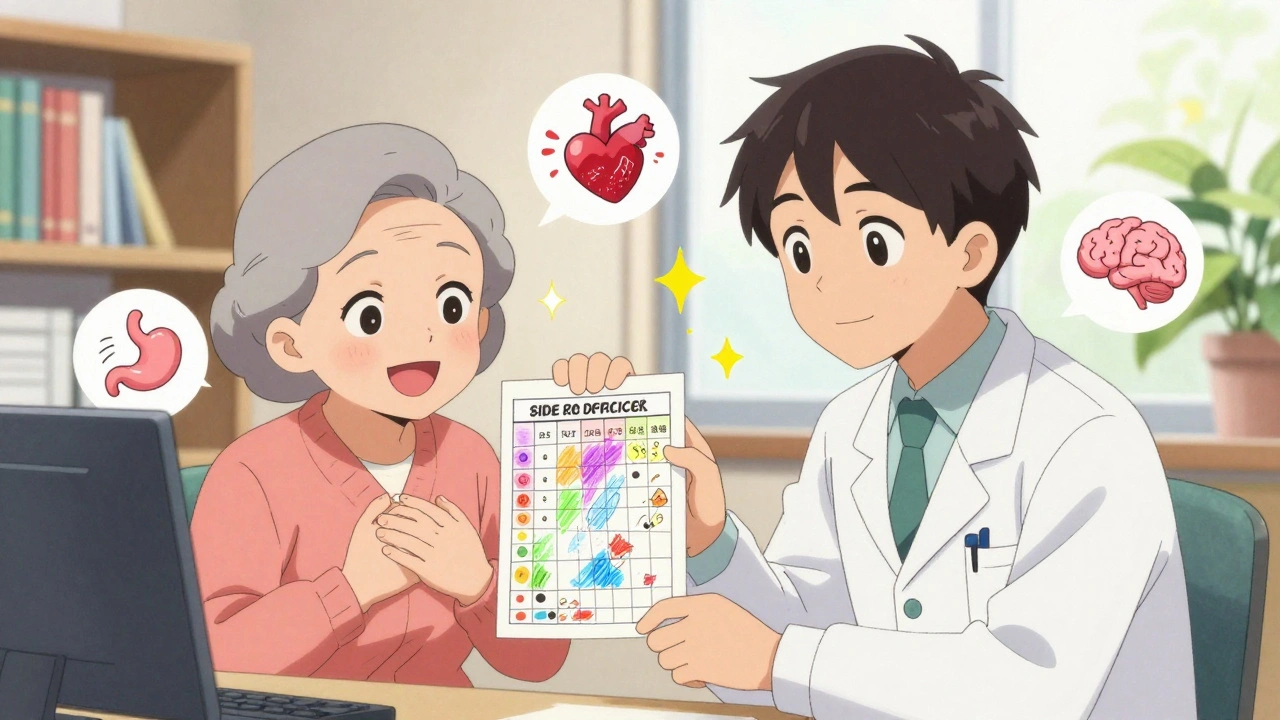
How to Track Side Effects So Your Doctor Can Help
Too many people go to their doctor and say, "I feel weird." That’s not helpful. Doctors need details.
Dr. Michael Chen at Johns Hopkins found that patients who track side effects with specific data are 4.2 times more likely to get the right fix. Here’s how to do it:
- Severity: Rate it 1-10. Is it a 2 (mild annoyance) or an 8 (can’t get out of bed)?
- Timing: When does it happen? Right after you take the pill? 3 hours later? Every morning?
- Duration: Has it been going on for 3 days? 3 weeks?
- Impact: Does it stop you from working, sleeping, or spending time with family?
Keep a simple note in your phone. For example:
"Dec 1: Took fluoxetine at 8 a.m. Nausea started at 9:30 a.m. Rated 7/10. Couldn’t eat breakfast. Felt better by 4 p.m. Happened all week."
This isn’t busywork. It’s your best tool for getting the right answer.
What to Ask Your Doctor - Three Key Questions
Don’t just show up with complaints. Go prepared. The National Institute on Aging recommends asking these three questions every time you bring up a side effect:
- "Is this side effect expected with this medication?" - Some side effects are common. Others are rare. Knowing which helps you decide if it’s normal.
- "What’s the timeline for this to go away?" - If your doctor says, "It usually fades in 10 days," you know when to check back.
- "What should I do if it gets worse?" - This gives you a clear action plan. Don’t leave without one.
These questions shift the conversation from vague worry to focused problem-solving. A 2023 JAMA Internal Medicine study showed patients who asked these questions resolved side effects 32% faster than those who didn’t.

What Not to Do - Common Mistakes People Make
People try to handle side effects on their own - and it often backfires.
Here are the top three mistakes:
- Stopping the medication cold. The CDC found 28% of people quit their meds because of side effects. But 73% of those cases led to treatment failure. Your condition comes back - worse.
- Assuming it’s "just aging." Older adults often brush off dizziness or confusion as "getting older." But it could be drug interactions. The National Institute on Aging says 80% of seniors take at least one medication that could cause cognitive side effects.
- Ignoring costs. A Kaiser Family Foundation study found 37% of people stick with side effects because they can’t afford to switch to a different drug. That’s not bravery - it’s a system failure. Talk to your doctor about cheaper alternatives. Generic versions often work just as well.
One real case from the IFFGD report: a 62-year-old woman had severe nausea from antibiotics. She took them on an empty stomach. Her pharmacist suggested taking them with a high-protein snack - like a boiled egg or Greek yogurt. Her nausea dropped from 5-6 times a day to 1-2. No dose change. No new drug. Just better timing with food.
How Your Condition Changes the Rules
The same side effect can be acceptable in one situation and unacceptable in another.
For someone with cancer, 60-70% nausea from chemotherapy might be a price they’re willing to pay. But for someone with mild high blood pressure, even a 10% drop in daily function from dizziness might be enough to switch medications.
The American Heart Association’s 2023 guidelines say: if a side effect affects more than 20% of your daily activities - like walking, cooking, or driving - it’s time to talk about alternatives. Same goes if it lasts longer than four weeks.
Your doctor’s job isn’t just to prescribe. It’s to help you weigh risk versus reward. If your medication isn’t improving your life - or it’s making it worse - there are other options. Always.
Final Rule: You’re the Boss of Your Body
You don’t have to suffer. You don’t have to guess. And you don’t have to be silent.
Side effects are part of treatment - but they’re not a punishment. They’re feedback. Your body is telling you something. Listen. Track it. Talk about it.
Accepting a side effect isn’t about being tough. It’s about making an informed choice. Addressing one isn’t about being dramatic. It’s about protecting your health.
The best outcome isn’t zero side effects. It’s the right balance - where the medicine helps you live better, not just survive.
Should I stop my medication if I have side effects?
No - not without talking to your doctor first. Stopping a medication suddenly can cause your condition to return worse than before. For example, stopping antidepressants abruptly can lead to withdrawal symptoms like dizziness, nausea, or mood swings. Always contact your provider before making any changes.
How long should I wait before calling my doctor about a side effect?
If it’s mild and expected (like dry mouth or mild drowsiness), give it 7-10 days. If it’s severe - trouble breathing, swelling, confusion, bleeding - call immediately. If a mild side effect lasts longer than two weeks, or starts interfering with your daily life, it’s time to talk to your doctor.
Can I manage side effects without changing my medication?
Yes - often. Many side effects can be reduced by changing when you take the pill (like taking it at night for drowsiness), taking it with food (to reduce nausea), drinking more water (for dry mouth), or using sugar-free gum. About 60-70% of gastrointestinal side effects improve with food. Always check with your pharmacist or doctor first.
Are side effects worse as I get older?
Yes. As we age, our bodies process drugs differently. We’re more sensitive to side effects, especially dizziness, confusion, and low blood pressure. The National Institute on Aging says seniors on five or more medications are at higher risk for dangerous interactions. Always review your meds with your doctor at least once a year.
What if I can’t afford to switch to a different medication?
Cost shouldn’t force you to suffer. Ask your doctor about generic alternatives, patient assistance programs, or lower-cost options. Many brand-name drugs have generics that work just as well. A 2023 Kaiser Family Foundation study found 22% of people had worse quality of life because they couldn’t afford to switch - but help is often available.
gladys morante
December 3, 2025 AT 22:47I started sertraline last month and the dry mouth is brutal. I’ve gone through three water bottles a day. I don’t complain because the anxiety is finally under control, but god, I wish there was a pill for the side effect of the pill.
Melania Dellavega
December 5, 2025 AT 15:16This is one of those posts that feels like it was written for me. I spent six months terrified to tell my doctor about the drowsiness from my mood stabilizer because I thought it was just me being lazy. Turns out it’s normal. And when I finally said something, we adjusted the timing - now I take it at 8pm instead of 8am. I sleep better. I function better. It’s not magic. It’s just communication. Don’t suffer in silence. Your doctor isn’t judging you - they’re trying to help.
Bethany Hosier
December 6, 2025 AT 16:25Did you know the FDA is pressured by pharmaceutical lobbyists to downplay side effects? The numbers they publish? Half-truths. The real rate of neurological side effects from SSRIs is closer to 40% - not the 15% they list. They want you to believe it’s "just adjustment" so you keep buying. I’ve seen people lose their jobs, their families, their minds because they were told to "wait it out." This isn’t medicine - it’s corporate control disguised as care.
Shawna B
December 7, 2025 AT 01:01dry mouth bad but worth it if it helps my depression
AARON HERNANDEZ ZAVALA
December 8, 2025 AT 19:18I used to think side effects meant I was weak. Now I see them as signals. My body isn’t broken - it’s talking. I keep a note on my phone like the article says. One line. Just when it happened and how bad. It’s changed everything. My doctor actually listens now. I didn’t think that was possible.
Lyn James
December 9, 2025 AT 16:28Let me be clear - if you’re tolerating side effects without pushing back, you’re not being brave, you’re being complicit in a broken system. The medical industrial complex thrives on passive patients. They don’t want you to ask questions. They don’t want you to track symptoms. They want you to swallow the pill, shut up, and keep paying. If you’re not demanding alternatives, you’re enabling the cycle. Your suffering is their profit margin. Wake up.
Craig Ballantyne
December 10, 2025 AT 17:12From a pharmacovigilance standpoint, the data on GI side effect mitigation via food co-administration is robust - particularly for metformin and NSAIDs. The 60–70% improvement metric is corroborated in multiple RCTs. However, adherence to this protocol remains suboptimal due to cognitive load and lack of patient education. The real intervention isn’t pharmacological - it’s behavioral. We need standardized, templated patient guidance embedded in EHRs.
Victor T. Johnson
December 12, 2025 AT 00:00Y’all are overthinking this. If your tongue feels like sandpaper, drink water. If you’re dizzy, don’t drive. If you’re confused or swelling up - yeah, call 911. No one needs a 10-page essay to know the difference between "annoying" and "deadly." Just use your brain. And stop acting like your doctor is your therapist. They’re not here to hold your hand - they’re here to fix shit. Bring data. Don’t bring drama.
Nicholas Swiontek
December 13, 2025 AT 03:28Just wanted to say thank you for writing this. I was about to quit my med because I thought the nausea meant it wasn’t working. I tracked it for a week - took it with a banana instead of on an empty stomach - and boom, 90% better. I almost gave up because I didn’t know what to do. This post saved me. Seriously. You’re not alone.
Robert Asel
December 13, 2025 AT 17:25While the article presents a superficially reasonable framework, it fails to address the fundamental flaw in modern pharmacotherapy: the assumption that side effects are an acceptable trade-off rather than a failure of precision medicine. The fact that we still rely on systemic, non-targeted drugs that produce widespread physiological disruption is a testament to the stagnation of pharmaceutical research. The real solution isn’t better patient education - it’s personalized genomics, pharmacokinetic modeling, and regulatory reform that incentivizes specificity over volume. Until then, we’re all just guessing in the dark.