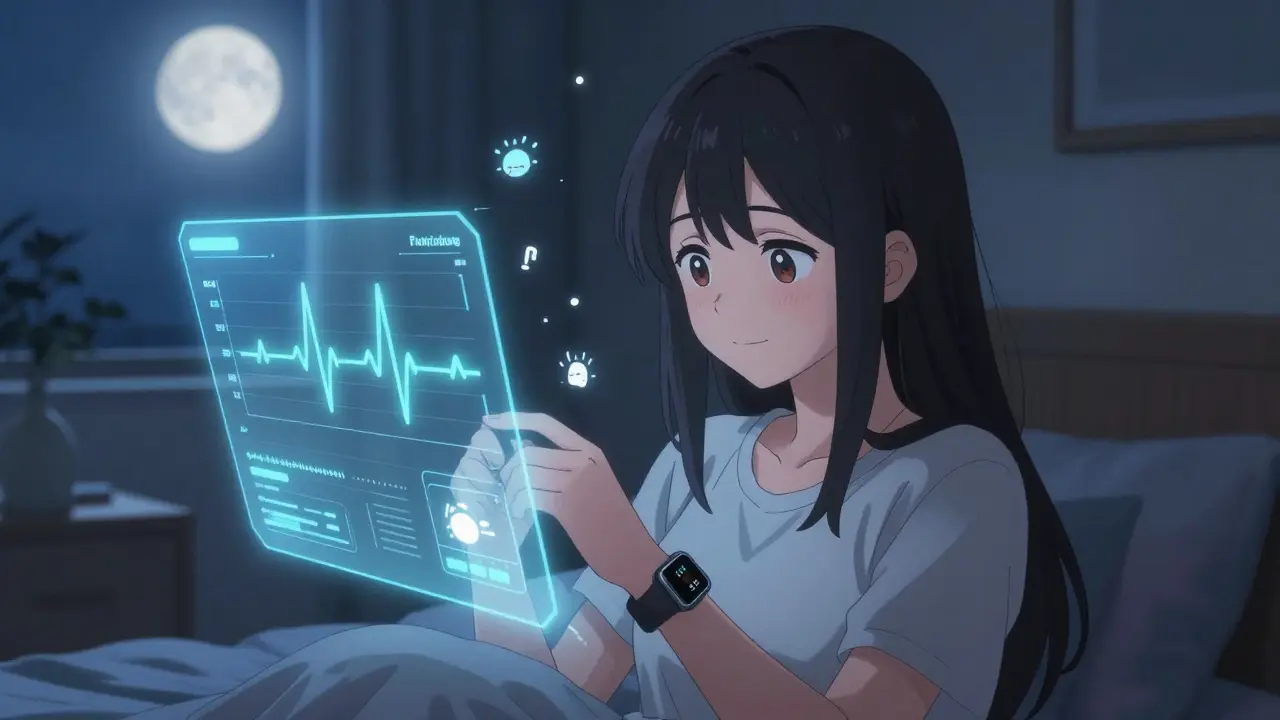
Wearable Side Effect Checker
How This Tool Works
Wearables track your heart rate, sleep, and activity levels. Changes in these metrics over time may indicate medication side effects. This tool helps you compare your current data against your established baseline to determine if you should consult your doctor.
Key Principles:
- Changes must be consistent and significant over time to be meaningful
- Look for patterns, not single data points
- Compare to your personal baseline established before starting a new medication
- Not a diagnosis tool - always consult your doctor with concerns
Analysis Results
Your data shows . The changes in your measurements may indicate potential side effects from your medication.
Heart Rate:
Sleep Quality:
Activity Level:
Important Safety Information
Wearable sensors can be affected by factors like skin tone, device placement, and activity levels. Changes in your metrics may not be related to medication side effects. If you experience any of these symptoms, please consult your doctor:
- Heart rate consistently below 40 bpm or above 120 bpm at rest
- Sudden inability to sleep for more than 48 hours
- Complete lack of movement for more than 12 hours
How Wearables Are Changing the Way We Spot Medication Side Effects
Most people don’t realize their smartwatch or fitness band might be the first to notice something’s off with their medication. You take your pills on time, feel fine at checkups, but something feels… off. Maybe you’re exhausted all the time. Or your heart races for no reason. Or you can’t sleep like you used to. These aren’t just bad days-they could be early signs of a side effect your doctor missed because they only see you every few months. Wearables are filling that gap by watching your body 24/7.
Devices like the Apple Watch, Fitbit, and Garmin don’t just count steps. They track your heart rate variability, sleep stages, and tiny changes in movement-data that can reveal drug reactions before they become serious. A 2024 study in the Journal of Medical Internet Research found that wearable data could predict medication side effects by spotting patterns in daily rhythms. For example, if your nighttime heart rate spikes every time you take a blood pressure pill, that’s not normal. That’s a signal.
What Wearables Actually Measure (And Why It Matters)
Modern wearables use three main types of sensors to catch side effects:
- Heart rate sensors (PPG): These use light to detect blood flow changes. They’re accurate within 92-98% of an ECG for detecting abnormal rhythms. If you’re on a beta-blocker and your heart rate drops below 40 bpm for more than five minutes, the Apple Watch Series 9 can flag it-something that used to require a hospital visit.
- Sleep trackers: They combine movement (actigraphy), heart rate patterns, and skin temperature to estimate sleep stages. Fitbit devices are especially good at this, matching polysomnography (the gold standard lab test) about 92% of the time. If you suddenly start waking up every hour or stop getting deep sleep after starting a new antidepressant, your watch might be the first to notice.
- Activity sensors (9-axis IMU): These tiny motion detectors track how you move-how fast you walk, how much you fidget, even how you get out of bed. In Parkinson’s patients, subtle slowing of movement (bradykinesia) from levodopa can show up as reduced daily steps or irregular motion patterns weeks before a doctor sees it.
It’s not about one number being high or low. It’s about change. Your body has a baseline. Wearables learn it. Then they watch for deviations. That’s how they catch side effects early.
Real Stories: When a Watch Saved Someone From a Dangerous Interaction
One Reddit user, u/ParkinsonsWarrior, noticed their Garmin showed sudden spikes in nighttime movement. They didn’t think much of it-until their neurologist confirmed it was early dyskinesia from too much levodopa. The dosage was adjusted before the shaking got worse.
Another user on PatientsLikeMe saw their Apple Watch log unexplained tachycardia after starting a new antidepressant. They brought the data to their doctor. Turns out, it was a dangerous interaction with their blood pressure meds. Without the watch, they might have kept taking both until they had a cardiac event.
These aren’t rare cases. A 2023 JAMA Internal Medicine study found that over 70% of patients who used wearables alongside their meds reported catching side effects their doctors hadn’t noticed. The key? They didn’t ignore the alerts. They tracked them over time and brought the data to appointments.
The Problem: False Alarms and Overwhelmed Patients
But wearables aren’t perfect. In fact, they’re often too sensitive.
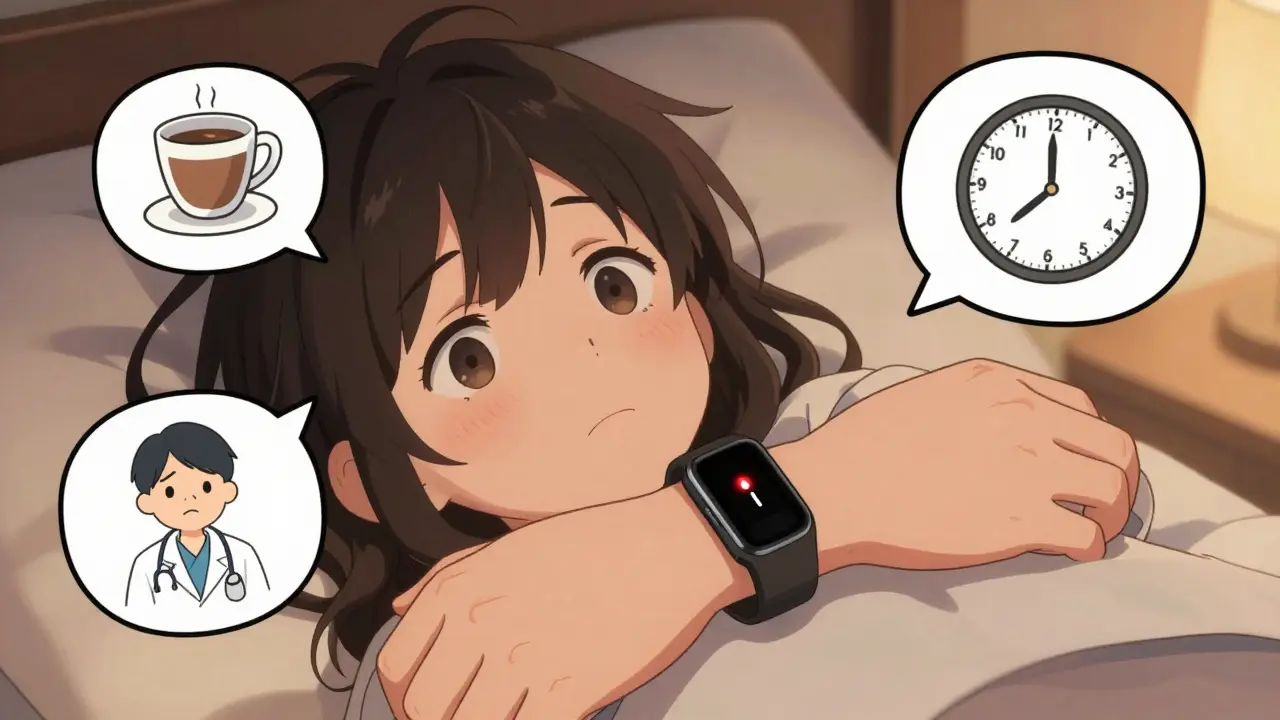
Consumer Reports surveyed 412 Fitbit users in March 2024. Sixty-three percent said they got false alerts-heart rate spikes from caffeine, sleep disruptions from stress, activity drops from a rainy day. These aren’t just annoyances. They cause notification anxiety.
One Amazon reviewer wrote: “I stopped wearing my watch because checking my heart rate became obsessive. I’d wake up at 3 a.m. to check if my BPM was normal. It made my anxiety worse.”
And then there’s accuracy. PPG sensors struggle with darker skin tones. A 2020 NIH study found accuracy dropped to 85% for Fitzpatrick skin types V and VI. That’s not just a tech flaw-it’s a health equity issue.
Plus, most devices don’t tell you what the data means. Your watch says your sleep efficiency dropped 15%. But is that from your new statin? Stress? Or just a bad night? Without context, you’re left guessing.
How to Use Wearables the Right Way
If you’re on a medication with known side effects-like antidepressants, blood pressure drugs, or Parkinson’s meds-here’s how to use your wearable safely and effectively:
- Start with a baseline. Wear your device for at least two weeks before starting a new drug-or after any dosage change. This gives you a personal normal. Your resting heart rate might be 58. Mine is 64. Yours might be 72. You need to know yours.
- Link it to your meds. Use apps that let you log when you take pills. If your heart rate spikes 30 minutes after your antidepressant, that’s a pattern. If it happens every night at 2 a.m., it’s probably not the drug.
- Look for trends, not spikes. One high heart rate reading means nothing. Three days in a row of elevated resting heart rate? That’s worth talking about.
- Bring the data to your doctor. Don’t just say, “I think my meds are messing with me.” Say, “My watch shows my resting heart rate went from 60 to 82 over three weeks, and it started after I increased my dose. Here’s the report.”
- Turn off non-essential alerts. If your watch buzzes every time your heart rate goes above 80, you’ll burn out. Keep only alerts for critical thresholds: heart rate below 40, sleep under 4 hours for three nights, or no movement for 12 hours.
Medical-Grade vs. Consumer Devices: What’s the Difference?
Not all wearables are created equal for health monitoring.
| Device | Best For | Accuracy (vs. Clinical Gold Standard) | Cost | FDA-Cleared for Side Effects? |
|---|---|---|---|---|
| Apple Watch Series 9 | Heart rhythm detection, bradycardia alerts | 98.8% for atrial fibrillation | $399 | Yes (beta-blocker bradycardia) |
| Fitbit Charge 5 | Sleep staging, stress tracking | 92.4% for sleep stages | $179 | No |
| Garmin Venu 2S | Activity patterns, movement changes | 91% for motion analysis | $299 | No |
| BioIntelliSense BioSticker | Continuous vital signs for high-risk patients | 97.3% for all vitals | $1,200 (prescription only) | Yes |
For most people, a consumer device like the Apple Watch or Fitbit is enough-if used wisely. But if you’re in a clinical trial, on high-risk meds, or have multiple chronic conditions, medical-grade wearables like the BioSticker are designed for precision, not convenience.
The Big Picture: Why This Matters Beyond Your Watch
This isn’t just about personal health. Pharmaceutical companies are now using wearables in clinical trials. In 2023, 43% of phase III cancer trials included wearable data to measure side effects-up from 7% in 2019. That’s because traditional methods (patient diaries, monthly check-ins) are unreliable. People forget. They underreport. They don’t want to sound like complainers.
Wearables give objective, continuous data. That means drugs can be approved faster, doses can be personalized, and side effects can be caught before they cause hospitalizations.
But here’s the catch: doctors aren’t trained to use this data yet. A 2024 AMA survey found that clinicians spend 15-20 minutes per patient just reviewing wearable reports. That’s not sustainable in a 15-minute appointment.
That’s why the future isn’t just better sensors. It’s better tools-AI that filters noise, highlights real risks, and gives doctors a one-page summary. The FDA is already drafting rules for this. By 2026, we’ll likely see apps that auto-generate side effect reports from your watch data and send them to your EHR.

What’s Next? The Future of Wearable Pharmacovigilance
Researchers are now testing watches that combine heart rate, skin conductance (sweat response), and voice analysis to detect neurological side effects. In early trials, this combo predicted Parkinson’s medication side effects with 94% accuracy.
Meanwhile, the European Medicines Agency is using Oura Rings to track vaccine reactions. And Apple’s latest algorithm can now detect beta-blocker-induced bradycardia automatically.
The goal? To move from reactive medicine-waiting for you to feel bad-to proactive care, where your body’s signals tell your doctor what to do before you even walk in the door.
Frequently Asked Questions
Can my wearable really detect medication side effects before my doctor does?
Yes, in many cases. Wearables monitor your body continuously, while doctors only see you every few weeks. Changes like a sudden drop in sleep quality, unexplained heart rate spikes, or reduced daily movement can appear days or weeks before you notice them-or before your doctor has a reason to test for them. Studies show wearable data has caught side effects like arrhythmias, bradycardia, and early dyskinesia before clinical visits.
Are smartwatches accurate enough to trust for health decisions?
For spotting trends, yes. For diagnosing, no. Consumer wearables are accurate enough to show you when something’s changed-like your resting heart rate rising from 60 to 85 over a week. But they’re not medical devices. Don’t stop a medication or change your dose based on your watch alone. Always bring the data to your doctor. Use it as a conversation starter, not a diagnosis tool.
Why do I keep getting false alerts on my Fitbit or Apple Watch?
Wearables are designed to be sensitive. A cup of coffee, a stressful meeting, or even a hot shower can trigger a heart rate spike. Sleep tracking can misread tossing and turning as wakefulness. That’s why you need to look at patterns-not single alerts. If your heart rate is high only after caffeine, it’s not a side effect. If it’s high every day at 3 p.m., regardless of what you eat, that’s worth investigating.
Do wearables work the same for people with darker skin?
No. Photoplethysmography (PPG) sensors, which measure heart rate with light, are less accurate on darker skin tones. Studies show accuracy drops to about 85% for Fitzpatrick skin types V and VI. This isn’t a design flaw-it’s a known limitation. If you have darker skin, pay more attention to trends over time rather than absolute numbers. Combine heart rate data with sleep and activity patterns for a clearer picture.
Should I wear my wearable all day and night?
For tracking side effects, yes-especially during the first few weeks of a new medication. But if you develop skin irritation, take breaks. Some users report rashes from constant contact. Also, if you start obsessing over your numbers, turn off alerts. The goal is awareness, not anxiety. Use it as a tool, not a prison.
Can my insurance pay for a wearable to track side effects?
Almost never right now. Only 27% of U.S. insurers cover wearables for medication monitoring as of mid-2024. Most consider them wellness devices, not medical equipment. But that’s changing. As more evidence shows they reduce hospitalizations, payers may start covering them for high-risk patients on specific drugs-like anticoagulants or chemotherapy.
What to Do Next
If you’re on medication and curious about wearables:
- Start with what you already have. Most people have a smartwatch or fitness band. Don’t buy a new one just yet.
- Set up a 14-day baseline. Log your meds, sleep, and activity without changing anything.
- Look for patterns. Do side effects show up after certain times? After meals? After skipping sleep?
- Print or screenshot your data. Bring it to your next appointment. Say: “I noticed this pattern. Can we talk about whether it’s the medication?”
- If you’re on a high-risk drug and want more precision, ask your doctor about medical-grade wearables like the BioSticker. They’re not for everyone-but they exist.
The future of medicine isn’t just in pills or surgeries. It’s in the quiet, constant stream of data your body sends out every second. Wearables are the first tools that let us listen-and respond-before things go wrong.
Mike Rose
January 31, 2026 AT 06:53Diksha Srivastava
January 31, 2026 AT 19:16Sarah Blevins
February 1, 2026 AT 02:16KATHRYN JOHNSON
February 2, 2026 AT 10:00Gaurav Meena
February 3, 2026 AT 01:37Jodi Olson
February 3, 2026 AT 05:16Carolyn Whitehead
February 3, 2026 AT 17:55Katie and Nathan Milburn
February 3, 2026 AT 18:17