Sulfonylurea Hypoglycemia Risk Calculator
Risk Assessment Tool
Calculate your risk of hypoglycemia based on the sulfonylurea you're taking, age, and other factors. Your results will show your relative risk level and personalized recommendations.
Enter your information above to see your risk assessment.
When you're managing type 2 diabetes, the goal isn't just to lower blood sugar-it's to lower it safely. Sulfonylureas have been around since the 1950s, and they still work. But for many people, they come with a dangerous side effect: low blood sugar, or hypoglycemia. It’s not rare. About 1 in 10 people taking these drugs will have at least one episode that’s serious enough to need help. And for some, it happens over and over-midnight lows, shaky hands before lunch, confusion after a walk. This isn’t just inconvenient. It’s risky.
How Sulfonylureas Work (and Why They Cause Low Blood Sugar)
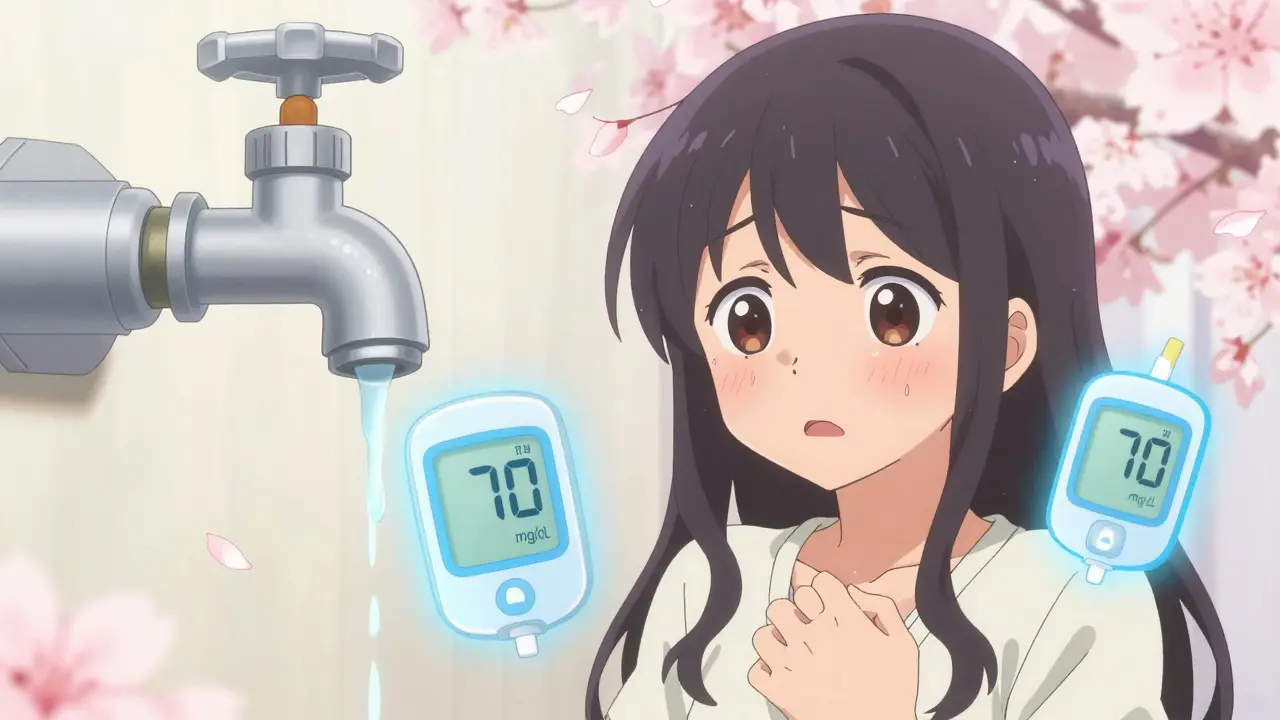
Sulfonylureas force your pancreas to release insulin-no matter what your blood sugar level is. That’s different from newer drugs that only kick in when glucose is high. These drugs bind to special receptors on your beta cells, close potassium channels, and trigger insulin release. It’s like turning on a faucet that won’t turn off.
This is why hypoglycemia happens. If you skip a meal, exercise more than usual, or take a dose that’s too high, your body keeps dumping insulin into your bloodstream. Blood sugar drops below 70 mg/dL. Your body panics. You sweat. Your heart races. You feel shaky, irritable, confused. In severe cases, you pass out or need someone to give you glucagon.
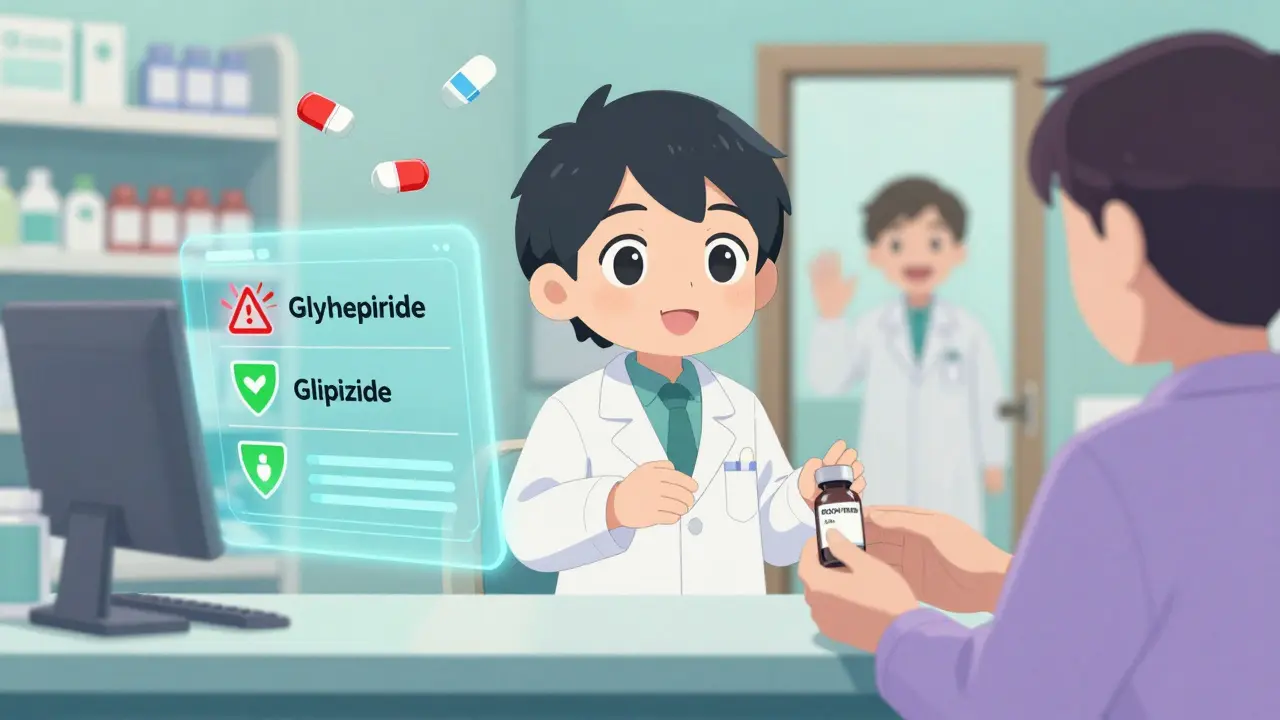
Not all sulfonylureas are the same. Glyburide is the most commonly prescribed in the U.S.-about 70% of prescriptions. But it’s also the biggest culprit. It sticks around in your system for up to 10 hours and has active metabolites that keep working even after the original drug is gone. Glipizide? Half-life of just 2-4 hours. Glimepiride? Shorter acting. Gliclazide? Even lower risk. The difference isn’t subtle. Studies show glyburide causes nearly 40% more severe hypoglycemia than glipizide.
Who’s Most at Risk?
Age is a big factor. People over 65 are 2.5 times more likely to have dangerous lows on glyburide than younger adults. That’s why the American Geriatrics Society says: don’t use glyburide in older patients. But it’s not just age.
Genetics matter too. About 1 in 5 people carry a variant in the CYP2C9 gene that slows down how fast their body breaks down sulfonylureas. If you have this variant and take a standard dose, your drug builds up. Your risk of hypoglycemia jumps 2.3 times. Most doctors don’t test for this-but they should.
Other meds can make things worse. If you’re on gemfibrozil (for cholesterol), sulfonamide antibiotics, or warfarin, your sulfonylurea levels can spike. Gemfibrozil alone can increase free drug concentration by 30-40%. That’s like doubling your dose without realizing it.
And let’s not forget lifestyle. Missed meals. Too much alcohol. Intense exercise without a snack. These aren’t just "bad habits"-they’re triggers that turn a safe drug into a danger.
Comparing Sulfonylureas: Which One Is Safer?
Not all sulfonylureas are created equal. Here’s how they stack up in real-world risk:
| Drug | Half-Life | Severe Hypoglycemia Risk | Notes |
|---|---|---|---|
| Glyburide (glibenclamide) | 10 hours | High | Most prescribed in U.S. 70% of sulfonylurea use. Active metabolites increase risk. Avoid in elderly. |
| Glipizide | 2-4 hours | Low to moderate | Shorter action. Fewer lows. Preferred choice for most patients. |
| Glimepiride | 5-8 hours | Moderate | Better than glyburide. Less active metabolites. Often used in Europe and Australia. |
| Gliclazide | 10-12 hours | Lowest among sulfonylureas | Only available outside the U.S. Pancreas-specific action reduces hypoglycemia risk by 28% vs. glyburide. |
If you’re on glyburide and have had even one low blood sugar episode, ask your doctor: Could glipizide be safer for me? Many patients report dramatic improvements after switching. One Reddit user, "GlipizideSurvivor," wrote: "Switched from glyburide to glipizide. My lows went from weekly to once every 2-3 months. I actually sleep through the night now."

How Newer Drugs Compare
Sulfonylureas aren’t the only option anymore. Newer classes like SGLT-2 inhibitors and GLP-1 agonists have one huge advantage: they rarely cause hypoglycemia. Their action is glucose-dependent. If your blood sugar drops, they stop working.
Here’s the real-world numbers:
- Sulfonylureas: 1.2-1.8 severe episodes per 100 person-years
- DPP-4 inhibitors: 0.5-1.0 per 100 person-years
- SGLT-2 inhibitors: less than 0.3 per 100 person-years
- GLP-1 agonists: less than 0.3 per 100 person-years
That’s a massive difference. But cost matters. Generic glipizide costs about $4 a month. A month of semaglutide? Over $1,000. That’s why sulfonylureas are still prescribed 18.7% of the time in the U.S.-they’re cheap, effective, and doctors know them.
The trade-off? You’re trading safety for savings. For some people, that’s worth it. For others, especially older adults or those with heart disease, it’s not.
How to Prevent Low Blood Sugar on Sulfonylureas
If you’re staying on a sulfonylurea, here’s what actually works to avoid lows:
- Start low, go slow. Doctors should begin with the lowest possible dose. For glipizide, that’s 2.5 mg. For glyburide, 1.25 mg. Many patients are started too high. Slow titration cuts hypoglycemia risk by over 30%.
- Use continuous glucose monitoring (CGM). The DIAMOND trial showed a 48% drop in hypoglycemia duration when patients wore a CGM. You don’t need to guess when your sugar is dropping. You’ll get an alarm before you feel shaky.
- Know your triggers. Skip a meal? Low blood sugar. Walk 5 miles? Low blood sugar. Drink alcohol without food? Low blood sugar. Keep a log. Patterns emerge.
- Always carry fast-acting carbs. Glucose tablets. Juice. Hard candy. Not chocolate-it’s too slow. Eat 15 grams of carbs at the first sign of low blood sugar. Wait 15 minutes. Check again.
- Check for drug interactions. Tell your pharmacist you’re on a sulfonylurea before taking any new meds. Gemfibrozil, sulfa antibiotics, even some NSAIDs can increase risk.
- Ask about CYP2C9 testing. If you’ve had repeated lows, ask if genetic testing is an option. It could mean cutting your dose by 30-50% and staying safe.
What the Experts Say Now
The American Diabetes Association still lists sulfonylureas as a second-line option after metformin. But they’ve added strong warnings: "Hypoglycemia risk must be minimized through appropriate dosing, patient selection, and monitoring."
Studies like the VADT and ADVANCE trials found that severe hypoglycemia is linked to higher risk of heart attack and death. Not because low blood sugar directly causes it-but because people who have frequent lows are often more fragile: older, sicker, on more meds, with worse control.
There’s new hope. The RIGHT-2.0 trial, wrapping up in late 2024, is testing a system where patients get dosed based on their CYP2C9 gene. Early results show a 40% drop in hypoglycemia. Imagine: a simple blood test before you start, and your dose is personalized from day one.
Another smart move? Pairing low-dose sulfonylureas with GLP-1 agonists. The DUAL VII trial showed this combo cut hypoglycemia risk by 58% compared to sulfonylurea alone. You get the cost benefit of the sulfonylurea-with the safety of the newer drug.
Real Stories, Real Risks
On Reddit, "Type2Warrior87" wrote: "Switched from metformin to glyburide last month and have had 3 severe lows requiring glucagon. My doctor didn’t warn me this could happen multiple times per week."
That’s the problem. Too many patients aren’t warned. They’re told, "This will help your sugar." No mention of the risk. No plan for what to do if it happens.
But there are success stories too. A 72-year-old woman in New Zealand switched from glyburide to glimepiride, started wearing a CGM, and stopped having lows. "I can go hiking again," she said. "I don’t carry glucagon anymore."
It’s not about avoiding sulfonylureas entirely. It’s about using them wisely. The right drug. The right dose. The right monitoring. The right conversations with your doctor.
If you’re on a sulfonylurea and you’ve ever felt your heart race, your hands shake, or your mind go fuzzy-you’re not alone. And you don’t have to live with it. There are better ways.
Can sulfonylureas cause low blood sugar even if I eat regularly?
Yes. Sulfonylureas force your pancreas to release insulin regardless of your blood sugar level. Even if you eat on time, factors like exercise, stress, alcohol, or drug interactions can still cause your blood sugar to drop too low. This is why the mechanism itself makes hypoglycemia a common side effect-not just a result of poor habits.
Is glyburide the worst sulfonylurea for low blood sugar?
Yes, glyburide carries the highest risk. It has a long half-life (up to 10 hours), active metabolites that stick around, and doesn’t shut off easily. Studies show it causes 36% more severe hypoglycemia than glipizide and is linked to higher hospitalization rates. The American Geriatrics Society specifically advises against using glyburide in patients over 65.
Are there safer alternatives to sulfonylureas?
Yes. SGLT-2 inhibitors (like empagliflozin) and GLP-1 receptor agonists (like semaglutide) rarely cause hypoglycemia because they only work when blood sugar is high. DPP-4 inhibitors are also safer. But they cost more. If cost is a barrier, glipizide or glimepiride are much safer sulfonylurea options than glyburide.
Can genetic testing help prevent hypoglycemia on sulfonylureas?
Yes. About 1 in 5 people carry a CYP2C9 gene variant (*2 or *3) that slows drug breakdown, leading to higher drug levels and 2.3 times more hypoglycemia risk. Testing before starting can help doctors choose a lower, safer dose. The PharmGKB now recommends this testing, and ongoing trials show it can reduce low blood sugar episodes by up to 40%.
Should I stop taking my sulfonylurea if I have low blood sugar?
Don’t stop on your own. If you’re having frequent lows, talk to your doctor. You may need a different drug, a lower dose, or better monitoring. Stopping suddenly can cause your blood sugar to spike. The goal is to find a safer way to manage your diabetes-not to quit treatment entirely.
Does using a CGM really help prevent lows on sulfonylureas?
Yes. The DIAMOND trial showed that people on sulfonylureas who used continuous glucose monitors had 48% less time spent in hypoglycemia. CGMs give you alerts before your sugar drops too low, letting you eat or adjust before symptoms start. For many, it’s the difference between daily lows and safe, stable control.
What to Do Next
If you’re on a sulfonylurea:
- Ask your doctor: "Which one am I on? Is it glyburide?"
- If you’ve had even one low blood sugar episode, ask: "Could I switch to glipizide or glimepiride?"
- Ask if you’re a candidate for a CGM-especially if you’re over 65 or have heart disease.
- Ask about CYP2C9 testing if you’ve had repeated lows despite careful habits.
- Keep glucose tablets or juice handy-everywhere. Your car, your desk, your purse.
Sulfonylureas aren’t going away. They’re too cheap, too effective. But they don’t have to be dangerous. With the right choices, you can still get the benefits without the risks.
Gray Dedoiko
December 25, 2025 AT 02:05Been on glipizide for 3 years now after switching from glyburide. My nights actually stopped being a horror show. No more 3 a.m. panic attacks where I’m shaking and sweating like I just ran a marathon. I didn’t even know how bad it was until it stopped.
Paula Villete
December 26, 2025 AT 07:19So let me get this straight - we’re still prescribing a drug that’s basically a insulin faucet with no off switch, just because it’s cheap? And we act surprised when people end up in the ER? The real tragedy isn’t the hypoglycemia - it’s that we’ve known this for decades and still treat patients like lab rats with a budget.
Katie Taylor
December 27, 2025 AT 15:43Stop blaming the drug. If you can’t manage your meals or your alcohol, that’s on you. People get hypoglycemia on metformin too - it’s called life. Stop whining and learn to carry glucose tabs. Simple.
Charles Barry
December 28, 2025 AT 13:09They don’t want you to know this, but sulfonylureas were pushed by Big Pharma to keep people hooked on daily meds instead of fixing the root cause - diet. The fact that they cause hypoglycemia? That’s not a bug. That’s a feature. Keeps you coming back. And don’t even get me started on CGMs - they’re just another $$$ trap. Your doctor gets paid per test. You’re the product.
Aurora Daisy
December 29, 2025 AT 09:02Oh wow, an entire article about how glyburide is dangerous and nobody warned you? Shocking. In the UK, we’ve known this since 1998. But in the US, you still treat diabetes like it’s a 1970s car with no seatbelts. At least we have NICE guidelines. You have... ads for insulin pens during the Super Bowl.
Georgia Brach
December 31, 2025 AT 08:00Let’s be real - the entire article is a marketing piece for glipizide and CGMs. Where’s the data on long-term mortality? Where’s the cost-benefit analysis of universal genetic testing? This reads like a slide deck from a pharmaceutical rep. And the Reddit quote? Anecdotal. Not evidence.
Joe Jeter
December 31, 2025 AT 11:55People who say "just switch to glipizide" are ignoring the fact that most insurance won’t cover it unless you’ve already had 3 ER visits. And if you’re on Medicaid? Good luck getting a CGM. This isn’t about medicine - it’s about who can afford to not die from their prescription.
Usha Sundar
January 1, 2026 AT 02:27My mom switched from glyburide to glimepiride. No more midnight shakes. She’s 71. She walks now. That’s all you need to know.
Pankaj Chaudhary IPS
January 2, 2026 AT 16:13As a physician in India, I see this daily. Sulfonylureas are the backbone of diabetes care here - affordable, accessible. But we’ve started adopting CYP2C9 screening in urban centers. One test, $5. Prevents dozens of hypoglycemic episodes. This isn’t just Western medicine - it’s smart medicine, everywhere.
Ademola Madehin
January 3, 2026 AT 22:30Bro, I had a low so bad I called 911 and the EMTs were like "again?!" I’m on glyburide and I’m 32. My doctor said "just eat more carbs." I’m not a vending machine. This system is broken. Someone help.
Jeffrey Frye
January 4, 2026 AT 11:46glipizide? more like glipizide... wait no i mean glipizide. anyway, i switched and my sugar is fine now. no more shaking. also i think the guy who wrote this is a drug rep. just saying.
Rosemary O'Shea
January 6, 2026 AT 09:40How quaint. You all treat diabetes like a technical problem to be solved with pills and gadgets. But what about the soul? The emotional toll of living in fear of your own body? The shame of needing glucagon in public? The loneliness of being told "it’s just a side effect"? No drug fixes that. No CGM gives you peace. Only acceptance - and the courage to demand better.
Sidra Khan
January 6, 2026 AT 21:20lol at the "real stories" section. Reddit users are not a clinical trial. Also, I’ve been on glyburide for 10 years and never had a low. So maybe it’s not the drug… maybe it’s you? 🤷♀️