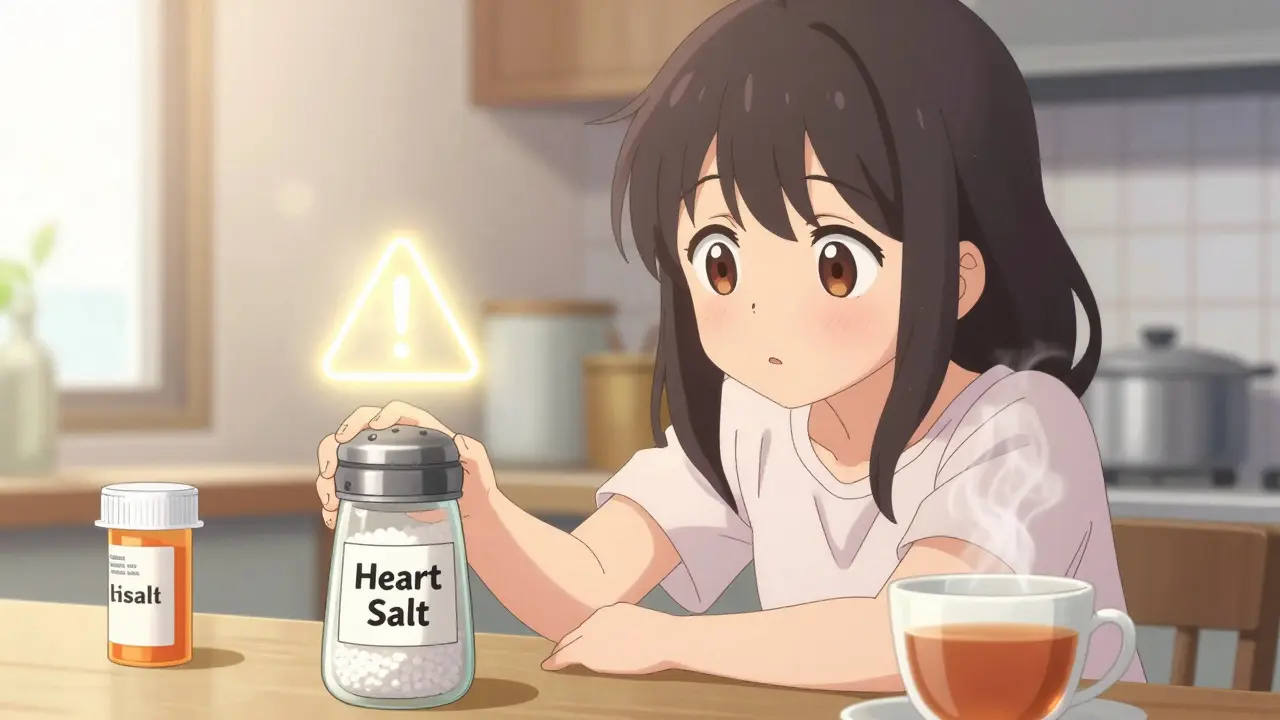
Potassium Risk Calculator
This calculator estimates your potassium risk when using salt substitutes while taking ACE inhibitors or ARBs. Based on guidelines from the American Diabetes Association and JAMA studies.
Note: This tool is for informational purposes only and does not replace medical advice. Always consult your healthcare provider.
Important Notes: This calculator is based on the article's information about potassium chloride salt substitutes. Each teaspoon typically contains 400-600mg of potassium.
Medical disclaimer: This tool does not provide medical advice. Always consult your healthcare provider before changing your diet or medications.
Many people switch to salt substitutes thinking they’re making a healthy choice-especially if they’re managing high blood pressure. But if you’re taking an ACE inhibitor or ARB, that little shaker on your kitchen counter could be quietly putting your heart at risk. It’s not a myth. It’s not exaggerated. It’s a real, documented danger that’s slipping through the cracks because no one talks about it.
What’s in Those ‘Healthy’ Salt Substitutes?
Most salt substitutes don’t remove sodium-they replace it with potassium chloride. Products like LoSalt, NoSalt, and Heart Salt typically contain 50% to 75% potassium chloride. That means every teaspoon you use adds 400-600 mg of potassium to your diet. Sounds good, right? Potassium helps lower blood pressure. It balances sodium. But here’s the catch: if your kidneys can’t flush out the extra potassium, it builds up. And when it builds up too much, your heart can stop.Why ACE Inhibitors and ARBs Are the Problem
ACE inhibitors (like lisinopril, enalapril) and ARBs (like losartan, valsartan) are common medications for high blood pressure, heart failure, and kidney protection in diabetics. They work by blocking a hormone system that raises blood pressure. But they also reduce aldosterone-a hormone that tells your kidneys to get rid of potassium. So now you’ve got two things working against you: you’re adding extra potassium through your salt substitute, and your body can’t get rid of it efficiently. A 2004 case report in the Journal of the Royal Society of Medicine described a 72-year-old man who went into cardiac arrest after using LoSalt while on lisinopril. His potassium level hit 7.8 mmol/L. Normal is 3.5-5.0. Above 6.5? That’s a medical emergency. His heart stopped. He survived-but only because it was caught in time.Who’s Most at Risk?
Not everyone is equally vulnerable. The biggest red flag is kidney function. If your estimated glomerular filtration rate (eGFR) is below 60 mL/min/1.73m², you’re in the danger zone. That’s about 1 in 7 U.S. adults. And if you have chronic kidney disease (CKD), especially stage 3 or higher, your risk of dangerous hyperkalemia jumps from less than 1 event per 100 people per year to nearly 9 events per 100. Diabetics are another high-risk group. About 1 in 5 diabetics with kidney issues have a condition called hyporeninemic hypoaldosteronism. Their bodies naturally produce less aldosterone. Add a salt substitute and an ACE inhibitor? That’s a recipe for trouble. The American Diabetes Association specifically warns about this combo.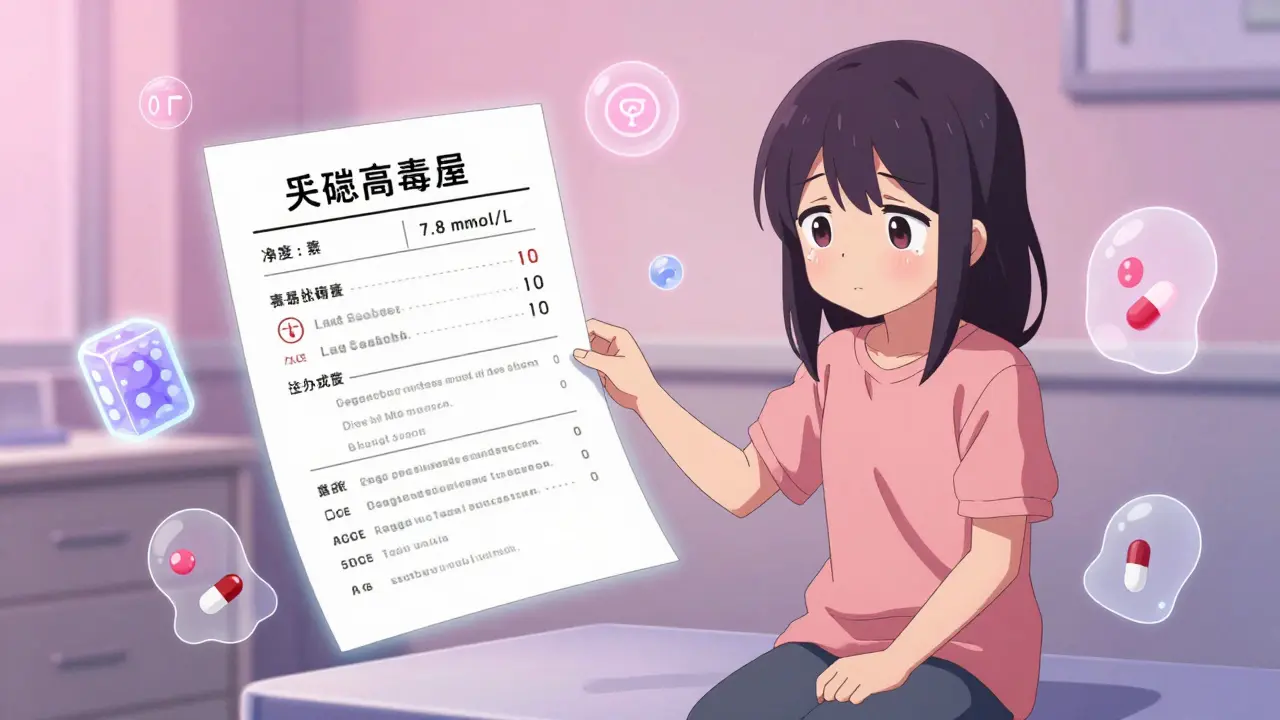
The Data Doesn’t Lie-But It’s Misunderstood
You’ve probably seen headlines like “Potassium Salt Lowers Stroke Risk.” That’s true-but only for people with healthy kidneys. A 2025 JAMA study tracked 21,000 people and found a 14% drop in stroke recurrence among those using potassium-enriched salt. Sounds great. But here’s what the study didn’t shout: 90% of those participants didn’t have kidney disease or take ACE inhibitors or ARBs. For the other 10%-the ones already on these medications-the same study’s data shows a 10-fold increase in hyperkalemia risk. That’s not a trade-off. That’s a trap. And most patients don’t know they’re in it.Real People, Real Consequences
Reddit threads and drug review sites are full of stories that don’t make it into medical journals. One user on r/kidney_stones wrote: “Woke up in the ER with potassium at 6.3 after using ‘Heart Salt’ for three weeks while on lisinopril.” Another, Martha from Michigan, described muscle weakness and irregular heartbeat after switching to potassium salt while on losartan. She didn’t know the connection until her doctor told her. On Amazon, 7% of reviews from users who self-reported kidney problems mention their doctor told them to stop using the salt substitute after bloodwork showed high potassium. That’s not a coincidence. That’s a pattern.What About Herbs and Spices?
There’s a safer way. Skip the potassium salt entirely. Use herbs and spices-garlic, rosemary, cumin, smoked paprika, lemon zest. Mrs. Dash and similar blends cut sodium by 40-50% without touching potassium. You lose the salty punch, but you gain safety. And you don’t need to sacrifice flavor. In fact, many people find their taste buds adjust and start enjoying the natural flavors of food more.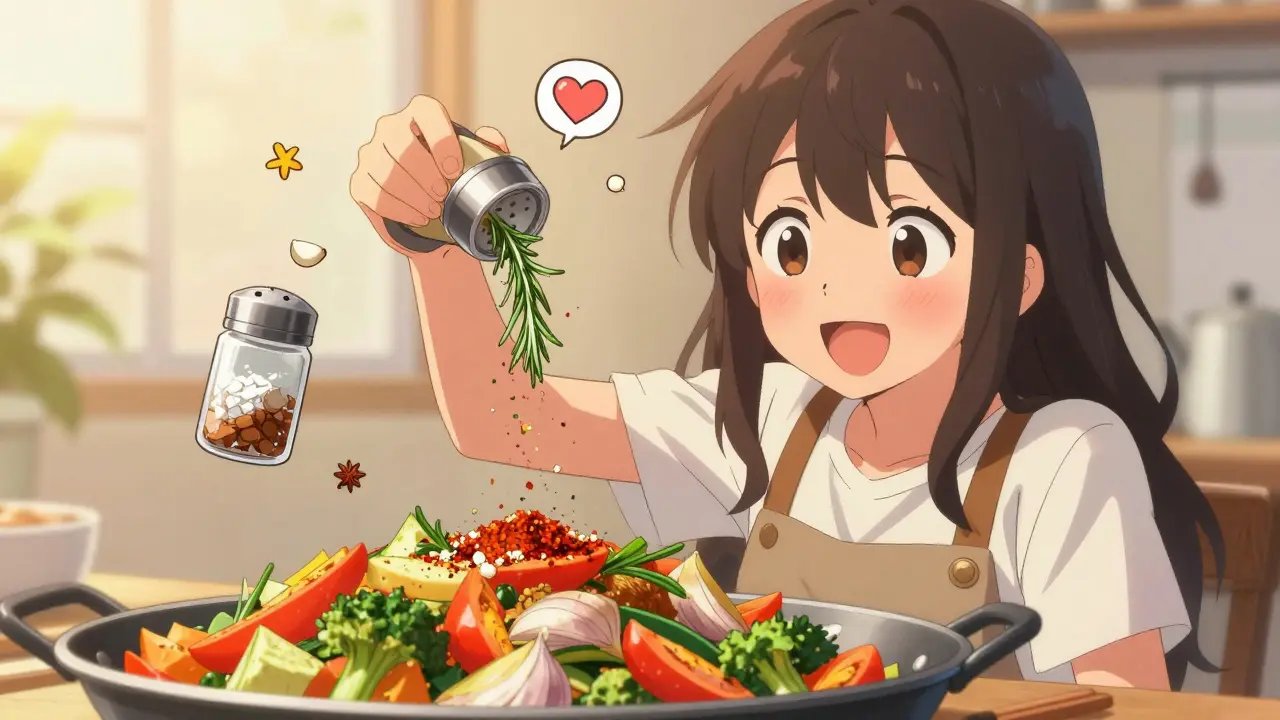
What Should You Do?
If you’re on an ACE inhibitor or ARB:- Check your salt substitute. Look at the ingredients. If it says “potassium chloride,” stop using it immediately.
- Ask your doctor. Get your potassium level tested. Even if you feel fine, high potassium doesn’t always cause symptoms until it’s too late.
- Don’t assume ‘low sodium’ means ‘safe.’ Many packaged foods labeled ‘low sodium’ still contain potassium chloride as a replacement.
- Use herbs and spices instead. They work. They’re cheap. And they won’t kill you.
Why Isn’t This Better Known?
The FDA doesn’t require salt substitutes to carry warnings about ACE inhibitors or ARBs. Only 3 out of 12 major brands voluntarily mention the risk. Canada changed its rules in January 2024-now all potassium salt products there must say “Contraindicated in patients taking ACE inhibitors.” The U.S. hasn’t followed suit. A proposed rule from the FDA in May 2024 could change that, but it won’t be final until mid-2026. Meanwhile, doctors aren’t asking. A 2023 study found 78% of patients on ACE inhibitors had no idea dietary potassium could be dangerous. They weren’t warned. They weren’t screened. They just switched to a ‘healthier’ salt because they saw it on the shelf.The Bottom Line
Salt substitutes aren’t inherently bad. For healthy people, they can be a useful tool. But if you’re on an ACE inhibitor or ARB, they’re a ticking time bomb. You don’t need to fear salt entirely. You just need to be smart about what you replace it with. Your heart doesn’t care if your salt is labeled ‘lite’ or ‘heart-healthy.’ It only cares about potassium levels. And when those climb too high, there’s no second chance.Don’t guess. Don’t assume. Ask your doctor. Get tested. And if you’re using potassium salt? Swap it out-today.
Ryan Barr
January 7, 2026 AT 00:59Let’s be real-this is why most people die from ‘natural’ remedies. You don’t get a medal for using ‘heart-healthy’ salt if your potassium’s at 7.8. The FDA’s asleep at the wheel.
Someone should sue these companies.
And no, ‘herbs and spices’ aren’t a solution for people who like salt. They’re a band-aid for a bullet wound.
Dana Termini
January 8, 2026 AT 01:44I’m a nurse who’s seen three patients in the ER with potassium-induced arrhythmias from these substitutes. No one ever connects the dots until it’s too late. This post should be mandatory reading for anyone on ACEi or ARBs. Your doctor won’t tell you. You have to know this yourself.
Stop trusting marketing labels. Read the ingredient list like your life depends on it-because it does.
Amy Le
January 9, 2026 AT 00:11AMERICA IS SLEEPWALKING INTO A KILLER FAD.
While Canada puts warning labels on potassium salt, the U.S. lets Big Salt profit off ignorance. This isn’t negligence-it’s corporate malice wrapped in ‘health’ branding.
And don’t get me started on how ‘herbs and spices’ are a privilege for people who have time to cook. What about the elderly? The poor? The ones who rely on convenience?
Fix the system, not the symptom. Ban these substitutes until they carry FDA-mandated warnings. Or better yet-ban them outright for high-risk groups.
This isn’t about taste. It’s about survival. And we’re failing.
Wake up. Or someone you love will be the next statistic.
Pavan Vora
January 10, 2026 AT 05:49Wow, this is so important... I live in India, and here, people use kala namak and rock salt, but also many are switching to low-sodium salts because of hypertension... I didn't know about the potassium chloride risk with ACE inhibitors... My uncle is on losartan, and he uses 'Lite Salt' every day... I will tell him immediately.
Thank you for sharing this, truly... I hope more doctors in India learn this too... It's not just an American problem.
Maybe we need global awareness?
Also, I think the FDA should act faster... Why wait till 2026?
People are dying now.
Indra Triawan
January 11, 2026 AT 15:23I cried reading this. My mom used one of those salt substitutes for years after her stroke. She said it was ‘better for her heart.’ She didn’t know it was slowly killing her. She passed last year. The coroner said hyperkalemia was a contributing factor. No one ever warned her. No one. Not her cardiologist, not her pharmacist, not even the label.
I’m so angry. And so sad.
If you’re reading this and you’re on an ACE inhibitor? Stop. Now. Go get your potassium checked. Don’t wait. Don’t hope. Just do it.
I wish I had known sooner.
Susan Arlene
January 12, 2026 AT 22:25so i switched to one of those salt things because my doc said cut sodium... turns out i’m on lisinopril and my potassium was sky high? like 6.1? i had no symptoms. felt fine. just tired.
they hospitalized me for 2 days. i didn’t even know potassium could do that.
now i just use garlic powder and black pepper. tastes fine. my food doesn’t taste like plastic anymore anyway.
also… why does no one talk about this? like, at all?
Joann Absi
January 12, 2026 AT 23:25THIS IS WHY AMERICA IS FALLING APART.
People think ‘natural’ means ‘safe.’
They think ‘low sodium’ means ‘good for you.’
They don’t read labels. They don’t ask questions. They just buy the shiny pink box with the heart on it.
And then they die. Quietly. Alone. In their kitchen.
Meanwhile, the FDA is busy debating fonts on warning labels.
Meanwhile, Big Pharma profits from the ER visits.
Meanwhile, we’re all just scrolling on our phones like nothing’s wrong.
Wake up. Or become another statistic.
❤️🩹
Ashley S
January 13, 2026 AT 13:15stop using salt substitutes. they’re bad. your heart can stop. just use herbs. it’s simple. why is this even a thing?
your doctor should have told you. they didn’t. now you know. fix it.