When a brand-name drug’s patent runs out, it doesn’t just quietly fade away. A storm hits the market - dozens of cheaper versions flood in, prices drop by as much as 90%, and the company that spent years and billions developing the drug suddenly sees its revenue vanish. If you’re on the brand side, you need to know when this will happen. Not just roughly - but precisely. Because the difference between predicting it six months early versus being caught off guard can mean hundreds of millions in lost revenue.
Why Timing Matters More Than You Think
It’s not enough to know the patent expiration date. That’s just the starting line. The real race begins long before that date. In fact, generic manufacturers start planning their entry 3 to 4 years in advance. They’re not waiting for the patent to expire - they’re waiting for the legal and regulatory green lights to line up. The key document? The FDA’s Orange Book. It’s not a fancy website. It’s a public database listing every patent tied to a drug, along with any exclusivity periods. But here’s the catch: many drugs have multiple patents. One covers the active ingredient. Another covers the pill coating. Another covers how it’s taken. Some of these are legitimate. Others? They’re just there to delay competition. This is called "evergreening," and it’s why Humira didn’t face real generic competition until 2023 - even though its main patent expired in 2016.The Hatch-Waxman Act: The Rulebook That Changed Everything
In 1984, Congress passed the Hatch-Waxman Act. It was a deal: drug companies got extra patent time to make up for the years they spent getting FDA approval, and in exchange, generic makers got a faster, cheaper path to market through Abbreviated New Drug Applications (ANDAs). But there’s a twist: the first generic company to file an ANDA that challenges a patent gets 180 days of exclusive sales. No one else can enter during that time. That’s why so many generics rush to be first. It’s not about being first to market - it’s about being first to file. But here’s what most people don’t realize: filing an ANDA isn’t enough. The generic company must also certify that the patent is invalid, unenforceable, or won’t be infringed. That’s called a Paragraph IV certification. And when that happens? The brand company usually sues. That lawsuit can delay the generic entry by over a year - sometimes much longer.What Actually Delays Generic Entry?
You’d think if a patent expires, generics just walk in. But reality is messier. Here are the real roadblocks:- Patent litigation: If the brand sues, entry is delayed by an average of 18.7 months.
- FDA approval delays: The median time from ANDA submission to approval is 38 months. Backlogs from pandemic staffing cuts added another 7.2 months in 2021-2022.
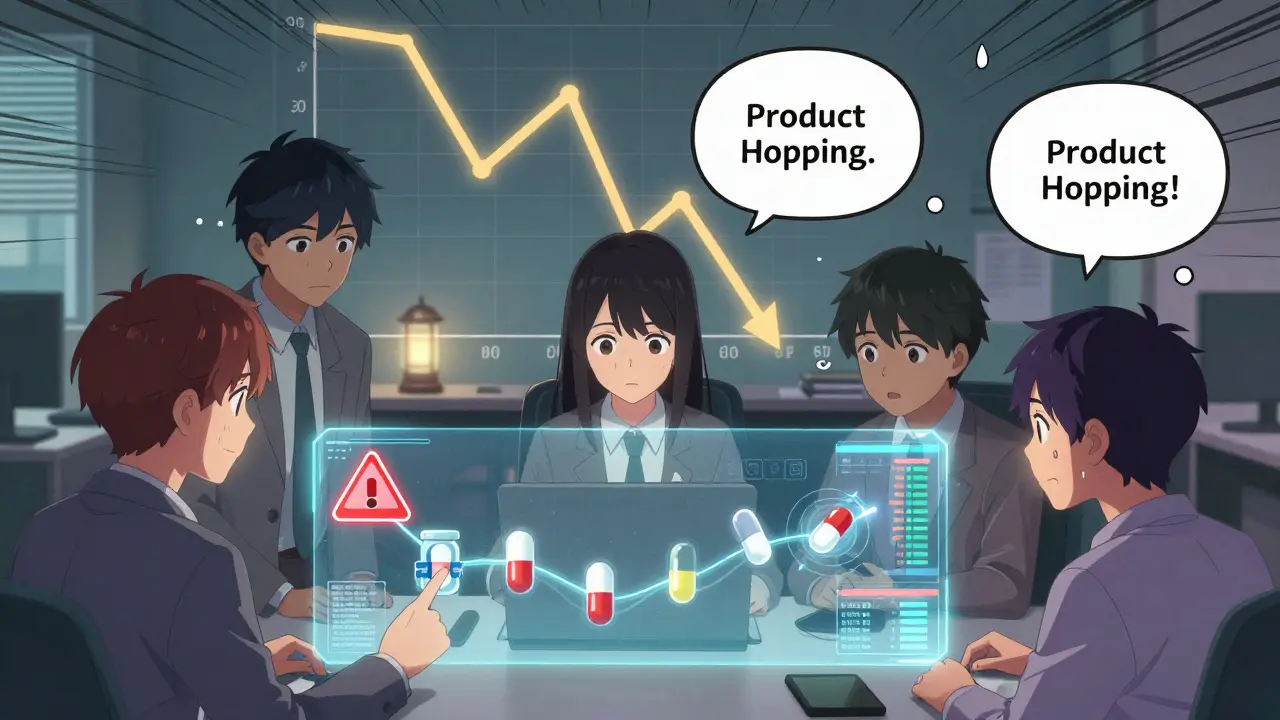
- Product hopping: The brand switches patients to a slightly modified version (new pill shape, new delivery method) just before patent expiry. This tricks pharmacies and doctors into keeping prescriptions on the new version - buying the brand 18-24 more months of exclusivity.
- REMS programs: Risk Evaluation and Mitigation Strategies, meant to manage drug risks, can legally block generic access. On average, they delay entry by 14.3 months.
- Pediatric exclusivity: If the brand tested the drug on kids, they get an extra 6 months of market protection.
- Authorized generics: Sometimes, the brand company launches its own generic version under a different label. This keeps prices higher than they’d be with true competition - and most forecasting models miss this entirely.
How Accurate Are the Predictions?
Simple models that just use patent dates? They’re wrong about half the time. R² values hover around 0.42-0.51 - meaning they explain less than half the variation in actual entry dates. Advanced models? They combine 40+ data points: litigation outcomes, FDA approval timelines, market size, patent clustering, even state-level substitution laws. The best ones - like Evaluate Pharma’s J+D Forecasting - hit R² values of 0.78-0.85. That’s 78-85% accuracy. But even those aren’t perfect. Oncology drugs? They take longer. The average delay for cancer drugs is 32% longer than for heart meds. Biologics? Even worse. Because biosimilars aren’t exact copies - they’re complex proteins - it takes 12-18 months just to develop them. And the FDA approval process? It’s slower. Accuracy drops to 57%.The Price Drop: It’s Not Linear - It’s a Cascade
Once the first generic hits, prices don’t just dip. They collapse in stages:- First generic: Drops price by 39%.
- Second generic: Drops it another 15% - now 54% below brand price.
- Sixth generic: Price is down 85%.
What’s Changing Now?
The FDA’s 2023 Competitive Generic Therapy (CGT) pathway is a game-changer. If a drug has too few generics already, the first company to enter gets 180 days of exclusivity - even if they didn’t file first. That’s meant to break monopolies on older, cheap drugs. But it’s also adding complexity to forecasts. AI is starting to help. Machine learning models are now scanning thousands of patent lawsuits, FDA letters, and court filings to predict outcomes. By 2026, these tools are expected to cut prediction errors from 11.4 months to 6.8 months. But here’s the problem AI can’t fix: human behavior. Take Humira again. Even with multiple biosimilars approved, AbbVie successfully moved patients to Skyrizi - a newer drug with its own patent. That cut biosimilar market share by 35%. No algorithm could predict that.What Should You Do?
If you’re in pharma - whether on the brand or generic side - here’s what you need:- Start tracking 48 months before patent expiry.
- Use the FDA Orange Book - weekly updates matter.
- Watch for Paragraph IV certifications - they’re the first red flag.
- Map out every patent, not just the main one.
- Track state laws. California’s 2022 substitution law slowed price drops by 8.2% compared to national models.
- Build a team: patent lawyers, regulatory experts, and economists who understand game theory. The best forecasting teams have all three.
Bottom Line
Predicting generic entry isn’t about guessing. It’s about connecting dots across law, science, and business. The patent date is just the first dot. The rest? They’re hidden in courtrooms, FDA labs, and corporate strategy rooms. The companies that get it right don’t just survive the patent cliff - they plan for it. They adjust pricing. They shift R&D. They lock in partnerships. The ones who don’t? They’re left with empty balance sheets and no warning.It’s not magic. It’s data. And if you’re not using it, you’re already behind.
How early should I start forecasting generic entry?
You should start 36 to 48 months before the patent expires. That’s when generic manufacturers begin filing ANDAs, launching litigation, and testing bioequivalence. Waiting until 12 months out means you’re already reacting - not preparing.
What’s the biggest mistake companies make in forecasting?
Relying only on patent expiration dates. Many drugs have multiple patents, and the last one to expire isn’t always the one that matters. Some patents are weak and get invalidated. Others are extended through exclusivity or litigation. Ignoring these layers leads to forecasts that are off by a year or more.
Do biosimilars follow the same timeline as small-molecule generics?
No. Biosimilars take 12-18 months just to develop, compared to 18-24 months for small-molecule generics to complete the entire approval process. The FDA’s approval timeline is longer, and substitution rules are stricter. As a result, biosimilar entry is slower, and price drops are shallower - often only 25-35% after three competitors, versus 85% for small molecules.
Can a brand company legally delay generics?
Yes - and they do. Tactics like "product hopping" (switching patients to a new formulation), filing frivolous patents, and using REMS programs to block access are all legal under current rules. The FTC and FDA have tried to curb these, but enforcement is slow. Forecasting models that ignore these tactics are dangerously inaccurate.
How accurate are AI-driven forecasting tools today?
Current AI tools reduce prediction errors by about 25% compared to traditional models, mainly by analyzing patent litigation language and FDA correspondence. By 2026, they’re expected to cut errors from 11.4 months to 6.8 months. But they still can’t predict human behavior - like a company’s decision to quietly move patients to a new drug, which can cut generic market share by 30% or more.
Aaron Sims
March 24, 2026 AT 03:54Danielle Arnold
March 25, 2026 AT 03:51James Moreau
March 25, 2026 AT 08:12J. Murphy
March 26, 2026 AT 08:08Jesse Hall
March 27, 2026 AT 14:51Sean Bechtelheimer
March 28, 2026 AT 07:40Seth Eugenne
March 30, 2026 AT 00:27Namrata Goyal
March 31, 2026 AT 08:50Alex Arcilla
March 31, 2026 AT 21:09Brandon Shatley
April 2, 2026 AT 10:26Blessing Ogboso
April 3, 2026 AT 09:20