
You’ve waited years for your name to come up. You endured the surgery, the recovery, and the initial relief of a new organ working inside you. But the hardest part isn’t over-it’s just beginning. Post-transplant life is a balancing act between staying healthy enough to keep the organ alive and managing the powerful drugs required to stop your body from attacking it. The stakes are incredibly high. According to data from the Scientific Registry of Transplant Recipients, patients who stick strictly to their medication protocols have a 95% chance of surviving at least one year post-transplant. Miss those doses? That number drops sharply to 78%. This isn't just about taking pills; it's about recognizing the subtle whispers of your immune system before they become screams.
Understanding the Three Types of Transplant Rejection
Rejection happens when your immune system identifies the new organ as foreign trash that needs to be removed. It doesn't happen all at once, and it doesn't always look the same. Doctors categorize rejection into three distinct types based on timing and severity. Knowing which one you're dealing with can save your graft.
Hyperacute rejection is the rarest but most immediate threat. It occurs within minutes to hours after the organ is connected. This happens because pre-existing antibodies in your blood attack the donor organ instantly. Thanks to advanced cross-matching techniques used in modern hospitals, this now affects less than 1% of recipients. If it does happen, the organ fails immediately, often requiring emergency removal.
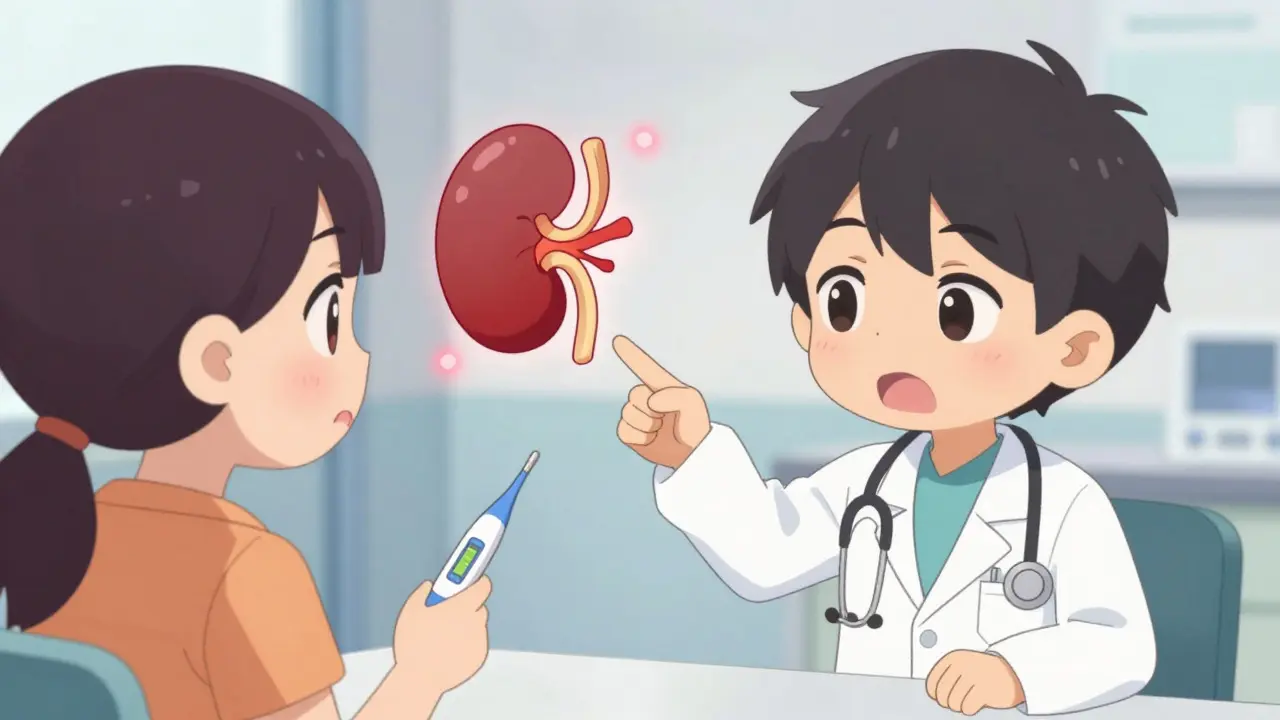
Acute rejection is what most people worry about. It typically strikes between one week and three months after surgery, though it can pop up anytime. About 15% of deceased-donor kidney recipients face this. Your body launches a sudden, aggressive immune response. The good news? Acute rejection is often reversible if caught early. Symptoms include tenderness or pain directly over the transplant site (seen in 65% of cases), fever above 100°F, and flu-like symptoms such as chills, headaches, and muscle aches. For kidney recipients, watch for decreased urine output and rapid weight gain-specifically 10+ pounds in 48 hours.
Chronic rejection is the silent killer. It develops gradually over months or years. Unlike acute rejection, there are rarely dramatic symptoms like fever or pain. Instead, you might notice a slow decline in organ function, persistent high blood pressure (systolic >140 mmHg), and progressive fatigue that rest doesn't fix. Because it creeps in slowly, many patients don't realize their organ is failing until significant damage has occurred.
| Type | Timing | Key Symptoms | Incidence Rate |
|---|---|---|---|
| Hyperacute | Minutes to Hours | Immediate organ dysfunction | <1% |
| Acute | 1 Week - 3 Months | Fever, pain at site, flu-like symptoms | ~15% (kidney) |
| Chronic | Months to Years | High BP, fatigue, gradual function loss | Varies by organ |
The Critical Role of Medication Adherence
If rejection is the enemy, non-adherence is the open door letting it in. Medical experts agree that skipping doses is the leading preventable cause of graft failure. Dr. Lloyd Ratner from Columbia University notes that non-adherence accounts for up to 22% of late graft losses in kidney transplantation. That makes it the second leading cause of losing an organ, right behind dying while the organ still works.
The math is unforgiving. The National Kidney Foundation states that adherence rates below 90% significantly spike your risk. For every 10% drop in how consistently you take your meds, your probability of graft failure jumps by 23%. Missing just 20% of your doses triples your chances of rejection compared to someone who takes every pill on time.
Why is it so hard? Because the standard regimen is complex. Most patients start with three classes of drugs:
- Calcineurin inhibitors (such as tacrolimus or cyclosporine, which suppress T-cell activity): These are the backbone of your defense. Tacrolimus requires strict monitoring, with target trough levels between 5-10 ng/mL in the first year.
- Antimetabolites (like mycophenolate mofetil or azathioprine, which stop cell division): These help prevent the immune system from multiplying cells that attack the organ.
- Corticosteroids (powerful anti-inflammatory drugs): Often used initially to calm severe inflammation.
In the first year, you might be swallowing an average of 12 pills daily. Add in side effects like tremors (affecting 40% of tacrolimus users) or hypertension (65%), and it’s easy to understand why some patients want to quit. But quitting means losing the organ.
Practical Strategies for Staying on Track
Willpower alone won’t cut it. You need systems. Data from the Texas Kidney Institute reveals that 78% of transplant centers now use electronic medication monitors that record every time a bottle opens. These devices show a stark reality: 45% of patients miss at least one dose per week during their first year. Here is how to beat the odds.
- Use Physical Organizers: Pill boxes aren't just for seniors. They are used by 63% of successful long-term recipients. Seeing an empty slot for Tuesday morning is a visual cue that stops you from forgetting later.
- Leverage Technology: Smartphone reminders improve adherence by 37%, according to a 2022 JAMA Internal Medicine study. Set alarms not just for "take meds," but for "check blood pressure" and "drink water."
- Enlist Family Support: Don't go it alone. Having a support system is associated with 28% lower rejection rates. Ask a partner or family member to do a weekly check-in on your pill box.
- Manage Side Effects Proactively: If tremors or nausea make you want to skip doses, tell your doctor. Adjustments can often be made without compromising protection. Never self-adjust.
Financial stress is another huge barrier. Annual medication costs can hit $28,000 without insurance. Work with your social worker to find patient assistance programs. Financial anxiety leads to missed doses, which leads to hospital bills that are far more expensive.

Monitoring and Emerging Technologies
The field of transplant medicine is moving from reactive treatment to proactive monitoring. The 2023 OPTN/UNOS guidelines now require centers to use structured adherence assessment tools. Many use the Basel Assessment of Adherence to Immunosuppressive Medications Scale (BAASIS) to evaluate risk.
New tech is helping too. Smart pill bottles that sync with mobile apps are being adopted by 35% of major centers. Early data from the Mayo Clinic shows these devices reduce rejection episodes by 22%. Additionally, pharmacogenomic testing is becoming standard. The FDA approved the XyGlo test in January 2023, which helps doctors tailor tacrolimus dosing to your specific genetic makeup, reducing toxicity risks.
Blood tests remain crucial. In the first month, you’ll likely have weekly checks. Biweekly in months two and three, then monthly for the rest of the first year. Creatinine levels are your primary indicator of kidney health. A rise of 0.3 mg/dL or more is a red flag that requires immediate attention.
Long-Term Outlook and Future Hope
The goal isn't just survival; it's quality of life. Studies from the University of Pittsburgh Medical Center tracking 15,000 recipients over 20 years show that patients maintaining 95%+ adherence have an 85% 10-year graft survival rate. Compare that to 42% for those with adherence below 80%. The difference is decades of life.
Research is also pushing toward "operational tolerance," where the body accepts the organ without lifelong drugs. The Immune Tolerance Network reported in October 2023 that 40% of participants in a combined stem cell-kidney transplant protocol achieved this state after 18 months. While not yet standard, it offers hope for a future with fewer pills and fewer side effects.
For now, your best bet is consistency. Treat your medication regimen with the same seriousness as the surgery itself. The operation gave you a second chance; your daily habits determine how long that chance lasts.
What are the first signs of acute transplant rejection?
The most common early signs include fever (over 100°F), tenderness or pain directly over the transplant site, and flu-like symptoms such as chills, headaches, and muscle aches. For kidney transplants, watch for decreased urine output and rapid weight gain (10+ pounds in 48 hours). Blood tests will also show elevated creatinine levels.
How much can I miss my medication before it becomes dangerous?
Missing even 20% of your doses triples your risk of rejection compared to fully adherent patients. The National Kidney Foundation warns that adherence rates below 90% significantly increase graft failure probability. Consistency is key; try to never miss a dose.
What is chronic rejection and how is it different from acute rejection?
Acute rejection happens suddenly, usually within weeks or months, with clear symptoms like fever and pain. Chronic rejection develops slowly over years. It often lacks dramatic symptoms, presenting instead as gradual organ function decline, persistent high blood pressure, and fatigue. It is harder to detect early.
Can smart pill bottles really help prevent rejection?
Yes. Data from the Mayo Clinic indicates that patients using smart pill bottles that sync with mobile apps experienced a 22% reduction in rejection episodes. These devices provide objective data on adherence, helping both patients and doctors identify patterns of missed doses early.
How often do I need blood tests after a transplant?
Frequency depends on how long ago you had your transplant. Typically, you'll need weekly blood tests in the first month, biweekly in months two and three, and monthly thereafter for the first year. After the first year, visits may become less frequent, but regular monitoring of creatinine levels remains essential.