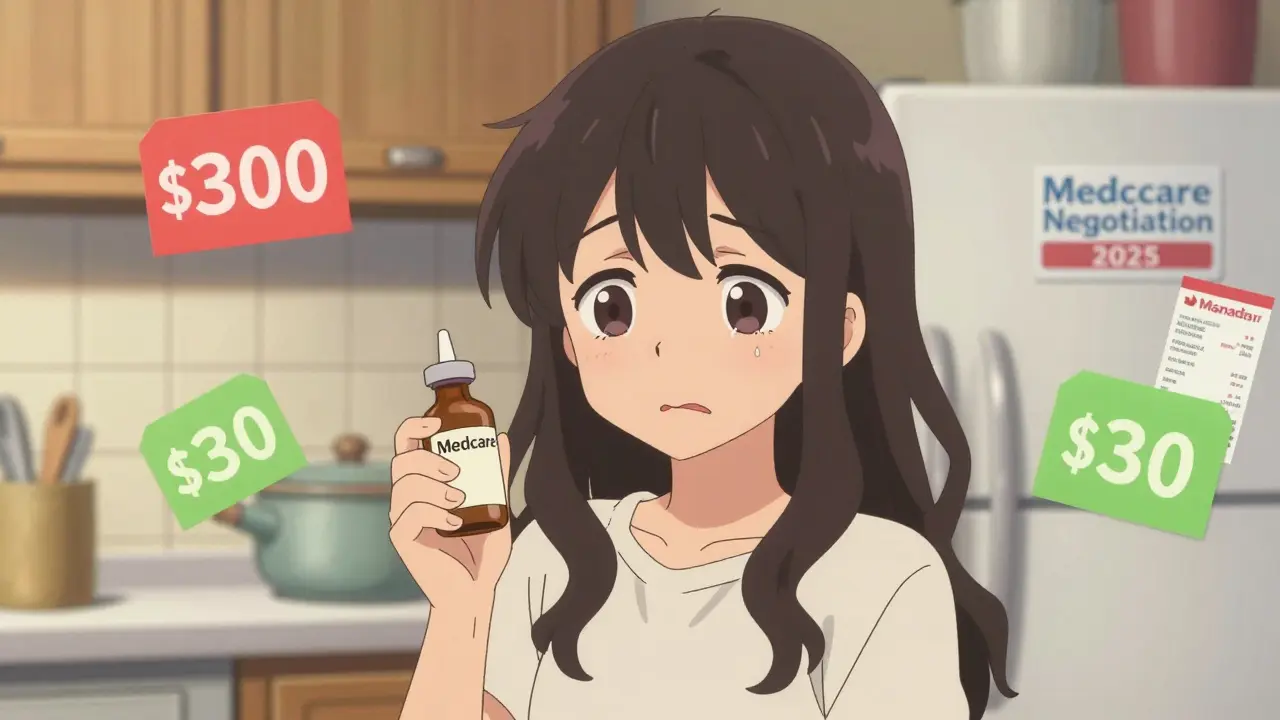
Why does a bottle of insulin cost $30 in Germany and $300 in the U.S.? Why do some people fly to Canada just to fill a prescription? The answer isn’t about quality, supply chains, or pharmaceutical companies being greedy-it’s about policy. Every country has its own system for deciding how much drugs cost, and those systems create wildly different outcomes for patients.
U.S. Drug Prices: High List Prices, Low Net Costs
The U.S. is often called the most expensive country for prescription drugs. And on paper, that’s true. For brand-name drugs, American list prices are more than four times higher than in other wealthy nations. A 30-day supply of Ozempic might carry a list price of $1,000 in the U.S., while it’s around $250 in the U.K. and $180 in Japan.
But here’s what most people miss: list prices aren’t what most Americans pay. The U.S. has the world’s largest generic drug market-90% of all prescriptions filled are generics. And those generics? They’re cheaper than anywhere else. A 30-day supply of metformin costs about $4 in the U.S., compared to $15 in Canada and $22 in Germany.
This split is key. The U.S. system lets drugmakers charge high prices for new, patented medicines-but it also forces pharmacies and insurers to negotiate deep discounts. The result? The average net price (after rebates and discounts) for all drugs in the U.S. is actually lower than in Canada, France, or Germany, according to a 2024 University of Chicago analysis.
How Other Countries Control Prices
Most other developed countries don’t rely on private negotiations. They use direct government control.
- France and Japan set fixed prices based on what they believe a drug is worth-considering its health benefit, not its development cost. If a drug doesn’t offer enough improvement over existing treatments, it gets a low price or gets rejected.
- Canada and the U.K. use external reference pricing. They look at what other countries pay and set their own price at or below the average of five to seven similar nations. If Germany pays $50 for a drug, Canada won’t pay more than $45.
- Australia negotiates prices directly with drugmakers through its Pharmaceutical Benefits Scheme. If a company won’t agree to the price, the drug doesn’t get listed on the national subsidy list. That’s why Australia has the lowest prices for Eliquis and Xarelto.
- Germany uses reference group pricing. If you’re prescribing a drug for high blood pressure, the government sets one price for all similar drugs in that group. If your doctor wants to prescribe the most expensive one, the patient pays the difference.
These systems keep prices down-but they also mean new drugs take longer to reach patients. In Japan, it can take 18 months longer for a new cancer drug to become available than in the U.S.
Medicare’s New Power to Negotiate
In 2022, the U.S. passed the Inflation Reduction Act-and for the first time, Medicare gained the legal right to negotiate prices for a small number of high-cost drugs. The first 10 were announced in 2023, with prices dropping in 2025.
Here’s what happened:
- Jardiance: Medicare price = $204. Average in 11 other countries = $52. That’s nearly four times higher.
- Stelara: Medicare price = $4,490. Other countries paid $2,822 on average.
- Enbrel: Medicare paid $3,100. Japan paid $750.
Even after negotiation, Medicare’s prices are still 2.8 times higher than the average of other OECD countries. Why? Because the law only applies to 10 drugs in the first year-and only to those used by Medicare beneficiaries, not private insurers. It’s a start, but far from a full fix.
Global Price Differences: It’s Not Just Rich vs. Poor
A 2024 study in JAMA Health Forum looked at 549 essential medicines across 72 countries. They didn’t just compare dollar amounts-they adjusted for how much people can actually afford. This is called purchasing power parity.
The results were shocking:
- In Lebanon, the price of essential medicines was just 18% of Germany’s baseline.
- In Argentina, prices were nearly six times higher than Germany’s.
- The Western Pacific region (including Australia, Japan, China) had the lowest overall prices.
- The Americas had the highest median prices-driven almost entirely by the U.S.
Even within regions, differences are huge. In India, a month’s supply of metformin costs less than $1. In the U.S., it’s $4. But a month’s supply of insulin in India can still cost $15-still unaffordable for many. Price isn’t just about the country-it’s about who’s paying.
Why the U.S. Still Pays More for New Drugs
The U.S. isn’t just expensive-it’s unique. Other countries are willing to say no to a drug if it’s too costly or offers little added benefit. The U.S. rarely says no. That means drugmakers know they can charge more here, and they do.
Drug companies argue that high U.S. prices fund global innovation. That’s partly true. The U.S. accounts for nearly half of global pharmaceutical R&D spending. But the link between high prices and innovation is weaker than claimed. Many top-selling drugs were developed with public funding (NIH grants, university research) before companies ever got involved.
And while the U.S. has more new drugs approved each year, it doesn’t have more breakthroughs. The same cancer drugs, diabetes treatments, and biologics are developed in the same labs in Switzerland, Germany, and the U.S.
What This Means for Patients
If you’re on a generic drug in the U.S., you’re likely paying less than people in most other countries. If you’re on a brand-name drug like Ozempic, Eliquis, or Enbrel, you’re paying far more.
And it’s not just about money. In countries with price controls, patients get access to drugs faster if they’re deemed essential. In the U.S., access depends on your insurance plan, your employer, and whether your doctor can prove medical necessity.
There’s also a hidden cost: people skip doses or split pills to make drugs last. A 2023 survey found that 1 in 4 Americans with diabetes reported cutting their insulin dose to save money. That’s not a personal choice-it’s a system failure.
What’s Next?
The U.S. is changing. By February 1, 2025, Medicare will announce the next 15 drugs it will negotiate prices for. That number will grow to 20 in 2026 and 30 in 2027. That’s still a small fraction of the 10,000+ drugs on the market-but it’s a start.
Other countries are watching. Canada is considering expanding its reference pricing system to include more brand-name drugs. The U.K. is testing new models that tie drug prices to real-world outcomes. Japan is pushing for faster approval of generics.
The bottom line? There’s no single best system. But every country except the U.S. has figured out how to balance affordability, access, and innovation. The U.S. still hasn’t.
Why are drug prices so much higher in the U.S. than in other countries?
The U.S. doesn’t regulate drug prices directly. Instead, drugmakers set list prices, and insurers negotiate discounts behind the scenes. Other countries use government price controls, reference pricing, or direct negotiation to cap costs. The U.S. also pays more for brand-name drugs because it rarely refuses to cover them, even if they’re expensive.
Are generic drugs cheaper in the U.S. than elsewhere?
Yes. The U.S. has the lowest prices for generic drugs in the world. For example, a 30-day supply of metformin costs around $4 in the U.S., compared to $15 in Canada and $22 in Germany. This is because the U.S. has a large, competitive generic market with hundreds of manufacturers and minimal regulatory barriers to entry.
Does Medicare now negotiate drug prices?
Yes. Starting in 2025, Medicare is negotiating prices for 10 high-cost drugs, with more to come each year. The first negotiated prices are already lower than the previous list prices-for example, Jardiance dropped from over $800 to $204. But these prices are still 2.8 times higher than the average in other OECD countries.
Why do some people travel to Canada or Mexico for medication?
Because in Canada and Mexico, drug prices are regulated and often much lower than in the U.S.-especially for brand-name drugs like insulin, Ozempic, or Eliquis. A patient paying $300 for a month’s supply of insulin in the U.S. might pay $35 in Canada. This is legal for personal use, though it’s not officially endorsed by U.S. authorities.
Do high U.S. drug prices fund global innovation?
It’s a common claim, but the evidence is mixed. While the U.S. does spend more on drug research, much of that funding comes from public sources like the NIH. Many top drugs were developed in university labs before companies stepped in. High prices don’t necessarily mean more innovation-they mean higher profits for companies.
What countries have the lowest drug prices?
Japan and France consistently have the lowest prices for both brand-name and generic drugs among wealthy nations. Australia also has very low prices for many medications due to its direct negotiation system. These countries use price controls, reference pricing, or both to keep costs down.
Can the U.S. lower drug prices without hurting innovation?
Yes. Countries like Germany, Canada, and Japan pay far less for drugs than the U.S. but still produce and license major innovations. They do it by setting fair prices, encouraging competition, and using public funding for early-stage research. The U.S. could do the same by expanding Medicare negotiation, speeding up generic approvals, and reducing patent abuse.