
When you’re dealing with sudden, intense pain-like after surgery, a bad back injury, or a toothache-taking one pill and hoping it’s enough can feel risky. That’s why many doctors and patients are turning to generic fixed-dose combinations for pain relief. These aren’t just two pills rolled into one. They’re carefully balanced mixtures of two active ingredients designed to work together better than either could alone. And thanks to recent approvals and growing evidence, these combinations are now more accessible, affordable, and widely used than ever before.
What Exactly Are Fixed-Dose Combinations?
A fixed-dose combination (FDC) is a single tablet or capsule that contains two or more pain-relieving drugs in set amounts. Unlike taking separate pills, an FDC delivers the exact ratio of each drug proven to work best together. This isn’t new science. The idea has been around since the early 2000s, but it’s only in the last few years that generic versions have become widely available and trusted.
The goal? To hit pain from multiple angles. For example, one drug might block inflammation at the injury site, while another tweaks how your brain processes pain signals. This is called multimodal analgesia, and it’s now a standard recommendation from the World Health Organization. Studies show these combinations often work better than doubling the dose of a single drug-and with fewer side effects.
Top Generic FDCs You Can Actually Buy Today
Not all pain combos are the same. Some are prescription-only. Others are sold over the counter. Here are the most common and well-studied generic fixed-dose products available right now:
- Tramadol + Acetaminophen (e.g., Ultracet generics): This one’s been around for years. Tramadol works on opioid receptors and boosts serotonin/norepinephrine. Acetaminophen blocks pain signals in the brain. Together, they’re effective for moderate to severe pain-especially dental pain or post-surgical recovery. The standard dose is 37.5 mg tramadol / 325 mg acetaminophen per tablet. Most brands now offer 75 mg / 650 mg extended-release versions too.
- Ibuprofen + Acetaminophen (OTC): Found in stores under names like Combunox generics. This combo is great for acute pain like headaches, sprains, or menstrual cramps. A 2023 Cochrane review found people using this combo after wisdom tooth removal needed rescue pain meds 40% less often than those on either drug alone. It’s also less likely to cause drowsiness than opioid combos.
- Tramadol + Diclofenac: Approved in Brazil, Europe, and parts of Asia since 2022. This pairing combines a weak opioid with a strong NSAID. A 2023 study showed it provided better pain control than 100 mg of tramadol alone after hip surgery. Peak pain relief hits within 2-3 hours. It’s now available as a generic in many countries.
- Drotaverine + Acetaminophen: Used mainly for abdominal cramps and kidney stones. Drotaverine relaxes smooth muscle. Acetaminophen handles the pain. In a randomized trial, patients reported noticeable relief within 2 hours-faster than either drug alone. This combo is not sold in the U.S. but is common in India, Brazil, and Eastern Europe.
- Dexketoprofen + Tramadol: A newer option, approved in Europe. Dexketoprofen is a fast-acting NSAID. Paired with 75 mg tramadol, it outperformed higher doses of either drug alone in hip replacement patients. Available as a generic in Spain, Italy, and Australia.
Why These Combos Work Better Than Single Drugs
Think of pain like a fire. If you only pour water on one side, the fire might still burn elsewhere. But if you hit it from all sides at once, you put it out faster.
Each drug in these combos attacks pain differently:
- NSAIDs (like ibuprofen, diclofenac): Reduce swelling and inflammation at the injury site.
- Acetaminophen: Blocks pain signals in the spinal cord and brain.
- Tramadol: Activates opioid receptors and boosts natural pain-blocking chemicals.
- Drotaverine: Relaxes muscle spasms that cause cramping pain.
When combined, they don’t just add up-they multiply. A 2023 study in the European Journal of Anaesthesiology showed tramadol/diclofenac FDC provided 40% more pain relief than either drug alone at the same total dose. That’s the “dose-sparing effect”: you get more pain control with less of each drug, which means fewer side effects.
Also, fewer pills to remember. One study found patients were 30% more likely to stick to their pain regimen when using a single FDC tablet instead of two separate pills.

Who Should Use These? Who Should Avoid Them?
These combos aren’t for everyone. Knowing who they help-and who they could hurt-is critical.
Good candidates:
- People with acute pain (post-op, injury, dental work)
- Those who didn’t get relief from single drugs
- Patients who struggle to take multiple pills daily
- People with moderate-to-severe pain who need fast, reliable relief
Watch out if you have:
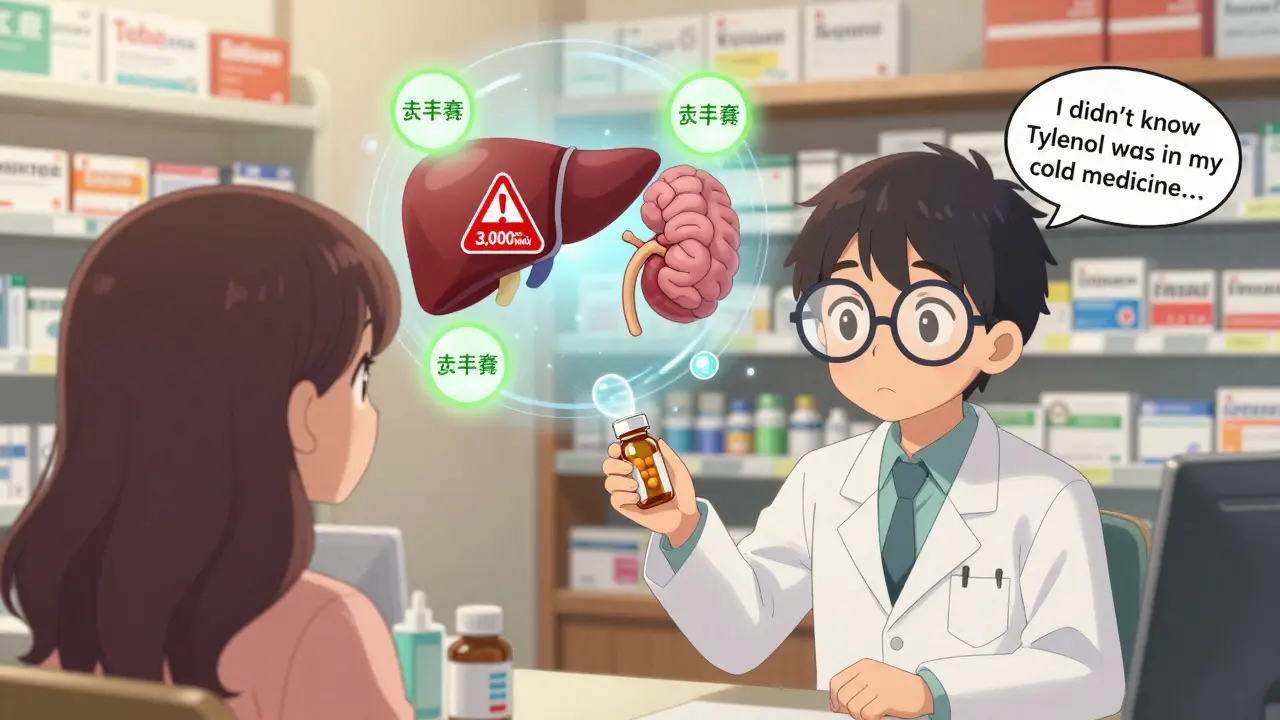
- Liver problems: Acetaminophen can damage the liver at high doses. Never exceed 3,000-4,000 mg per day. If you’re taking other meds with acetaminophen (like cold pills), you could accidentally overdose.
- Kidney disease or ulcers: NSAIDs like diclofenac or ibuprofen can worsen kidney function or cause bleeding. Avoid if you’re on blood thinners.
- History of opioid dependence: Tramadol is still an opioid. Even weak ones carry risk. Avoid if you’ve misused pain meds before.
- Depression or seizures: Tramadol can lower seizure threshold and interfere with antidepressants.
A 2022 FDA report found 22% of accidental acetaminophen overdoses came from people not realizing they were double-dosing with combination products. Always check every pill bottle you take.
Real-World Results: What Patients Actually Say
Numbers tell one story. Real people tell another.
On Drugs.com, generic tramadol/acetaminophen (Ultracet copies) has a 6.2/10 rating. The top praise? “Worked instantly for my toothache.” The top complaint? “Nausea and dizziness-I couldn’t drive.”
A Reddit thread from June 2023 with 142 users showed 68% said these combos were more effective than single drugs during flare-ups. But 72% admitted they’d stopped using them because of side effects.
In Brazil, where tramadol/diclofenac is widely used, 82% of patients reported high satisfaction. But 15% quit because of stomach upset. That’s why doctors here now start with lower doses and monitor closely.
The pattern? These combos work well-when they’re right for you. But they’re not magic. Side effects are real, and they’re often dose-dependent.
What’s New in 2024 and Beyond
The landscape is shifting fast.
In January 2024, the FDA released draft guidance on developing abuse-deterrent FDCs-meaning future versions may include features that make them harder to crush or misuse. That’s a big step toward safer opioid combinations.
Also in 2023, the WHO added tramadol/acetaminophen to its Model List of Essential Medicines for Acute Pain. That means it’s now officially recognized as a core treatment for emergency and surgical pain worldwide.
Market data shows this category is growing. The global FDC pain market hit $14.7 billion in 2022 and is expected to grow over 6% yearly through 2028. Generic manufacturers like Teva, Mylan, and Sun Pharma now produce over 37 approved versions of tramadol/acetaminophen alone in the U.S.
One emerging trend? “NSAID-sparing” combos. Instead of using high-dose ibuprofen, doctors are pairing lower doses with acetaminophen or tramadol to cut GI risks while keeping pain relief strong. This is now recommended by NPS Australia and other health bodies.
How to Use These Safely
If your doctor suggests an FDC, here’s how to make sure it’s safe and effective:
- Check all your meds. Look for acetaminophen in cold, flu, and sleep aids. Don’t exceed 3,000 mg daily.
- Don’t take longer than needed. Most FDCs are meant for 3-5 days max unless supervised. Long-term use increases liver, kidney, and addiction risks.
- Know your triggers. If you get dizzy or nauseated, talk to your doctor. It might be the tramadol. There are NSAID/acetaminophen alternatives without opioids.
- Use the lowest effective dose. Start with one tablet. Wait 6-8 hours before the next. Don’t “stack” doses.
- Store safely. Keep out of reach of kids. Even one extra tablet can be dangerous.
Many doctors say they need 2-3 cases to feel comfortable prescribing these. If you’re unsure, ask: “Is this combo right for me? What’s the risk if I take it longer than a few days?”
Final Thoughts
Generic fixed-dose combinations are changing how we treat acute pain. They’re cheaper, simpler, and often more effective than single drugs. But they’re not risk-free. The key is using them smartly-right drug, right dose, right time.
For most people with short-term pain, these combos are a smart upgrade. For others-especially those with liver issues, a history of addiction, or who take multiple meds-they’re a red flag.
Ask your pharmacist: “What’s in this pill?” Check the label. Know your limits. And never assume more is better. Sometimes, less-combined just right-is everything you need.
Are generic pain combination pills as effective as brand-name ones?
Yes. Generic fixed-dose combinations must meet strict bioequivalence standards set by the FDA, EMA, and other regulators. They contain the same active ingredients in the same amounts as brand-name versions. The only differences are in inactive ingredients (like fillers or coatings), which don’t affect how well the drugs work. A 2023 study comparing generic and brand tramadol/acetaminophen found identical pain relief and side effect profiles in over 1,200 patients.
Can I take a fixed-dose combo with other painkillers?
Generally, no-unless your doctor says so. Mixing FDCs with other NSAIDs (like aspirin or naproxen) or acetaminophen (like Tylenol or cold meds) can lead to overdose. For example, taking tramadol/acetaminophen plus extra Tylenol could push your daily acetaminophen intake over 4,000 mg-the limit linked to liver damage. Even one extra pill can be dangerous. Always check the active ingredients on every bottle.
Why aren’t all pain combo pills available in the U.S.?
The FDA requires proof that a combination offers a clear advantage over taking the drugs separately. Many combos approved elsewhere-like drotaverine/acetaminophen-haven’t been submitted for U.S. approval because the market is small or the regulatory path is expensive. Also, opioid-containing combos face extra scrutiny due to the opioid crisis. So while you can get tramadol/acetaminophen or ibuprofen/acetaminophen in the U.S., you won’t find some of the newer or non-opioid combos available in Europe or Latin America.
How long should I take a pain combination pill?
Most FDCs are meant for short-term use-3 to 5 days max-for acute pain like after surgery or injury. Long-term use increases risks: liver damage from acetaminophen, kidney stress from NSAIDs, or dependence on opioids like tramadol. If pain lasts longer than a week, see your doctor. You may need a different approach, not a stronger pill.
Do these combos help with chronic pain?
Not really. Most fixed-dose combinations are labeled for acute pain only. While some patients with chronic conditions (like arthritis or fibromyalgia) report short-term relief, long-term use is not recommended. The risks outweigh the benefits. For chronic pain, guidelines now favor non-drug therapies (physical therapy, exercise, cognitive behavioral therapy) or single-agent treatments with careful monitoring. FDCs are not a long-term solution.
What’s the difference between tramadol and codeine in these combos?
Tramadol and codeine are both opioids, but they work differently. Tramadol has a dual action: it binds to opioid receptors and also boosts serotonin and norepinephrine-making it effective for nerve-related pain. Codeine is converted to morphine in the liver, but not everyone metabolizes it well. Some people get no pain relief; others get too much, leading to dangerous side effects. Tramadol combos are more predictable, which is why they’ve largely replaced codeine in modern FDCs. Codeine combos are now rare in the U.S. and Europe.
Always talk to your doctor or pharmacist before starting any new pain medication-even if it’s generic or sold over the counter.
Stephen Rudd
March 11, 2026 AT 08:31Let me guess - you’re one of those people who thinks combining drugs is some kind of medical breakthrough. Newsflash: we’ve been doing this for decades. Tramadol + acetaminophen? That’s just a lazy way to get high while pretending you’re managing pain. And don’t get me started on the FDA’s ‘draft guidance’ - like they’re suddenly concerned about abuse when they spent 20 years letting pharma companies push opioids like candy. This isn’t innovation. It’s repackaging addiction with a fancy label and a Cochrane review. If you need two drugs to feel okay, you’re already dependent. Stop romanticizing polypharmacy.
Erica Santos
March 12, 2026 AT 14:36Oh wow. A 14-page essay on how to take two pills instead of one. Congrats, you’ve reinvented the wheel. Next up: ‘The Revolutionary Concept of Using a Spoon to Eat Soup.’ I love how every single combo is framed as this magical solution - except when it’s not. 72% of Reddit users stopped using them because of side effects? That’s not a feature. That’s a warning label written in blood. And yet here we are, treating these like dietary supplements. If you’re not getting your pain under control with one drug, maybe the problem isn’t the drug - it’s the diagnosis. Just a thought.
George Vou
March 13, 2026 AT 12:23Scott Easterling
March 14, 2026 AT 01:41Mantooth Lehto
March 14, 2026 AT 19:02Melba Miller
March 16, 2026 AT 00:48Let’s not pretend this isn’t about profit. The U.S. doesn’t approve most of these combos because they’re unsafe - they’re not approved because they’re not American-made. Tramadol/diclofenac? Available in Brazil. Dexketoprofen/tramadol? Sold in Spain. But in the U.S.? Not unless a U.S. company files the paperwork. And guess who files? The same companies that got rich off oxycodone. This isn’t about patient care. It’s about market control. If a foreign company made this, the FDA would bury it. But if a U.S. firm repackages a foreign combo? Suddenly it’s ‘essential.’ Wake up. The system is rigged. And we’re the ones swallowing the pills.
Katy Shamitz
March 16, 2026 AT 10:21Oh honey, I’m so glad you wrote this. I’ve been telling my friends for years - you don’t need to take five different pills for pain. One smart combo? Game changer. I had a herniated disc last year. Took me three months to find the right combo - ibuprofen + acetaminophen. No opioids. No drowsiness. Just relief. I used to think I was weak for needing help. Now I know I was just using the wrong tools. And don’t even get me started on how hard it is to find a doctor who actually understands multimodal analgesia. Most just hand you a script for oxycodone and call it a day. Thank you for validating what so many of us have been quietly doing. You’re not alone.
Nicholas Gama
March 16, 2026 AT 11:35