
Understanding Your Liver Health
Your liver is a workhorse. It filters toxins, processes nutrients, and manages energy storage. But when that hardworking organ gets overloaded with fat, trouble starts brewing. This condition used to be called Nonalcoholic Fatty Liver Disease, often abbreviated as NAFLD. However, medical experts increasingly refer to it as Metabolic Associated Fatty Liver Disease (MAFLD). The name change matters because it shifts the focus away from what you aren't doing (drinking alcohol) to what is actually happening metabolically.
This isn't just a minor glitch. About one in four people globally carries excess fat in their liver cells. In the United States, those numbers climb even higher, affecting roughly 30% to 35% of the population. While many cases stay mild, the stakes are high. Without intervention, this fatty buildup can evolve into scarring and permanent damage. The good news? Unlike some chronic conditions, liver fat is reversible if you act on the right pathways.
The Mechanics of Accumulation
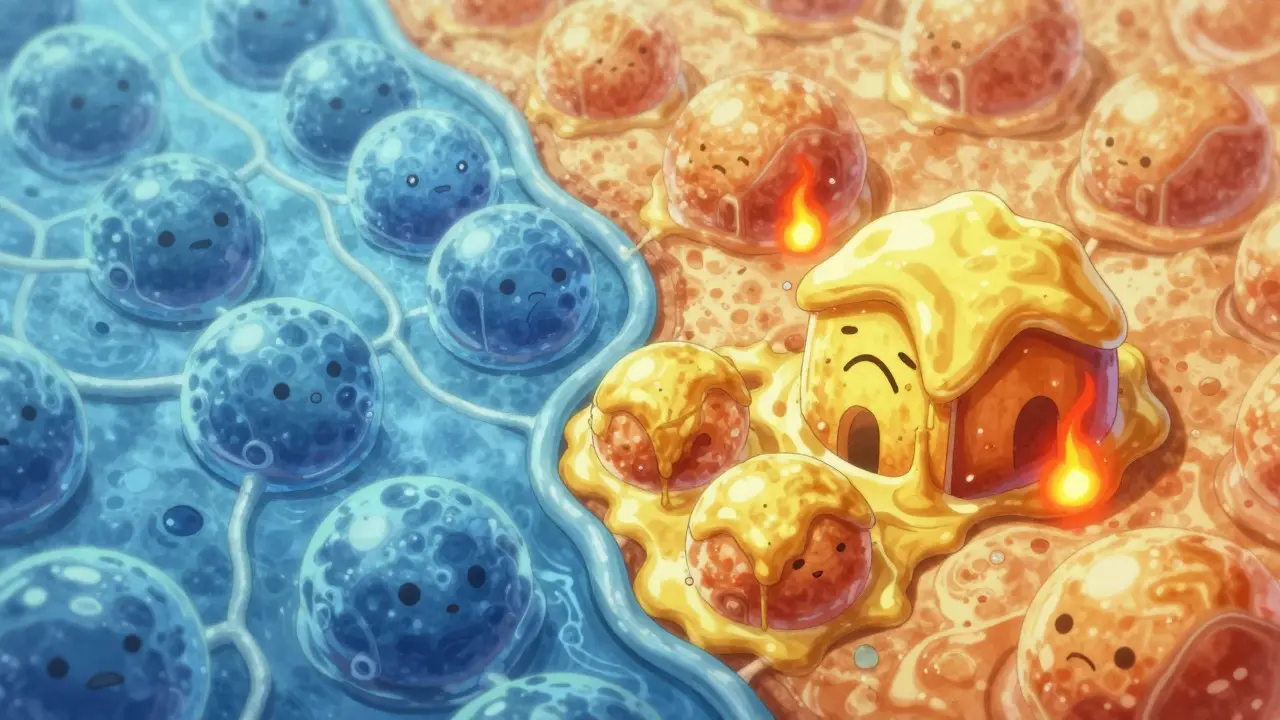
To fix the problem, you first need to know how it builds up. It's rarely caused by one single meal or habit. Instead, think of it as a traffic jam inside your liver cells. When your body becomes resistant to insulin-the hormone that tells cells to take in sugar-your adipose tissue starts spilling free fatty acids into your bloodstream. Your liver grabs these fats to store energy.
In a healthy system, this process balances out. But with metabolic dysfunction, two things happen simultaneously. First, the flood of fats coming from your body fat increases by 50% to 100%. Second, your liver starts making more fat from scratch, a process called de novo lipogenesis. Research using stable isotopes shows that in people with fatty liver, this internal fat production accounts for up to 26% of hepatic triglycerides, compared to only 5% in healthy individuals.
This creates a cycle where your liver is drowning in fat while trying to maintain glucose control. The result is Steatosis, which is simply the medical term for fat accumulation. When more than 5% of your liver cells contain fat droplets, that diagnosis is confirmed. If left unchecked, simple fat storage turns into inflammation.
From Fat to Scarring: The Progression Pathway
Not every case of fatty liver ends badly, but the risk is real. Many people stay at the simple steatosis stage forever. Others progress to Nonalcoholic Steatohepatitis (NASH). At this stage, the fat isn't just sitting there; it's irritating the cells, causing inflammation and cell death. Experts note that only 20% to 30% of patients advance to advanced fibrosis over a decade, but that still represents hundreds of thousands of lives affected annually.
Once NASH sets in, scar tissue begins replacing healthy tissue. This is fibrosis. If fibrosis spreads, it compromises blood flow and leads to cirrhosis. Cirrhosis is irreversible hardening of the liver. By the time symptoms appear-fatigue, abdominal pain, jaundice-the damage is often deep. Current projections suggest that NASH will become the leading reason for liver transplantation by the year 2030, highlighting why early detection is critical.
| Stage | Characteristics | Potential Outcome |
|---|---|---|
| Simple Steatosis | Fat accumulation >5% | Reversible with lifestyle changes |
| NASH | Inflammation + Cell injury | Risk of progression increases significantly |
| Fibrosis | Scar tissue formation | Can be slowed or stabilized, rarely fully reversed |
| Cirrhosis | Severe scarring/Hardened liver | Requires transplant in end-stage |
Proven Steps for Reversal
Reversing the condition requires addressing the root driver: metabolic health. You cannot pill your way out of this alone; lifestyle remains the cornerstone of therapy. The most effective metric to track is body weight reduction. A landmark study known as the LEAN trial showed that losing 7% to 10% of your total body weight can resolve NASH in up to 90% of participants.
You don't need a magic bullet diet, but specific macronutrients help. The Mediterranean Diet stands out in clinical data. This approach focuses on extra virgin olive oil, nuts, fish, and vegetables, providing about 40% carbohydrates, 35% fat, and 20% protein. Studies show this specific ratio improves liver enzymes and reduces fat within six months.
Exercise plays a vital role independent of weight loss. While aerobic exercise helps burn calories, combining it with resistance training yields better results for liver fat specifically. Aim for 150 minutes of moderate cardio plus two days of strength training per week. Even if the scale doesn't move, this combination improves insulin sensitivity, lowering the pressure on your liver to produce new glucose.
Medical Interventions and Future Treatments
If lifestyle adjustments aren't enough, medications offer support. For years, doctors had few tools. Vitamin E is one option for non-diabetic patients with NASH. Pioglitazone, a diabetes medication, has shown histological improvement in over half of diabetic patients with fatty liver, though it often causes modest weight gain as a side effect.
Newer agents target specific inflammatory pathways. Drugs like Cenicriviroc block chemical signals that recruit immune cells to the liver, reducing inflammation directly in the organ. More promisingly, GLP-1 receptor agonists, widely used for weight management, have shown dual benefits. Beyond helping you lose weight, they lower liver inflammation markers like TNF-alpha by 35% and reduce oxidative stress.
The landscape shifted significantly with the approval of Resmetirom. As of 2024, regulatory bodies granted approval for this thyroid hormone receptor-beta agonist specifically for treating moderate-to-severe fibrosis in MAFLD. It works by turning on genes that break down fat, effectively accelerating the liver's cleanup crew. Clinical trials showed significant NASH resolution compared to placebo, offering hope for patients who struggle with weight loss alone.

The Role of the Gut-Liver Connection
Your liver health isn't just internal; it's connected to your gut. Imagine the intestine and liver as neighbors sharing a fence. When your gut lining becomes permeable-a state often called "leaky gut"-bacterial toxins like LPS leak into the blood. The liver filters these toxins, triggering massive inflammation.
Researchers are finding that shifting the Gut Microbiome can improve liver outcomes. Probiotics like Lactobacillus rhamnosus GG have been shown in models to reduce intestinal permeability by 30%. Some pilot human studies suggest that fecal microbiota transplantation can improve hepatic steatosis by up to 30%, suggesting your digestive bacteria play a starring role in liver health.
Monitoring is essential. You shouldn't rely on symptoms. Ask your doctor about non-invasive testing like a FibroScan, which measures liver stiffness and fat content instantly. With insurance barriers dropping and technology becoming more accessible, getting baseline data allows you to track progress objectively rather than guessing based on fatigue levels.
Setting Realistic Expectations
Progress takes time. Don't expect overnight miracles. Patient surveys indicate that while 78% of people see improvement after sticking to a Mediterranean-style diet for six months, many describe the journey as frustratingly slow. One patient shared that maintaining discipline for 12 months reduced their fibrosis score from F3 to F1. Consistency beats intensity here.
Avoid the trap of quick-fix cleanses. Detox teas and juice fasts do not remove liver fat. The liver is already a detox organ; it needs nutrients to function, not starvation. Focus on sustainable habits you can maintain for the rest of your life. If you have type 2 diabetes, managing your HbA1c is directly linked to stabilizing your liver health.
Is fatty liver reversible?
Yes, especially in the early stages. Losing 7-10% of body weight has been proven to resolve nonalcoholic steatohepatitis (NASH) in most cases. Even milder weight loss of 3-5% can improve general fat levels.
What foods should I avoid with fatty liver?
Focus on cutting refined sugars and processed carbohydrates. These spike insulin and trigger the liver to make more fat. Limit saturated fats and trans fats found in fried foods and processed snacks. Prioritize fiber-rich whole foods.
Can medication cure fatty liver?
Medication supports recovery but does not replace lifestyle changes. New drugs like Resmetirom help resolve NASH and fibrosis, but they work best when combined with dietary improvements and exercise.
How do I know if my liver is healing?
Blood tests show improvement in liver enzymes like ALT and AST, but imaging is more accurate. A FibroScan test can quantify liver stiffness and fat content, giving a clearer picture of structural recovery than blood work alone.
Is alcohol safe if I have NAFLD?
Limiting or avoiding alcohol is generally recommended. Even if alcohol didn't cause the condition, your liver is compromised, and adding alcohol makes it harder for the organ to recover. Consult your doctor for personalized guidance.
Rod Farren
April 1, 2026 AT 02:53The distinction regarding de novo lipogenesis accounts for nearly a quarter of hepatic triglycerides in these patients which is staggering to consider. Insulin resistance triggers adipose tissue spillage leading directly to fatty acid flux into the portal vein circulation. We often underestimate the volume of internal lipid production versus dietary intake alone. This metabolic dysfunction creates a cycle of glucose dysregulation while trying to maintain energy homeostasis. Hepatic fat clearance pathways become saturated during sustained periods of positive energy balance. The inflammatory markers rise alongside the cellular stress response mechanisms in the hepatocytes. Understanding the biochemical cascade is crucial before attempting any therapeutic intervention strategies.
Molly O'Donnell
April 1, 2026 AT 04:36The statistics on NASH progression are absolutely frightening to read.
Eleanor Black
April 2, 2026 AT 03:08This article really highlights how critical early intervention is for maintaining organ function throughout life. 😢 Many people ignore their liver health until it is too late for effective reversal. We often think we feel fine when our organs are actually struggling internally. The data regarding insulin resistance is particularly concerning in the general population. It is important to understand that fat accumulation is silent and asymptomatic in the beginning stages. Diet adjustments should be made with sustainability in mind rather than extreme restriction. ⚠️ Quick fixes rarely lead to lasting metabolic improvements for anyone. Consistency is truly the most vital factor for recovery over time. 📈 Exercise provides independent benefits beyond weight loss numbers on a scale. Resistance training seems especially beneficial for liver function specifically. 💪 Medication helps but cannot replace foundational lifestyle changes completely. Resmetirom offers new hope for those with significant fibrosis already present. 🏥 Gut health plays a surprisingly large role in overall health outcomes as well. Probiotics may assist in managing intestinal permeability issues effectively. Everyone deserves access to accurate diagnostic testing tools like FibroScan. 🌟
Julian Soro
April 2, 2026 AT 17:51Great breakdown on the biochemistry involved here. The mention of stable isotopes really clarifies why diet alone sometimes feels insufficient. It is about stopping the internal production spike as much as reducing intake. We need more awareness on how insulin signaling drives that extra fat creation. Losing weight helps but targeting insulin sensitivity first is the smarter play. Keep spreading this kind of accurate information to help others take action. 🚀
Callie Bartley
April 3, 2026 AT 23:16It is always nice to see experts tell us what to eat again like we haven't heard this before. Why do we need fancy scans when we could just stop eating carbs entirely? The push for medication solutions feels suspicious given the profit incentives. Most people just need to eat less and move more without the complex theories. I am tired of the medical industry making everything sound complicated to sell tests.
Jenny Gardner
April 5, 2026 AT 07:12That perspective overlooks the significant biological drivers discussed in the text!!! Simple calorie reduction does not address the specific hormonal pathways causing de novo lipogenesis!!! Relying on basic advice ignores the complex interplay between gut microbiota and liver function!!! Ignoring medical advancements like Resmetirom denies help to those who struggle with weight loss due to genetics!!! Accurate diagnosis through scanning prevents late stage complications that basic advice cannot fix!!! Please consider the scientific nuance presented here before dismissing clinical progress!!!
Russel Sarong
April 6, 2026 AT 11:19The fact that one in four people globally carries excess fat is simply unacceptable!! It is shocking that 35% of the US population is affected by this condition today!!! We are sleepwalking into a massive epidemic of liver failure and transplants!!! The statistics on scar tissue formation are genuinely alarming!!! How many people will suffer irreversible damage before they even know they are sick??? It is time to take this metabolic crisis seriously!!! The potential for prevention is high but public awareness remains dangerously low!!!
Cullen Zelenka
April 6, 2026 AT 22:50It sounds scary but remember it is reversible in most early cases. People panic because they hear bad news without reading the recovery section. Small changes add up over months without needing a miracle cure. Just don't get bogged down by the scary percentages and focus on your own journey. Plenty of people have reversed their scores with steady effort.
Rocky Pabillore
April 7, 2026 AT 05:42It really comes down to self-control in my opinion. Those who claim metabolic dysfunction are usually just lacking discipline in their daily habits. Modern society is overly focused on finding external solutions like drugs rather than fixing behavior. People want the easy way out with pills instead of doing the hard work. Real health requires mental fortitude that seems to be missing in the average person. It is unfortunate that we cater to those unwilling to take responsibility for their own bodies. The underlying issue is laziness disguised as disease.
Owen Barnes
April 9, 2026 AT 01:22I beg to differ with teh assumption about discipline being the sole driver. Metabolic resistance is genetic for many lvoer conditions regardless of mindset. Blaming patients for biology often creates unnecessary guilt and shame. Research supports that genetics and environment interact significantly here. We should focus on structural support rather than moral judgment. Every body reacts differently to food and stress signals. Compassion helps more than criticism in promoting real change.
Arun Kumar
April 9, 2026 AT 14:52Family history plays a huge role in how we approach this issue. In many households the concept of shared meals makes individual diet changes difficult. We must educate communities on how subtle shifts impact everyone together. Supporting each other through meal prep and activity helps sustain motivation. Health is a collective journey that benefits from cultural acceptance of healthy foods. Building resilience against processed food marketing starts at home. Small steps taken together make the hardest parts of healing manageable.
James DeZego
April 11, 2026 AT 09:03I love seeing this focus on community support and shared meals 🙂. Family involvement really does change the outcome for chronic conditions. It takes a village to shift old habits for the better 🍲. Thanks for highlighting the social aspect of nutrition management 😊.
Sharon Munger
April 12, 2026 AT 10:06just do the diet work and stay consistent
Cara Duncan
April 12, 2026 AT 23:39Absolutely agree that consistency is the key 🎯. It isn't about perfection every single day. Just keep moving forward even when it gets slow 🐢. You got this and your body will thank you for the care ❤️. Remember to celebrate small wins along the way 🎉. Together we can build healthier futures for ourselves 💪.