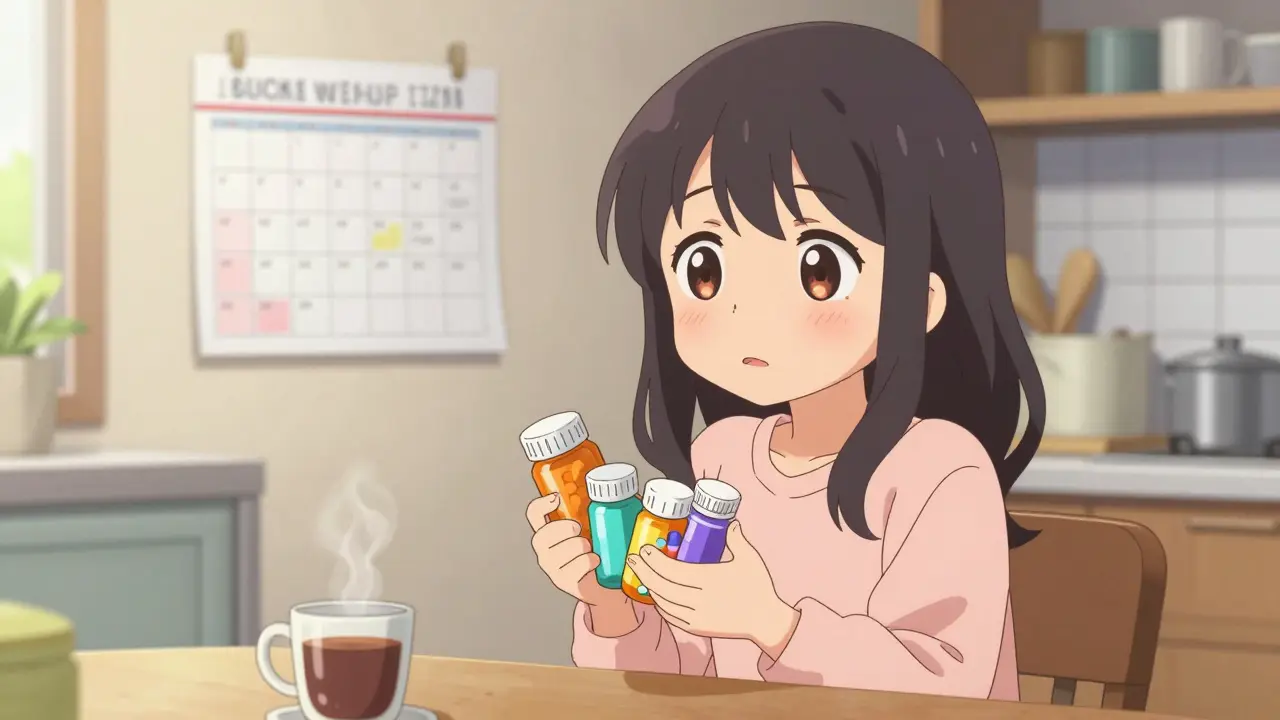
Imagine spending hours at the doctor’s office, getting a prescription that could save your life or manage a painful condition, only to have it sit unused in a cabinet. It sounds extreme, but it happens more often than you might think. In fact, medication adherence is the extent to which patients follow prescribed treatment recommendations in agreement with their healthcare provider. The World Health Organization flagged this as a major public health priority back in 2003 because they found that only about half of people with chronic illnesses actually take their long-term therapy as directed.
This isn't just about being forgetful. Poor adherence contributes to roughly 125,000 deaths annually in the United States alone and accounts for 30% to 50% of all treatment failures. Whether you are managing high blood pressure, diabetes, or heart failure, sticking to your regimen is the difference between staying healthy and ending up in the hospital. So, why do we struggle with something so critical, and what can you actually do about it?
Understanding Why We Miss Doses
To fix the problem, you first need to understand the root cause. Experts divide non-adherence into two main buckets: intentional and unintentional. Knowing which one applies to you changes the solution completely.
Unintentional non-adherence is when patients face practical barriers such as poor recall, complex regimens, or financial constraints despite intending to follow recommendations. This is the "I forgot" or "It's too complicated" category. A 2022 survey of over 1,200 patients found that 68% cited forgetting as the primary reason for missed doses. Another 42% said their regimen was just too complex to track mentally. If you fall here, you don't need a lecture on why meds are important; you need better systems.
On the other hand, Intentional non-adherence occurs when patients consciously decide not to follow treatment recommendations based on personal beliefs and risk-benefit assessments. Maybe you feel fine, so you stop taking blood pressure pills. Or perhaps you’re worried about side effects, or the cost is simply too high-61% of non-adherent patients report cost as a primary obstacle. These decisions require honest conversations with your doctor, not just a reminder app.
The Math Behind Your Regimen
Complexity is a silent killer of adherence. The American Medical Association (AMA) has clear data on this: adherence drops by approximately 2% for every additional daily dose you have to take. Think about that. If you are on a once-daily regimen, you have a 79% chance of sticking with it. But if your schedule requires four doses a day? That likelihood plummets to 51%.
If you are juggling multiple conditions, each additional diagnosis reduces your adherence by another 4% to 6%. This is why simplifying is key. Ask your doctor if any medications can be switched to extended-release versions or combined into single pills. Every reduction in daily tasks increases your odds of success significantly.
Low-Tech Tools That Actually Work
You don’t need the latest gadget to get started. Sometimes, the simplest solutions are the most reliable. Here are some tried-and-true methods:
- Pill Organizers: These are lifesavers for many. A weekly organizer lets you see at a glance if you’ve taken your morning dose. In patient surveys, 73% of positive reviewers cited blister packs or organizers as highly effective. They provide visual confirmation, removing the doubt of "Did I already take that?"
- Blister Packs: Many pharmacies offer automated blister packing services where your monthly meds are sorted into individual packets for each time of day. This removes the sorting effort entirely.
- Medication Lists: Keep an updated list of all your drugs, dosages, and reasons for taking them. Review this list with your pharmacist or doctor at every visit. It helps catch errors and ensures everyone is on the same page.

Digital Helpers and Apps
Technology has evolved to become a powerful ally in medication safety. Mobile health apps now represent about 35% of digital adherence solutions on the market. Apps like Medisafe is a leading mobile application that provides tailored reminders and educational content for medication management. have shown impressive results. Users in diabetes communities reported a 22% improvement in adherence after using these reminder systems.
However, technology isn't a silver bullet for everyone. About 57% of users over 65 report difficulty with smartphone apps. If you or a loved one struggles with tech, stick to physical organizers or ask family members to help set up simple alarms on a basic phone. For those who embrace it, electronic monitoring devices (EMDs) that track bottle openings can improve adherence by 15% to 20%, according to CDC research.
| Strategy | Best For | Effectiveness Boost | Cost | |
|---|---|---|---|---|
| Weekly Pill Organizer | Visual learners, simple regimens | Moderate | Low ($5-$15) | |
| Mobile Reminder Apps | Tech-savvy users, complex schedules | High (12-22%) | Free to Low | |
| Pharmacy Blister Packs | Multiple medications, elderly patients | High | Moderate (Service fee) | |
| Pharmacist Counseling | New prescriptions, side effect concerns | Very High (up to 15%) | Covered by insurance often |
The Role of Healthcare Providers
Your doctor and pharmacist are part of the team, not just dispensers of pills. The CDC recommends that providers use specific techniques to boost adherence during visits. One of the most effective is the "teach-back" method. After explaining your regimen, ask yourself or have your doctor ask you to explain it back in your own words. This simple step increases understanding by 35%.
Providers should also create a shame-free environment. Instead of asking "Are you taking your meds?" which invites a polite "yes," try open-ended questions like "Many people have trouble taking medications as prescribed-have you?" This normalizes the struggle and opens the door for honest discussion about barriers like cost or side effects.
Team-based care is also showing huge promise. Studies show that patients receiving pharmacist-led medication reconciliation and collaborative care achieve 89% adherence rates compared to 74% in control groups. Don't hesitate to ask for a consultation with your pharmacist, especially when starting new treatments.

Overcoming Financial Barriers
Let's talk money. Cost is a massive barrier. If you are skipping doses because you can't afford them, you are putting your health at serious risk. There are steps you can take:
- Ask for Generics: Generic drugs are chemically identical to brand-name drugs but cost significantly less. Always ask if a generic option is available.
- Patient Assistance Programs: Many pharmaceutical companies offer programs that reduce or eliminate costs for qualifying patients. Your pharmacist can help you navigate these.
- Coupon Cards: Services like GoodRx or manufacturer coupons can lower out-of-pocket costs at the pharmacy counter.
- Discuss Priorities: If you must choose, prioritize life-saving medications (like insulin or heart meds) over maintenance ones, and discuss this hierarchy with your doctor.
Building a Sustainable Routine
Adherence is a dynamic process, not a one-time fix. It involves initiation (taking the first dose), implementation (sticking to the schedule), and avoiding discontinuation (stopping prematurely). To make it stick, anchor your medication routine to existing habits. Take your morning pill with your coffee, or your evening pill right before brushing your teeth. This habit-stacking technique leverages neural pathways already established in your brain.
Also, monitor your progress. Some health systems now integrate adherence metrics into their records. If you have access to a patient portal, check your refill history. Seeing a gap in refills can be a wake-up call to reset your routine. Remember, the goal isn't perfection-it's consistency. Taking 80% or more of your prescribed medicine is considered adherent by medical standards. Aim for that, and don't beat yourself up over the occasional missed dose. Just get back on track immediately.
What is the difference between intentional and unintentional non-adherence?
Unintentional non-adherence happens when you want to take your meds but face barriers like forgetting, complexity, or cost. Intentional non-adherence occurs when you consciously decide not to take them due to beliefs about side effects, feeling better, or distrust in the treatment.
How much does medication complexity affect adherence?
Significantly. Adherence decreases by about 2% for each additional daily dose required. Once-daily regimens have a 79% adherence rate, while four-times-daily regimens drop to 51%. Simplifying your regimen is one of the best ways to improve compliance.
Are medication reminder apps effective?
Yes, for many people. Studies show apps like Medisafe can improve adherence by 12-22%, particularly for chronic conditions like diabetes. However, they may be less effective for older adults who struggle with smartphone technology.
What is the "teach-back" method?
The teach-back method is a communication tool where patients explain their medication regimen back to the provider in their own words. This confirms understanding and has been shown to increase comprehension by 35%.
How can I afford my medications if cost is a barrier?
You can ask for generic alternatives, use patient assistance programs from manufacturers, utilize coupon cards like GoodRx, or discuss prioritizing essential medications with your doctor. Never skip doses without consulting your healthcare provider.