
Imagine a patient leaves your office with a stack of brochures about their new diabetes medication. They nod politely, tuck the papers into their bag, and drive away. Did they actually understand how to take it? Can they spot the side effects? Most likely, you have no idea until they call back in three days with a complication. This is the gap between patient education and genuine understanding. Measuring education effectiveness isn't just about checking boxes; it’s about tracking whether a patient truly grasps the concepts needed to manage their health.
In healthcare, we often assume that information transfer equals learning. It doesn’t. To track generic understanding-the ability to apply knowledge across different scenarios-we need systematic assessment methods. These methods move beyond simple recall tests to evaluate if a patient can actually use what they’ve learned in real life. Whether you are a nurse educator, a physician, or a health coach, knowing how to measure this impact is critical for improving patient outcomes and reducing readmission rates.
The Core Problem: Why Traditional Methods Fail
We have long relied on indirect measures to gauge patient understanding. You might ask, "Do you have any questions?" or hand out a satisfaction survey at the end of a visit. While these tools provide some insight, they are flawed. A patient might say "yes" because they feel rushed, intimidated by medical jargon, or simply want to leave. Surveys measure perception, not competence. According to research from the NIH (2012), indirect measures like surveys and focus groups capture self-reported skills but fail to document actual behavior or knowledge retention.
This creates a dangerous blind spot. A patient may report high confidence in managing their insulin dosage but still administer it incorrectly at home. The disconnect between perceived understanding and actual capability is where adverse events happen. To fix this, we must shift toward direct assessment strategies that provide concrete evidence of learning. This means observing what patients do, not just listening to what they say.
Direct vs. Indirect Assessment: Choosing the Right Tool
To accurately track generic understanding, you need to balance two types of assessment: direct and indirect. Think of direct assessments as the proof of work and indirect assessments as the feedback loop. Both are necessary, but they serve different purposes.
| Assessment Type | Examples | Strengths | Limitations |
|---|---|---|---|
| Direct Assessment | Teach-back method, return demonstrations, simulated scenarios, case study analysis | Provides concrete evidence of skill acquisition; identifies specific knowledge gaps | Time-intensive; requires coordination with clinical staff; may feel evaluative to patients |
| Indirect Assessment | Patient satisfaction surveys, confidence scales, follow-up phone calls, alumni-style exit interviews | Easy to implement; captures patient perceptions and emotional responses; low cost | Does not prove actual competence; prone to social desirability bias; lacks specificity |
Direct assessments, such as the teach-back method or return demonstrations, allow you to see exactly what a patient knows. If a patient demonstrates how to inject themselves correctly, you have undeniable proof of learning. Indirect assessments, like asking a patient to rate their confidence on a scale of 1 to 10, help you understand their mindset and comfort level. Faculty Focus (2023) recommends a balanced approach: use mostly direct assessments for core competencies and supplement them with indirect measures to interpret the results and improve the educational delivery itself.
Formative vs. Summative Evaluation in Clinical Settings
Timing matters just as much as the method. In education theory, we distinguish between formative and summative assessments. In a clinical context, this distinction determines whether you are helping a patient learn in the moment or evaluating their final readiness.
Formative assessments are ongoing checks that happen during the educational process. For example, after explaining a new diet plan, you might ask the patient to list three foods they will avoid tomorrow. This provides immediate feedback. If they struggle, you can adjust your explanation right then. Cornell University’s Center for Teaching Innovation (2023) highlights techniques like "minute papers"-where students write down the most confusing part of a lecture-as highly effective for gauging comprehension in real-time. In healthcare, this translates to quick verbal checks or short quizzes embedded in counseling sessions.
Summative assessments, on the other hand, occur at the end of an instructional unit. This might be a final review before discharge, where the patient must demonstrate all key skills independently. Summative evaluations determine if the patient has met the required standards for self-care. ERB Learn (2023) notes that these assessments are crucial for determining overall mastery but offer little opportunity for correction if the patient fails. Therefore, formative assessments should dominate the early stages of patient education, while summative assessments confirm readiness at the transition points, such as hospital discharge.
Criterion-Referenced Approaches for Health Literacy
When measuring understanding, are you comparing the patient to other patients, or to a standard of care? Most traditional testing uses norm-referenced approaches, which rank individuals against each other. This is useless in healthcare. We don’t care if a diabetic patient understands their condition better than 50% of other diabetics; we care if they meet the safety threshold.
This is why criterion-referenced assessment is the gold standard for patient education. As explained by Prodigy Game (2023), criterion-referenced assessments compare individual performance against specific, fixed learning standards. For instance, instead of grading a patient’s response to a question on a curve, you check if they correctly identified the signs of hypoglycemia. Yes or no. This binary clarity helps identify precise learning gaps. If a patient misses a criterion, you know exactly which concept needs reteaching. Creating these assessments requires aligning every question or task with a specific health literacy goal, a process that ensures relevance and fairness.
Practical Implementation Strategies for Clinicians
You don’t need a degree in educational psychology to implement these strategies. However, you do need to integrate them into your workflow without adding excessive administrative burden. Here are practical steps to start tracking generic understanding today:
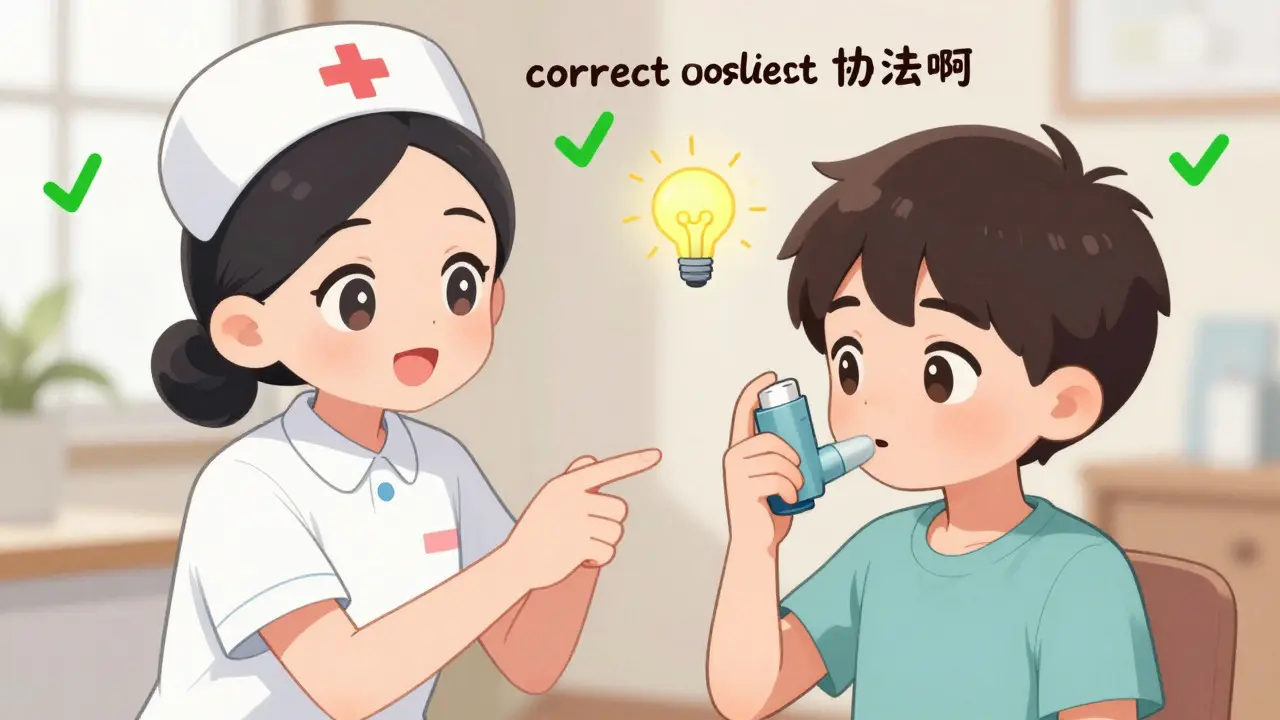
- Use the Teach-Back Method: Ask patients to explain the information back to you in their own words. This is a direct, formative assessment that reveals misunderstandings immediately.
- Implement Exit Tickets: Before a patient leaves, ask them to complete a one-question card or digital form: "What is the one thing you will do differently tomorrow regarding your health?" This provides actionable data on intent and understanding.
- Leverage Simulations: For procedural skills, use role-play. Have the patient act out a scenario, such as calling the clinic for advice when symptoms worsen. This assesses application, not just memory.
- Align Assessments with Outcomes: Define clear learning objectives first. What does "understanding" look like for this specific condition? Then, choose an assessment method that directly measures that objective.
- Combine Direct and Indirect Data: Use surveys to gauge patient confidence and satisfaction, but validate those perceptions with direct observation of skills. This holistic view prevents overestimating competence.
The University of Northern Colorado (2023) emphasizes that programs must first determine the questions they wish to answer with collected evidence. Are you trying to improve discharge protocols? Reduce medication errors? Tailor your assessment strategy to these specific goals. Don’t collect data just to collect it.

Overcoming Common Barriers
Implementing robust assessment strategies faces real-world hurdles. Time is the biggest constraint. Clinicians often feel pressured to move through appointments quickly, making detailed assessments seem impractical. However, investing time in formative assessment now saves time later by preventing complications and readmissions. A 40% reduction in the need for major reteaching was reported by K-12 educators using exit tickets (Teachers Pay Teachers forum, 2023), and similar efficiencies can be achieved in healthcare.
Another barrier is the intangible nature of some learning variables. Factors like affect, values, perceptions, and beliefs significantly influence health behaviors but are hard to measure with traditional tests. The NIH study (2012) cautions that performance measures may miss these nuances. To address this, incorporate open-ended questions and narrative reflections into your indirect assessments. Ask patients how they feel about their diagnosis or what barriers they anticipate. This qualitative data complements quantitative skill checks.
Finally, resistance to change among staff can stall implementation. Educate your team on the value of direct assessment. Show them how tracking understanding improves patient safety and job satisfaction by reducing chaotic emergency visits. Start small with pilot programs in high-risk areas, such as chronic disease management, and expand based on success.
The Future of Patient Education Assessment
The landscape of patient education is evolving rapidly. Technology is playing a huge role. The HolonIQ 2023 Global Education Technology Report projects that the assessment technology market will grow significantly, driven by competency-based and formative assessment tools. Artificial intelligence is emerging as a powerful ally. AI-powered adaptive assessments can personalize learning paths and provide real-time feedback, potentially becoming standard in higher education and healthcare training by 2027.
Moreover, there is a global shift toward "assessment for learning" rather than "assessment of learning." UNESCO’s 2022 Global Education Monitoring Report highlights that many countries are revising policies to emphasize formative approaches. This means focusing on continuous improvement and holistic development, including critical thinking and problem-solving skills. For patient education, this translates to empowering patients to become active partners in their care, capable of navigating complex health systems and making informed decisions.
As we move forward, the integration of multi-method assessment frameworks will become essential. Institutions are adopting three-tiered models (diagnostic, formative, summative) to ensure comprehensive coverage of learning outcomes. By embracing these advanced strategies, healthcare providers can bridge the gap between information delivery and genuine understanding, ultimately leading to better health outcomes for everyone.
What is the difference between direct and indirect assessment in patient education?
Direct assessment involves observing or measuring a patient's actual performance, such as through the teach-back method or return demonstrations. It provides concrete evidence of what the patient can do. Indirect assessment relies on self-reporting, such as surveys or confidence scales, which capture the patient's perception of their own understanding but do not prove competence.
Why is the teach-back method considered effective?
The teach-back method is effective because it is a direct, formative assessment tool. By asking patients to explain information in their own words, clinicians can immediately identify misconceptions and clarify them. It shifts the focus from whether the provider spoke clearly to whether the patient understood, ensuring accurate communication.
How can I implement formative assessments in a busy clinical setting?
You can implement formative assessments by integrating quick checks into your routine. Use brief verbal questions, one-question exit tickets, or short simulations. These methods take minimal time but provide valuable real-time feedback, allowing you to adjust your teaching approach instantly and prevent future misunderstandings.
What is criterion-referenced assessment?
Criterion-referenced assessment evaluates a patient's performance against a fixed set of standards or learning objectives, rather than comparing them to other patients. This approach is ideal for healthcare because it determines if a patient has mastered specific, essential skills required for safe self-care, regardless of how others perform.
Why are indirect assessments insufficient on their own?
Indirect assessments, like satisfaction surveys, only measure perception. A patient may feel confident but lack the actual skills to manage their condition. Relying solely on indirect measures can lead to false positives, where providers assume understanding exists when it does not, increasing the risk of adverse health events.