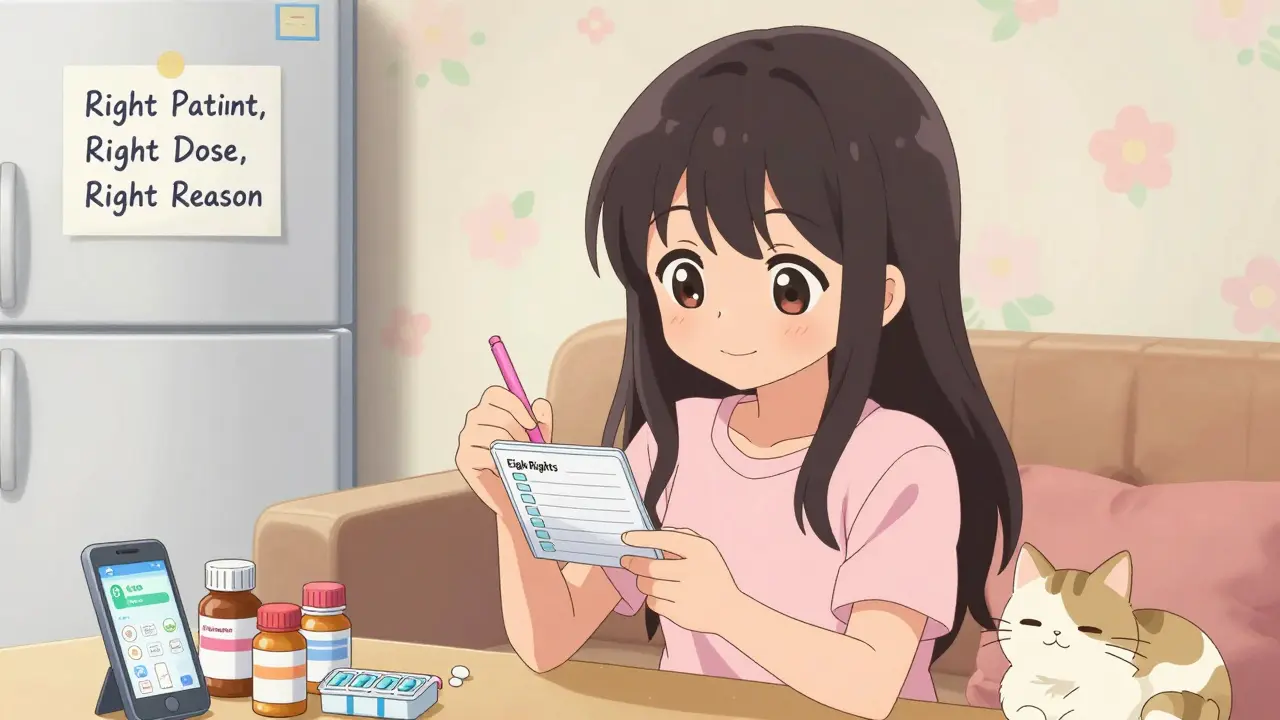
Every year, over 1.5 million people in the U.S. end up in the emergency room because of medication mistakes. Many of these aren’t accidents-they’re preventable. The problem isn’t always bad doctors or faulty pharmacies. Often, it’s a simple lack of understanding. If you don’t know what to ask, or how to recognize a red flag, you’re at risk. You don’t need to be a nurse or a pharmacist to protect yourself. You just need to know a few key terms-and how to use them.
Know the Eight Rights of Medication Safety
The foundation of medication safety isn’t complicated. It’s built on eight simple checks, often called the Eight Rights. These aren’t just for nurses. They’re for you. When you get a new prescription, use these as your checklist.- Right patient: Make sure they’re giving the medicine to you. Ask them to check your name and date of birth. Don’t let them skip this-even if you’ve been coming here for years.
- Right medication: Know the name of what you’re taking. Ask for both the brand name and the generic name. Many errors happen because drugs sound alike-like hydroxyzine and hydralazine.
- Right dose: Does this match what your doctor wrote? For liquids, know how many milliliters you’re supposed to take. A teaspoon isn’t always 5 mL. Use the measuring cup that came with it.
- Right route: Is this meant to be swallowed, injected, applied to the skin, or inhaled? Giving an IV drug by mouth can kill you. If you’re unsure, ask.
- Right time: Are you supposed to take this with food? Before bed? Every 6 hours? Write it down. Use your phone alarm. Missing doses or doubling up is a common mistake.
- Right reason: Why are you taking this? Not just “for blood pressure.” Ask: “Is this for my chest pain? My anxiety? My infection?” If you can’t answer that, you’re taking a pill blindfolded.
- Right documentation: Make sure your doctor and pharmacist know you took it. If you’re in the hospital, ask if they logged it. If you’re at home, keep a simple log. Even a note on your phone helps.
- Right response: Are you feeling better? Or worse? Did you get dizzy? Rash? Nausea? Track it. If something new shows up, call your provider. Don’t wait for your next appointment.
These aren’t just words. They’re your safety net. Studies show patients who ask about the right reason reduce their chance of getting the wrong drug by 37%.
Understand What an Adverse Drug Event Is
An adverse drug event (ADE) is any harm caused by a medicine. It’s not just an allergic reaction. It’s also taking too much, mixing drugs that shouldn’t be mixed, or even taking a drug for the wrong reason. ADEs include:- Severe dizziness from blood pressure meds
- Bleeding from blood thinners
- Low blood sugar from insulin
- Stomach bleeding from NSAIDs like ibuprofen
The CDC says ADEs are one of the top causes of preventable hospital visits. And the worst part? Many happen because patients didn’t know what to watch for. If you’re on a new drug, ask: “What are the warning signs I should call you about?” Write them down. Keep them next to your medicine.
Recognize High-Alert Medications
Some drugs are more dangerous than others. These are called high-alert medications. They’re not rare. In fact, you might be on one right now. They include:- Insulin
- Warfarin (blood thinner)
- Opioids like oxycodone
- Intravenous potassium
- Chemotherapy drugs
According to the Institute for Safe Medication Practices, these drugs cause 67% of fatal medication errors. That doesn’t mean you shouldn’t take them. It means you need to be extra careful. If you’re given one of these:
- Ask why it’s necessary
- Confirm the dose twice
- Check the label three times
- Know what to do if you miss a dose
Don’t be shy. Ask your pharmacist: “Is this a high-alert drug?” They’ll tell you. And they’ll explain what extra steps to take.
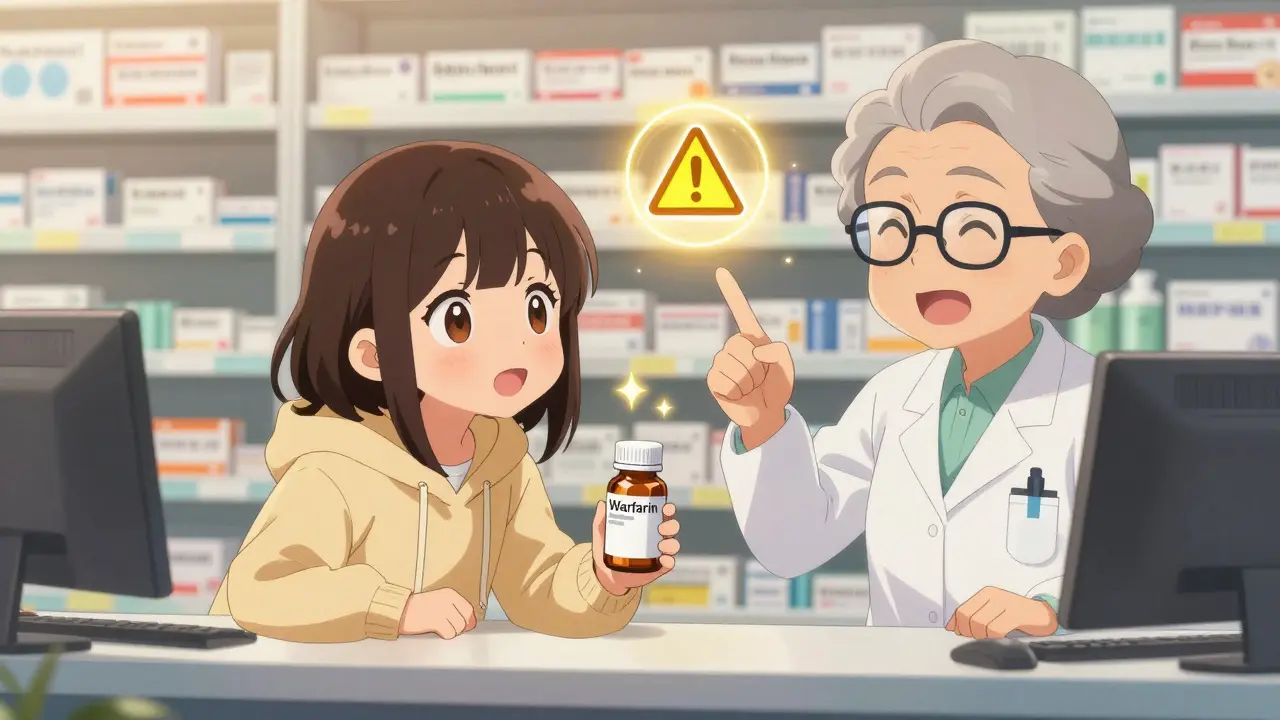
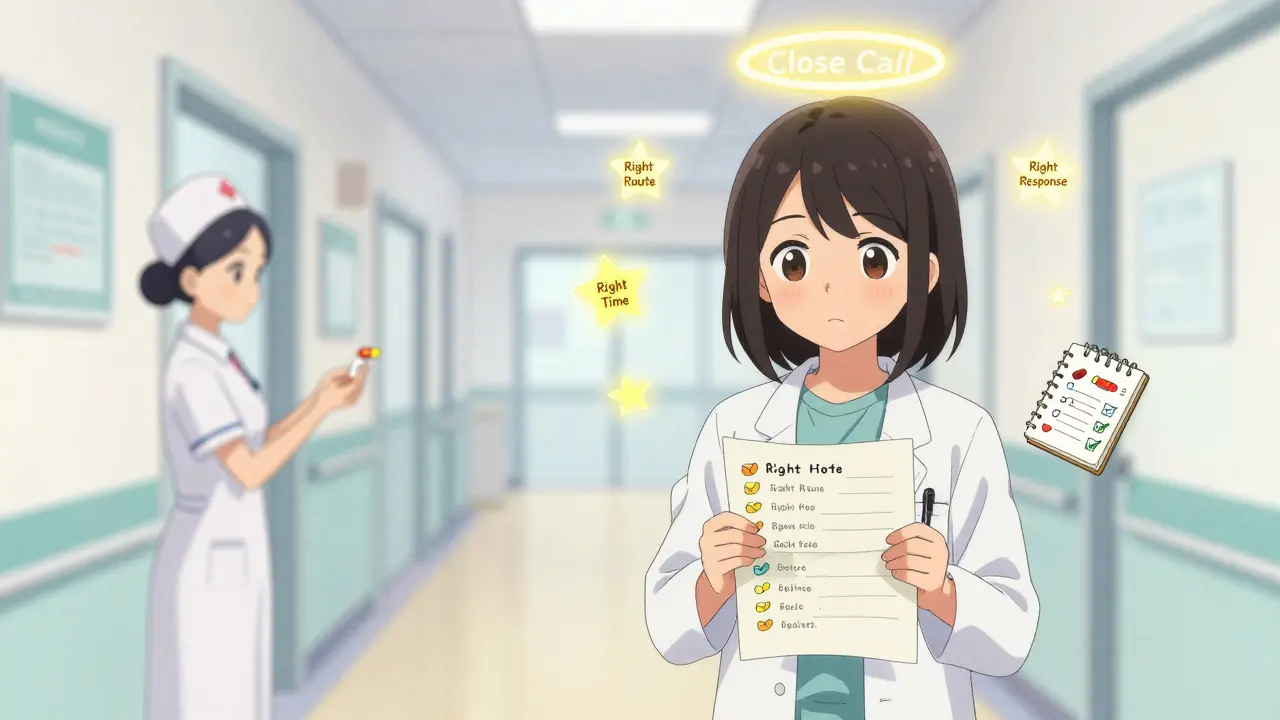
Know the Difference Between a Close Call and a Sentinel Event
You might hear these terms in the hospital or from your doctor. They sound scary, but they’re useful to understand.A close call is when something almost went wrong-but didn’t. Maybe the nurse almost gave you the wrong pill, but caught it at the last second. That’s not a failure. That’s a win. Report it. Hospitals use close calls to fix systems before someone gets hurt.
A sentinel event is much worse. It’s when a medication error causes death or serious injury. The Joint Commission tracks these. A patient dying from an overdose of morphine? That’s a sentinel event. These are rare-but they happen. And they’re preventable.
If you or a loved one experiences a close call, tell someone. Write it down. Say: “This almost happened to me. Can we make sure it doesn’t happen again?” You’re not complaining. You’re saving lives.
Use Your Tools to Stay Safe
You don’t have to remember everything. Use what’s already in your pocket.- Medication apps: Apps like Medisafe remind you when to take pills and check each dose against the Eight Rights before the alert goes off. Over 8 million people use them.
- Smartphone notes: Type out your meds: name, dose, time, reason. Share it with a family member.
- Paper list: Keep a folded list in your wallet. Include all prescriptions, vitamins, and supplements. Bring it to every appointment.
- Pharmacy visits: Ask your pharmacist to review all your meds at least once a year. They spot interactions doctors miss.
One study found patients who kept a written list reduced their medication errors by 31%. That’s not magic. That’s just being organized.
Why This Matters More Than Ever
We’re taking more medicines than ever. The average American adult takes four prescription drugs. Seniors often take ten or more. New drugs come out every year. Older ones get new uses. And our bodies change as we age.What worked last year might not be safe now. What your doctor prescribed for pain might interact badly with your new heart pill. That’s why knowing these terms isn’t optional. It’s essential.
Since 2018, the number of patients who ask about medication safety has gone up 22%. And guess what? Hospital errors from meds have dropped 17% in the same time. The data is clear: when patients speak up, people live longer.
What to Do Next
Start today. Don’t wait for a mistake to happen.- Write down every medicine you take-prescription, over-the-counter, vitamins, herbs.
- For each one, write the reason you take it. If you don’t know, call your doctor.
- Ask your pharmacist: “Are any of these high-alert drugs?”
- Download a free medication app and set up reminders.
- Next time you get a new prescription, ask: “Is this the right patient, right drug, right dose, right route, right time, right reason, right documentation, right response?” Say it out loud.
You’re not just a patient. You’re the most important part of your own safety team. No one else will check every box for you. But you can. And you should.
What if I don’t understand the medical terms my doctor uses?
Ask them to explain it in plain language. Say: “Can you explain this like I’m 12?” Most doctors will. If they get frustrated, that’s a red flag. You have the right to understand your care. You can also ask for a patient educator or pharmacist to help-many hospitals offer this for free.
Can I trust my pharmacist more than my doctor about medications?
You don’t have to choose. Your doctor decides what you need. Your pharmacist knows how it works, what it interacts with, and how to take it safely. They’re trained to catch errors. Always ask your pharmacist to review your full list of meds. They’re your best line of defense against dangerous combinations.
I’m on Medicare. Does this apply to me?
Yes, even more so. Medicare patients often take multiple medications. In fact, 40% of Medicare beneficiaries take five or more drugs daily. That’s why Medicare now requires a free Medication Therapy Management (MTM) session for eligible patients. Use it. Bring your full list. Ask about every pill.
What if I’m taking supplements or herbal remedies?
Those count too. St. John’s Wort can make your birth control fail. Garlic supplements can thin your blood like aspirin. Turmeric can interfere with diabetes meds. Always tell your doctor and pharmacist about every supplement-even if you think it’s “natural” or “harmless.”
How do I know if I’m having an adverse drug event?
Look for sudden changes: new rash, confusion, dizziness, nausea, swelling, unusual bleeding, or feeling worse instead of better. If you’re unsure, call your provider. Don’t wait. If you have trouble breathing, chest pain, or swelling in your throat, go to the ER. These are emergencies.
Is this advice different if I live in New Zealand?
No. The science behind medication safety is the same everywhere. The Eight Rights, high-alert drugs, and adverse drug events are global standards. New Zealand’s health system follows the same safety guidelines as the U.S., Canada, and the UK. The tools may look different, but the principles don’t change.
Final Thought: You’re the Last Line of Defense
No system is perfect. Doctors get tired. Pharmacies get busy. Technology glitches. But you? You’re always there. You hold the pills. You take them. You feel the effects. You know your body better than anyone else.Knowing these terms isn’t about being difficult. It’s about being smart. It’s about asking the right questions so you don’t become a statistic. Every time you say, “Can you check the dose?” or “Why am I taking this?” you’re not just protecting yourself. You’re helping make healthcare safer for everyone.
Ed Di Cristofaro
January 31, 2026 AT 22:43Man, I can't believe people still don't know this stuff. I gave my grandma a printout of the Eight Rights last year and she stopped going to the ER. She even corrects the nurses now. You think it's hard to ask questions? Try dying because you were too polite to say, 'Wait, that's not my name.' No more silence. Speak up or get buried.
vivian papadatu
February 1, 2026 AT 22:55This is one of the most important posts I've read in years. I'm printing this out and giving copies to my parents, my sister, and my elderly neighbor. Knowledge isn't power-it's survival. And the part about high-alert meds? I had no idea insulin was in that category. Thank you for writing this with such clarity. I'll be sharing it everywhere.
Nicki Aries
February 3, 2026 AT 14:17Oh my gosh. I just realized I’ve been taking my blood pressure pill at 7 a.m. instead of 8 p.m. for six months. I thought it was 'once a day'-I didn’t know timing mattered that much. I’m downloading Medisafe right now. Also, I’ve been hiding my turmeric supplements from my pharmacist because I thought they were 'just herbs.' I’m so embarrassed. Thank you for making me feel safe enough to admit this.
Naresh L
February 4, 2026 AT 02:21It's interesting how the structure of care-eight rights, sentinel events, close calls-mirrors the epistemological frameworks used in safety-critical systems elsewhere. The human element remains the most fragile variable. One wonders whether systemic reform alone can compensate for the cognitive load placed on patients. Perhaps the real innovation is not in the terms themselves, but in the cultural normalization of patient interrogation.
Sami Sahil
February 4, 2026 AT 16:58bro this is fire!! i showed this to my mom and she finally stopped mixing her pain meds with her heart stuff. i was like 'mom, you’re not a scientist, you’re a human' lol. download the app. write it down. ask dumb questions. they’re not dumb if you’re still alive.
franklin hillary
February 6, 2026 AT 05:39Let me tell you something-this isn’t advice. This is your lifeline. I’ve seen three people die from medication errors. One was my uncle. He didn’t know the difference between hydroxyzine and hydralazine. He thought the pharmacist was just being annoying when he asked for the generic. He was 68. He didn’t need to go. You think you’re being difficult? You’re being alive. Use the app. Write the list. Ask the question. Don’t wait until it’s too late. This is not a suggestion. This is your responsibility.
Bob Cohen
February 6, 2026 AT 07:06Wow. I’m so impressed someone actually wrote this without sounding like a corporate wellness pamphlet. I mean, I didn’t even know 'right reason' was a thing. I thought doctors just handed out pills like candy. Guess I’ve been living in a fantasy. Also, I’ve been taking melatonin for sleep for three years and never told my doctor. Oops. Guess I’m updating my list tonight.
Ishmael brown
February 7, 2026 AT 15:14So let me get this straight-we’re supposed to trust the same system that gave us OxyContin and the Vioxx scandal? And now we’re supposed to be the 'last line of defense'? That’s not empowerment. That’s a trap. They make the drugs, they mislabel them, they train nurses to rush, and then they blame YOU for not catching it? I’m not asking questions. I’m taking my chances.
Aditya Gupta
February 9, 2026 AT 05:53yes! ask for the generic name. write it down. use the app. its simple. dont overthink. your life is worth it.
Nancy Nino
February 10, 2026 AT 12:06While I commend the intent of this article, one must question the underlying assumption that patients possess the cognitive bandwidth, linguistic fluency, or emotional resilience to assume the role of pharmacovigilance officers. The burden of safety has been externalized onto the most vulnerable populations under the guise of empowerment. This is neoliberal healthcare in its most insidious form.
June Richards
February 11, 2026 AT 12:14Ugh. I’ve been saying this for years. Why do we need a whole blog post to tell us to read the label? I once took two Advil instead of one because I didn’t look. I’m fine. So what? Stop treating people like babies. You don’t need a checklist to not overdose. Just don’t be an idiot.
Jaden Green
February 12, 2026 AT 03:42Let’s be honest-this is just another performative piece of virtue signaling disguised as patient advocacy. The real issue is that pharmaceutical companies, with their $20 billion marketing budgets, have turned medicine into a commodity. The 'Eight Rights' are a Band-Aid on a hemorrhage. Meanwhile, the FDA approves new drugs faster than ever, and no one asks why. This article doesn’t challenge the system-it just asks you to play by its broken rules harder.
Lu Gao
February 13, 2026 AT 09:44I love this so much 😊 I’ve been using Medisafe since 2021 and it’s saved me from two potential disasters. One time it flagged that my new antidepressant and my OTC sleep aid were a bad combo. I called my pharmacist-turns out she’d caught it too. We both high-fived over the phone. Small wins, y’all. Keep asking questions. You’re doing great.
Angel Fitzpatrick
February 13, 2026 AT 10:37They don’t want you to know about the Eight Rights. They want you dependent. The entire medical-industrial complex is built on obfuscation. Insulin? High-alert? Of course. It’s the most profitable drug on the planet. Warfarin? They’ve been tweaking the dosing for decades to keep you coming back. And don’t get me started on the RFID chips they’re embedding in pill bottles under the guise of 'medication adherence.' This isn’t safety-it’s control. They’re training you to be a compliant drone. Don’t fall for it. Question everything. Even this post.