
You’re here because pain and swelling are shouting louder than your day. Maybe it’s a gout flare that woke you at 3 a.m., or a shoulder tendon that hates you every time you reach for the top shelf. Indomethacin-sold as Indocin-can help. But it’s also one of the punchier NSAIDs, with real risks if you wing it. I’ll give you the clear, yes-or-no answers you clicked for: what it’s for, how to dose it, what to avoid, and smart alternatives if it’s not a fit. When my husband Adrian had a brutal gout attack last winter, we learned fast what works, what backfires, and what actually lets a household with a kid (hi, Ianthe) get some sleep again.
- Fast take: indomethacin reduces inflammation and pain from gout flares, arthritis, bursitis, and tendinitis; it’s strong, and not for casual aches.
- Dose basics: adults usually start at 25-50 mg two to three times daily; for gout, 50 mg three times daily short-term. Max: 200 mg/day (immediate‑release); 150 mg/day (extended‑release).
- Serious risks: heart attack/stroke and stomach bleeding can happen without warning-use the lowest dose for the shortest time.
- Avoid if pregnant after 20 weeks; be careful with blood thinners, SSRIs/SNRIs, ACE inhibitors/ARBs/diuretics, lithium, methotrexate, and alcohol.
- Alternatives: naproxen, colchicine, or steroids for gout; topical NSAIDs for joints; disease‑modifying meds for inflammatory arthritis.
What it is, what it treats, and how it works
Indocin is a brand of indomethacin, a nonsteroidal anti‑inflammatory drug (NSAID). It blocks COX enzymes that make prostaglandins-those chemical messengers that dial up swelling and pain. It’s stronger than everyday ibuprofen and often used when other NSAIDs didn’t cut it.
Common reasons doctors prescribe it:
- Gout flares: short bursts to calm a hot, swollen joint fast.
- Osteoarthritis and rheumatoid arthritis: relief of joint pain and stiffness.
- Ankylosing spondylitis: back pain and stiffness in the spine.
- Bursitis and tendinitis: shoulder, elbow, hip flare-ups that need a stronger anti‑inflammatory.
Special uses (handled by specialists):
- Headache disorders: diagnostic and therapeutic trials in hemicrania continua and paroxysmal hemicrania where indomethacin response is classic.
- Closing a patent ductus arteriosus (PDA) in premature infants: done in the NICU with IV dosing and strict monitoring.
Speed: many people feel relief within 30-60 minutes after a dose; swelling starts easing over 24-48 hours. For Adrian’s big‑toe gout flare, the first 50 mg dose didn’t make it vanish, but by the third dose the stabbing pain fell to a growl and he could walk again.
Who it’s not great for: if you have a history of stomach ulcers or bleeding, severe kidney disease, uncontrolled high blood pressure, heart failure, or you’ve had a recent heart attack or bypass surgery. People with asthma with nasal polyps or past NSAID reactions should avoid it unless cleared by a doctor.
Why doctors still choose it: it works when you need quick, tough anti‑inflammatory power-especially in gout and tendon/bursa flares-while keeping steroid side effects off the table. But the power comes with rules.
Dosing, how to take it, and safety rules
Plain-English dosing guide for adults (your doctor may tailor this):
- Osteoarthritis/Rheumatoid arthritis/Ankylosing spondylitis: 25 mg two or three times daily; increase by 25-50 mg per day at intervals if needed. Maximum: 200 mg/day (immediate‑release). Extended‑release 75 mg once or twice daily; maximum 150 mg/day.
- Acute gout flare: 50 mg three times daily for 2-3 days, then 25-50 mg two to three times daily until the flare settles (usually 5-10 days total). Do not exceed 200 mg/day.
- Bursitis/Tendinitis: commonly 25-50 mg two or three times daily for 1-2 weeks, then taper off.
- Rectal suppository (if oral meds are a no-go): 50 mg two to three times daily.
Important limits come from the FDA-prescribing information and standard references (DailyMed label, updated 2025). Extended‑release and immediate‑release forms have different maximums, and you should not exceed them.
| Condition | Typical adult start | Max daily dose | Time to feel effect | Notes |
|---|---|---|---|---|
| Gout flare | 50 mg three times daily | 200 mg (IR) | 30-60 min pain relief; 24-48 h swelling | Short course only; hydrate; add stomach protection if high risk |
| Osteoarthritis/RA/AS | 25 mg 2-3×/day | 200 mg (IR) or 150 mg (ER) | Within hours for pain; days for stiffness | Use lowest effective dose; reassess often |
| Bursitis/Tendinitis | 25-50 mg 2-3×/day | 200 mg (IR) | 24-72 h | Plan to taper off in 1-2 weeks |
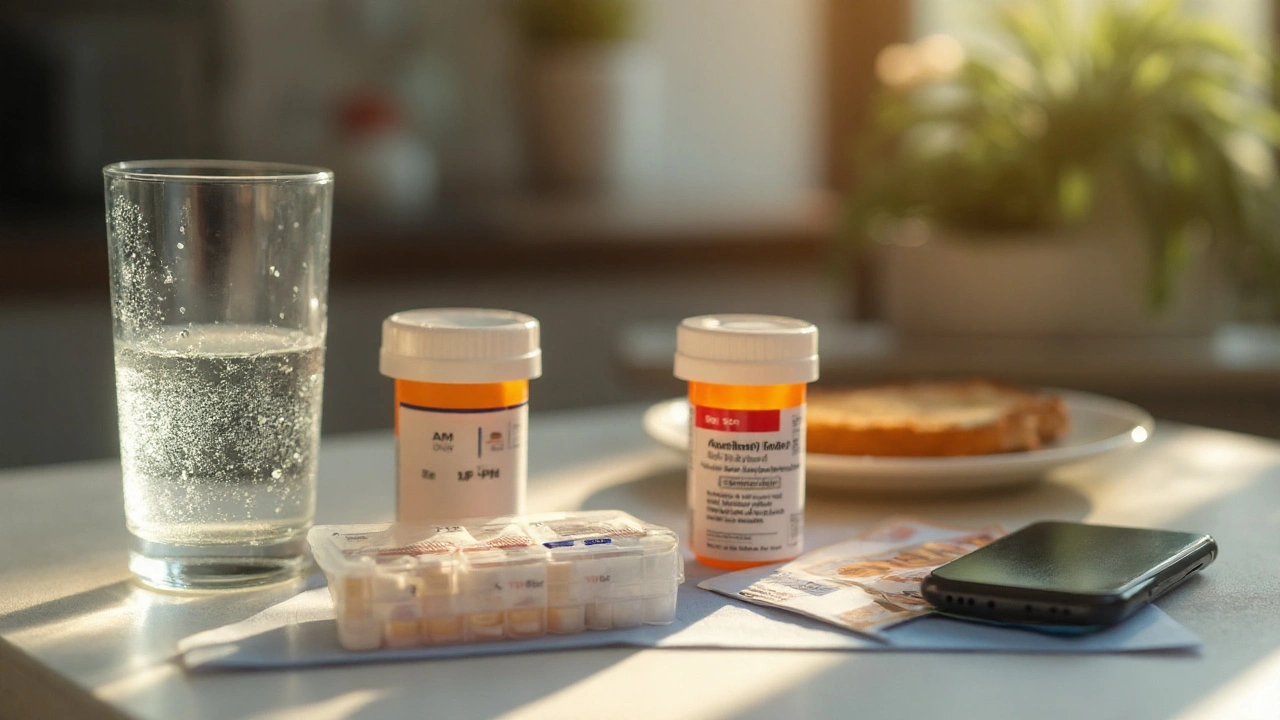
How to take it so your stomach and heart don’t hate you:
- Take with food or milk and a full glass of water. Don’t lie down for 10 minutes after swallowing.
- Stick to the same form your doctor prescribed (immediate‑release vs. extended‑release). Do not crush or split extended‑release capsules.
- Avoid doubling up with other NSAIDs (ibuprofen, naproxen, diclofenac, celecoxib) or aspirin used for pain. This piles on risk without better relief.
- If you’re on daily low-dose aspirin for your heart, ask your clinician how to time doses; mixing NSAIDs with aspirin can blunt aspirin’s effect and raise bleeding risk.
- Skip alcohol while you’re using it-this combo invites stomach bleeding.
- Hydrate, especially if you’re also on diuretics (water pills). Dehydration plus NSAIDs is rough on kidneys.
- Driving/machinery: wait and see how you feel. Dizziness, drowsiness, or blurred vision can happen.
Missed dose? If it’s close to the next one, skip and continue the schedule. Don’t double up.
How long can you stay on it? For flares, think days-not weeks. For chronic conditions, doctors aim for the lowest dose for the shortest time, with regular checks of blood pressure, kidneys, and stomach risk.
Who should ask before using even one dose:
- Pregnancy: FDA advises avoiding NSAIDs at 20 weeks or later due to fetal kidney problems and reduced amniotic fluid; near the third trimester there’s risk of early ductus arteriosus closure. If you’re trying to conceive or pregnant in the first half, talk to your OB first. This guidance comes from FDA Drug Safety Communications (2020 onward).
- Breastfeeding: small amounts get into milk. Short courses are often considered, but discuss with pediatrics if your baby is preterm or has kidney issues.
- Age 65+: start low, go slow. Higher risk of bleeding and kidney strain.
- Kidney, liver, heart disease, high blood pressure, past ulcers/bleeding: you need a personalized plan, often with a stomach protector (like a PPI) or a different drug.
Side effects, interactions, and red flags you don’t ignore
Common side effects:
- Heartburn, stomach pain, nausea
- Dizziness, drowsiness, headache (indomethacin has a “headachy” reputation at higher doses)
- Fluid retention, swelling in legs
- Ringing in ears, blurred vision in some
Serious risks (can happen without warning):
- Stomach/intestinal bleeding or ulcers: black stools, vomit that looks like coffee grounds, severe stomach pain
- Heart attack or stroke: chest pain, shortness of breath, weakness on one side, slurred speech
- Kidney injury: peeing less, swelling, sudden fatigue
- Liver problems: yellow skin/eyes, dark urine, right‑upper‑belly pain
- Severe skin reactions (rare): rash with blisters, peeling skin, mouth sores
- Allergic reactions: wheeze, swelling of face/lips, hives, sudden drop in blood pressure
If any of those show up, stop the drug and get urgent care.
High‑risk combos to avoid or clear with your prescriber first:
- Blood thinners: warfarin, apixaban, rivaroxaban, dabigatran-bleeding risk shoots up.
- Antiplatelets: clopidogrel; combining increases GI bleeding risk.
- SSRIs/SNRIs: sertraline, fluoxetine, venlafaxine-additive bleeding risk in the gut.
- ACE inhibitors/ARBs and diuretics: lisinopril, losartan, furosemide-together with NSAIDs can strain kidneys (“triple whammy”).
- Lithium: levels can climb to toxic; needs level checks or a different pain plan.
- Methotrexate: NSAIDs can raise levels; monitor or avoid around dosing days.
- Cyclosporine or tacrolimus: higher kidney risk.
- Other NSAIDs (including topical diclofenac): total exposure adds up.
- Alcohol and corticosteroids: more GI bleeding risk.
- Herbals that thin blood: ginkgo, high‑dose garlic, ginseng, fish oil-use caution.
Monitoring checklist your clinician might use if you’re on it more than a short burst:
- Blood pressure
- Serum creatinine/eGFR (kidney function) before and during treatment, especially if dehydrated or on ACE/ARB/diuretic
- CBC and liver enzymes for longer courses
Black box warnings (from the FDA label):
- Increased risk of serious cardiovascular thrombotic events, including MI and stroke
- Increased risk of serious GI bleeding, ulceration, and perforation
- Contraindicated for peri‑operative pain in coronary artery bypass graft (CABG) surgery
Who should avoid it outright or get specialist input:
- History of NSAID‑triggered asthma or anaphylaxis
- Active GI bleeding or recent ulcer complications
- Severe kidney disease not on dialysis
- Advanced liver disease with coagulopathy
- Right after CABG surgery
Alternatives, checklists, and your next steps
If Indocin isn’t your match (or your risks are high), you have options. Here’s how doctors often think about it in 2025, drawing on FDA labeling, the American College of Rheumatology’s gout guidance (2020), and common clinical practice.
By condition:
- Gout flare: naproxen or ibuprofen (if lower risk), colchicine (best if started early), or a short oral steroid taper (like prednisone) if NSAIDs aren’t safe. Ice, elevate, and rest the joint.
- Osteoarthritis: topical NSAIDs (diclofenac gel) for knees/hands, physical therapy, weight support (shoe inserts, braces), heat/ice. Acetaminophen can help pain but doesn’t fight inflammation.
- Rheumatoid arthritis/axial spondyloarthritis: NSAIDs are for symptoms. Long‑term control needs disease‑modifying therapy (methotrexate, biologics)-this is rheumatology territory.
- Bursitis/Tendinitis: rest, ice, physical therapy, taping, and if needed, a targeted steroid injection rather than weeks of pills.
- Headache disorders (hemicrania continua/paroxysmal hemicrania): this is a neurologist’s playbook; if indomethacin works but causes side effects, dose‑sparing strategies or other agents may be tried.
Quick-start action plan (step-by-step):
- Confirm the target: is this a gout flare, bursitis, or long‑standing arthritis pain? Wrong target, wrong tool.
- Check your risk: any history of ulcers, heart disease, kidney problems, pregnancy past 20 weeks, or meds on the interaction list? If yes, call your clinician first.
- Pick the smallest useful dose: most adults start at 25-50 mg. For gout, 50 mg three times daily for the first 48-72 hours is common-then taper.
- Protect your gut: ask about a PPI if you’re 65+, had a past ulcer, or you’re on aspirin, steroids, or an SSRI/SNRI.
- Set a stop date: flares rarely need more than 5-10 days. If you’re not better in 48 hours-or you’re worse-reassess.
Real‑life scenario calls:
- Gout not improving after 48 hours: call your clinician. You might need a steroid burst or colchicine added. Don’t keep escalating the dose.
- Stomach burning after each dose: pause and call. You may need a PPI, a lower dose, food with each dose, or a different drug.
- You forgot a dose: take it when you remember unless it’s close to the next one. Never double up.
- Blood pressure spikes: check readings twice daily and share with your clinician. NSAIDs can raise BP.
- New ankle swelling or peeing less: stop the drug and call-kidneys may be unhappy.
Cheat-sheet: the do/don’t list I keep on my fridge when a flare hits our house
- Do: take with food and water; space doses evenly; use ice and elevation for flares; sleep as much as you can (healing loves rest).
- Do: log your other meds; tell your clinician if you’re on blood thinners, SSRIs/SNRIs, ACE/ARB, diuretics, lithium, or methotrexate.
- Do: ask for a stomach protector if you’ve ever had a GI bleed or you’re 65+.
- Don’t: stack with ibuprofen, naproxen, or diclofenac. One NSAID at a time.
- Don’t: drink alcohol on it. Your stomach lining will not thank you.
- Don’t: use in pregnancy after 20 weeks. If you’re not sure you could be pregnant, pause and check.
Questions you’re probably asking (mini‑FAQ)
- Is Indocin stronger than ibuprofen? It’s more potent per milligram and often better for gout flares and certain tendon/bursa pains. Potent also means stricter safety rules.
- Can I take it with Tylenol (acetaminophen)? Yes, they work differently and don’t add bleeding risk like two NSAIDs would. Keep total acetaminophen under 3,000 mg/day (or 4,000 mg/day only if your clinician approves and your liver is healthy).
- How fast does it work? Often within an hour for pain easing; swelling can take a day or two.
- Why did I get a headache on it? Indomethacin is infamous for this at higher doses. Lowering the dose, switching to another NSAID, or adding a gut/brain‑friendly plan can help-talk to your prescriber.
- Can I split the extended‑release capsule? No. Don’t crush or split ER forms. If you need smaller steps, ask for immediate‑release 25 mg capsules.
- Is it safe while breastfeeding? Short courses may be considered, but check with your pediatrician, especially if the baby is preterm or has kidney issues.
- Can I use it if I’m on low‑dose aspirin for my heart? Sometimes, with careful timing and stomach protection-but you need a personalized plan, because NSAIDs can blunt aspirin’s antiplatelet benefit and raise bleeding risk.
- Does it raise blood pressure? It can. If you have hypertension, monitor at home and share readings.
- What if I have chronic kidney disease? Many people with CKD should avoid it; your nephrologist or primary care doctor will guide pain options that protect kidney function.
Credible sources behind this advice: the FDA prescribing information and boxed warnings for indomethacin (as reflected on DailyMed, 2025), the FDA’s safety communication on NSAID use after 20 weeks of pregnancy, and the American College of Rheumatology’s 2020 gout management guideline. These aren’t dusty footnotes-doctors use them to make real decisions every day.
Last thing: pain relief is great, but control beats crisis. If your “one-off” flares aren’t one-off anymore, ask about prevention-urate‑lowering therapy for gout, disease‑modifiers for inflammatory arthritis, or a physical therapy plan for tendons and bursae. That’s what finally ended our cycle of 3 a.m. flare drama in my house.
Jarid Drake
September 17, 2025 AT 07:33Been on indocin for a year for chronic bursitis. Worst part? The headache. Like, every single time. I dropped to 25mg twice a day and it’s tolerable now. Also, took my doc’s advice and started taking it with a big glass of milk and a banana. No more stomach drama. 🙌
juliephone bee
September 17, 2025 AT 19:46i read this whole thing and i still dont know if i shud take it for my gout or not… i think i need to talk to my dr but this was super helpful? like… thanks?
Ellen Richards
September 18, 2025 AT 21:27Oh sweetie, you’re lucky you even have access to real medicine. My cousin in Ohio was prescribed ibuprofen for a gout flare and ended up in the ER because he thought ‘natural remedies’ were ‘better.’ Indomethacin isn’t for the faint of heart-but neither is chronic pain. You’re doing fine.
Victoria Bronfman
September 20, 2025 AT 20:50INDOCIN = GOUT GODDESS 🙏✨ I took 50mg three times for 3 days and my toe went from ‘screaming’ to ‘whispering.’ Also, side note: don’t drink wine while on it. I learned that the hard way. 💀🍷
Christopher John Schell
September 21, 2025 AT 19:31You got this. Pain doesn’t define you. Indocin might be rough, but you’re tougher. Stick to the schedule, hydrate like your kidneys are on a date, and don’t let the side effects scare you into giving up. You’re not alone. 💪❤️
Felix Alarcón
September 23, 2025 AT 04:42As someone who moved from Mexico to the U.S. and had to navigate this system, I want to say thank you for writing this in plain English. My abuela had arthritis and we used herbal teas-until we found out NSAIDs could actually help. This guide saved us months of guesswork. Gracias.
Lori Rivera
September 24, 2025 AT 19:58While the information presented is comprehensive and generally accurate, one should consult the most recent FDA labeling and clinical guidelines prior to initiating therapy, particularly given the evolving safety profile of NSAIDs in the context of cardiovascular and renal risk stratification.
Leif Totusek
September 25, 2025 AT 00:14It is imperative to note that the concomitant use of indomethacin with angiotensin-converting enzyme inhibitors, diuretics, and/or angiotensin receptor blockers may result in a significant reduction in renal perfusion, particularly in elderly or volume-depleted patients. This interaction warrants careful monitoring.
KAVYA VIJAYAN
September 26, 2025 AT 06:27Indomethacin is essentially a COX-1/COX-2 non-selective inhibitor with a high affinity for prostaglandin synthetase, which explains its potency in acute inflammatory states like gouty arthritis-but also its GI toxicity profile. The real issue isn’t the drug, it’s the healthcare system’s overreliance on pharmacological quick fixes without addressing underlying metabolic dysregulation, especially in uric acid metabolism. I’ve seen patients on 200mg/day for months because their diet still includes red meat, beer, and fructose-sweetened beverages. You can’t NSAID your way out of a metabolic crisis. Consider allopurinol or febuxostat for long-term control. And yes, hydration matters-not because it’s ‘nice,’ but because it reduces uric acid crystallization in renal tubules. Also, if you’re on SSRIs, watch for serotonin syndrome risk with high-dose indomethacin-it’s rare, but documented in case reports from the 2018 JAMA Internal Medicine meta-analysis.
Tariq Riaz
September 26, 2025 AT 15:45Interesting how this post treats indomethacin like a magic bullet. Meanwhile, the real problem is that doctors prescribe it like candy. My uncle got it for a shoulder injury and ended up with a perforated ulcer. No one warned him. Also, why is there no mention of cost? Indocin is $200 a month without insurance. Most people can't afford it. This is privilege medicine disguised as helpful advice.
Roderick MacDonald
September 28, 2025 AT 13:41Let me tell you something-this isn’t just about pain. It’s about reclaiming your life. When I first started on indomethacin, I thought I’d never play with my kids again. But I followed the rules: food, water, no alcohol, no stacking NSAIDs. I tapered off after 7 days. Now I do yoga, I ice my knees, and I keep a log. You’re not just surviving-you’re rebuilding. Keep going. One dose at a time. You’ve got this.
Chantel Totten
September 28, 2025 AT 17:50Thank you for sharing your story with Adrian. I’ve been in that 3 a.m. flare zone too. The fear, the guilt, the exhaustion. I’m so glad you found a way through. I’m printing this out to show my doctor. I think I need to ask about colchicine instead.
Guy Knudsen
September 30, 2025 AT 01:46Who says you need indocin at all? Just eat more turmeric and stop being weak. Also, why are you taking it with food? That’s what they want you to think. Real men take it on an empty stomach. And if you're on aspirin? You're doing it wrong.
Terrie Doty
October 1, 2025 AT 23:53I’m a nurse and I’ve seen so many patients on this drug. One thing no one talks about? The dizziness. My patient last week thought she was fine to drive, then nearly crashed because she couldn’t focus. Please, if you feel even a little off, don’t get behind the wheel. I’ve seen lives ruined because someone didn’t listen to that warning. Also-your doctor might not know about the lithium interaction. Tell them everything. Even the ginseng tea.
Renee Zalusky
October 3, 2025 AT 16:50Dear author-you’ve written a love letter to pharmacology wrapped in a survival guide. I laughed when you said ‘the pain fell to a growl.’ That’s poetry. I also cried a little when you mentioned Ianthe. Parenthood turns us all into pharmacists overnight. I’ve been on indomethacin for ankylosing spondylitis since 2021. I take it with oatmeal, I track my BP with a Fitbit, and I refuse to use it longer than 10 days unless my rheumatologist signs off. I also keep a ‘meds journal’-paper, not app-because I believe in the ritual of writing it down. Thank you for writing this. It feels like a hand reaching through the screen.
Scott Mcdonald
October 5, 2025 AT 01:57Hey, I saw your post and I’m like, wow, this is legit. I’m on it too. But can I ask-do you take it with water or soda? I use diet coke because it’s easier to swallow. Is that bad? Also, can I take it with my pre-workout? I need to lift heavy.
Gregg Deboben
October 5, 2025 AT 22:35INDOCIN IS AMERICAN MEDICINE. IT WORKS. YOU WANT TO BE WEAK AND TAKE HERBS? GO TO INDIA. HERE WE DON’T PLAY. IF YOUR TOE HURTS, YOU TAKE THE DRUG. NO EXCUSES. IF YOU CAN’T HANDLE IT, THEN YOU’RE NOT A REAL MAN. I TOOK 150MG A DAY FOR 14 DAYS AND I DIDN’T CRY. YOU?