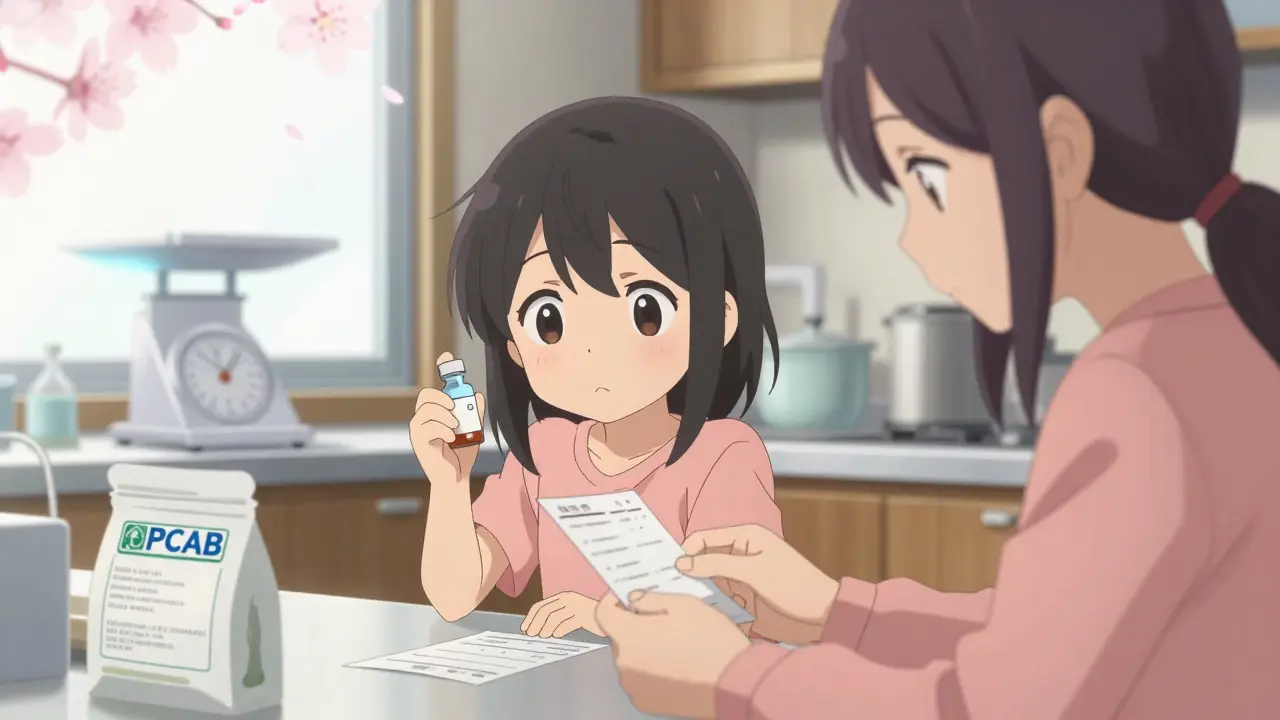
When your child needs medicine but can’t swallow pills, or has allergies to dyes or sugar, compounded medications might seem like the perfect solution. These are custom-made drugs prepared by pharmacists to fit a child’s exact needs-like a flavored liquid instead of a tablet, or a dose scaled down for a tiny body. But here’s the hard truth: compounded medications are not FDA-approved. That means no government agency checks their safety, strength, or purity before they reach your child. And when it comes to kids, even small mistakes can lead to serious harm.
Why Compounded Medications Are Used for Children
Pediatricians turn to compounding when no commercial option works. A child with a severe allergy might need a dye-free version of their medication. A toddler with reflux might need a sugar-free, alcohol-free liquid because the standard version causes stomach pain. Premature babies in the NICU often need tiny doses of drugs like morphine or fentanyl, diluted from adult-strength vials. Some children with thyroid conditions get compounded levothyroxine because the standard tablets are too large to split accurately. These needs are real. But they’re also high-risk. According to the Institute for Safe Medication Practices (ISMP), between 14% and 31% of children experience medication errors-and most of them happen during dosing or preparation. A single mistake in concentration can mean the difference between a therapeutic dose and a toxic one.The Hidden Dangers of Compounded Drugs
Unlike mass-produced drugs, compounded medications don’t go through rigorous testing. The FDA doesn’t approve them. They’re made in small batches, often by hand. That means contamination, incorrect strength, or unstable ingredients can slip through unnoticed. One tragic example is the 2012 fungal meningitis outbreak. It started with contaminated compounded spinal injections and killed 64 people. More recently, the FDA documented over 900 adverse events linked to compounded semaglutide and tirzepatide by the end of 2024-including 17 deaths. Children were among those hospitalized with vomiting, nausea, and acute pancreatitis from improperly prepared doses. A parent on Reddit shared that their 8-year-old ended up in the ER after receiving compounded levothyroxine that was 40% weaker than prescribed. The child developed hypothyroid symptoms: fatigue, weight gain, and sluggishness. The pharmacy had mislabeled the concentration. No one caught it. These aren’t rare cases. A 2022 analysis by SafeMedicationUse.ca found that 68% of pediatric compounding errors came from miscommunication about concentration units. Was it 5 mg/mL? Or 50 mg/mL? One decimal point can be fatal.When Should You Avoid Compounded Medications?
The FDA is clear: compounded drugs should only be used when no FDA-approved alternative exists. That’s the rule. Too often, it’s ignored. For example, many parents ask for compounded versions of GLP-1 drugs like semaglutide for weight management in teens. But there are FDA-approved liquid forms available now. Why risk a custom-made version with unknown potency? The same goes for thyroid meds, antibiotics, or seizure drugs. Commercial options exist for most pediatric needs. If your child’s doctor recommends a compounded version, ask: “Is there an FDA-approved version that could work?” If the answer is yes, insist on it. Compounded drugs should be the last option-not the easiest one.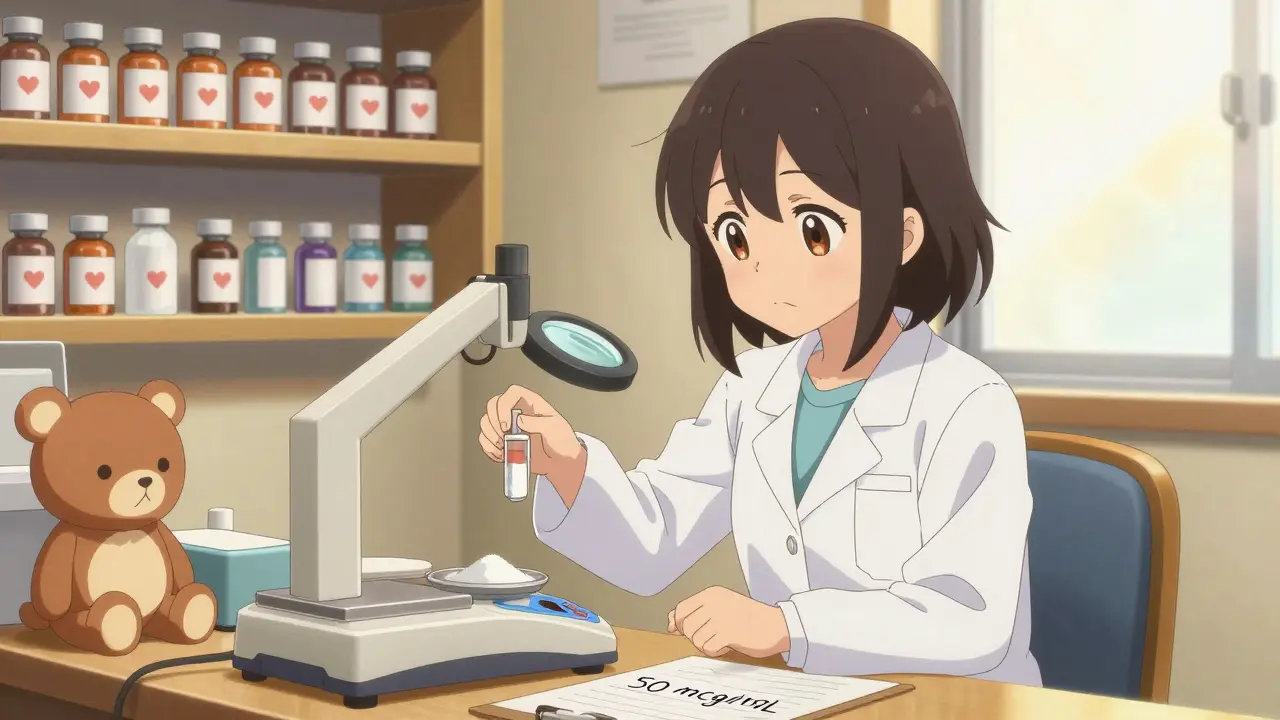
How to Spot a Reputable Compounding Pharmacy
Not all compounding pharmacies are the same. Some follow strict standards. Others cut corners. Here’s how to tell the difference:- Check for PCAB or NABP accreditation. Only about 1,400 of the 7,200 compounding pharmacies in the U.S. have this certification. It means they’ve passed independent audits for cleanliness, training, and accuracy.
- Ask if they use gravimetric analysis. This is a high-tech weighing system that measures ingredients to the milligram. It cuts pediatric dosing errors by up to 75%. But only 7.7% of U.S. hospitals use it because it costs $25,000-$50,000 per station. If your pharmacy doesn’t use it, ask why.
- Verify their state license. All compounding pharmacies must be licensed by their state pharmacy board. You can check this online through your state’s board website.
- Ask about their training. Pharmacists who compound for kids should have completed at least 40 hours of specialized pediatric dosing training. Ask if their technicians are certified in sterile compounding under USP Chapter <797>.
What Parents Must Do Before Giving the Medication
Never assume the pharmacist got it right. You are your child’s last line of defense.- Always ask for the exact concentration. Write it down. Example: “The levothyroxine is 50 micrograms per milliliter.” Don’t rely on labels alone.
- Double-check the dose with both the doctor and pharmacist. Ask: “Can you confirm this dose matches the prescription?” Repeat the dose back to them.
- Ask how it was made. Was it weighed on a precision scale? Was there a second pharmacist check? If they say no, walk away.
- Store it correctly. Some compounded liquids need refrigeration. Others must be used within 7 days. Ask for written storage instructions.
- Watch for changes. If the color, smell, or texture changes, stop using it. Call the pharmacy immediately.
Technology That Could Save Lives (But Isn’t Widely Used)
The tools to prevent these errors already exist. Gravimetric analysis-using digital scales that measure ingredients down to the microgram-is the gold standard. It’s used in top children’s hospitals and has cut dosing errors by 75%. Yet, most pharmacies still use volumetric methods-measuring liquids with syringes or graduated cups. These are far less accurate, especially for tiny doses. A 2024 study from the University of Utah found that gravimetric compounding increased prep time by 30%, which is why smaller pharmacies avoid it. The Emily Jerry Foundation, created after a 2-year-old died from a compounded chemotherapy error, has pushed for “Emily’s Law” in 28 states. These laws would require gravimetric verification for all pediatric sterile compounding. But until these laws become universal, the burden falls on parents.What to Do If Something Goes Wrong
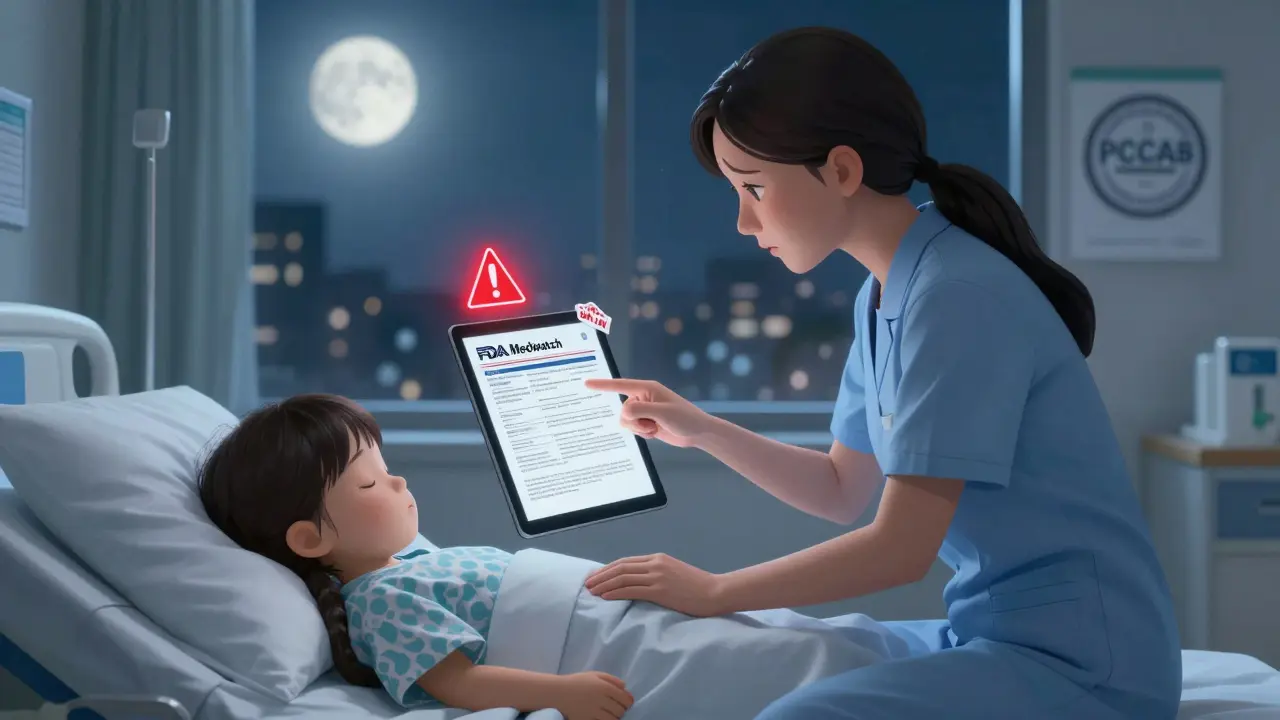
If your child has a reaction-vomiting, dizziness, unusual sleepiness, rash, or seizures-stop the medication immediately. Call your doctor and the pharmacy. Then, report it. The FDA’s MedWatch system accepts reports from anyone. You don’t need to be a doctor. Go to fda.gov/medwatch and file a report. Your report could help prevent another child from being harmed. Also, contact the Institute for Safe Medication Practices (ISMP). They track pediatric medication errors and use real cases to update safety guidelines.The Bottom Line
Compounded medications can be lifesaving for children with no other options. But they come with serious, often hidden risks. The system is not designed to protect kids. It’s built on trust, not verification. Your job isn’t to trust. It’s to verify. Ask questions. Demand proof. Push for FDA-approved alternatives. If you must use a compounded drug, insist on a PCAB-accredited pharmacy, gravimetric preparation, and independent double-checks. Write down every detail. Confirm every number. And never assume the pharmacist knows better than you do. Your child’s safety doesn’t depend on regulations. It depends on you.Are compounded medications safe for children?
Compounded medications are not FDA-approved, so their safety, strength, and purity aren’t verified before use. While they can be necessary for children who can’t swallow pills or have allergies, they carry higher risks than commercial drugs. Medication errors-especially in dosing-are common, and even small mistakes can lead to serious harm. They should only be used when no FDA-approved alternative exists.
How can I tell if my child’s compounded medication is made safely?
Ask if the pharmacy is accredited by PCAB or NABP. Verify they use gravimetric analysis (precision weighing) instead of manual measuring. Confirm that two trained pharmacists independently check each dose. Check that the pharmacy follows USP Chapter <797> standards for sterile compounding. If they can’t answer these questions clearly, find another pharmacy.
What should I do if my child has a bad reaction to a compounded drug?
Stop giving the medication immediately. Contact your child’s doctor and the pharmacy. Report the reaction to the FDA through MedWatch at fda.gov/medwatch. Also notify the Institute for Safe Medication Practices (ISMP). Document the lot number, expiration date, and how the medication looked or smelled. These reports help track patterns and prevent future harm.
Can I ask for an FDA-approved version instead of a compounded one?
Yes, absolutely. You have the right to ask if there’s an FDA-approved drug that could work for your child. Many parents don’t realize that liquid, sugar-free, or flavor-free versions of common medications already exist. If your doctor says no, ask them to explain why. Often, compounded versions are chosen out of convenience-not medical necessity.
Why aren’t all pharmacies using safer technology like gravimetric analysis?
Gravimetric analysis equipment costs between $25,000 and $50,000 per station, and staff need 6-8 weeks of training to use it properly. Many smaller pharmacies, especially those serving rural areas, can’t afford it. Labor costs and time constraints also make it harder to adopt. As a result, most still rely on less accurate manual methods, putting children at greater risk.
Sonja Stoces
February 14, 2026 AT 13:12And don't even get me started on the 'natural flavoring' that turned out to be propylene glycol. My daughter's liver enzymes spiked. Now I demand certificates of analysis before I even pick it up. 🤷♀️
Suzette Smith
February 14, 2026 AT 14:55Reggie McIntyre
February 15, 2026 AT 01:25Let’s stop calling it ‘custom’ and start calling it what it is: high-stakes improvisation. And if you’re not using gravimetry, you’re basically playing Russian roulette with a syringe. 🤕
Jack Havard
February 15, 2026 AT 17:38Gloria Ricky
February 16, 2026 AT 05:38Stacie Willhite
February 18, 2026 AT 04:35Jason Pascoe
February 18, 2026 AT 05:15christian jon
February 19, 2026 AT 23:34Pat Mun
February 20, 2026 AT 15:38Sophia Nelson
February 21, 2026 AT 23:52Skilken Awe
February 22, 2026 AT 04:01andres az
February 23, 2026 AT 07:45Steve DESTIVELLE
February 24, 2026 AT 11:01