Why Talking About Senior Medications Matters
Most seniors take multiple medications. In fact, nearly 9 out of 10 adults over 65 are on at least two prescription drugs. About 1 in 7 take five or more every day. That’s not just common-it’s risky. Every extra pill adds a chance for side effects, dangerous interactions, or mistakes. The good news? You can cut those risks dramatically by talking clearly and often with your doctor or pharmacist.
Adverse drug reactions send over 1.3 million older adults to the emergency room each year in the U.S. Many of these are preventable. The key? Communication. Not just asking questions, but preparing, listening, and following up. When seniors and their caregivers speak up, hospital stays drop. Mistakes shrink. Lives get better.
Before the Appointment: Get Everything Ready
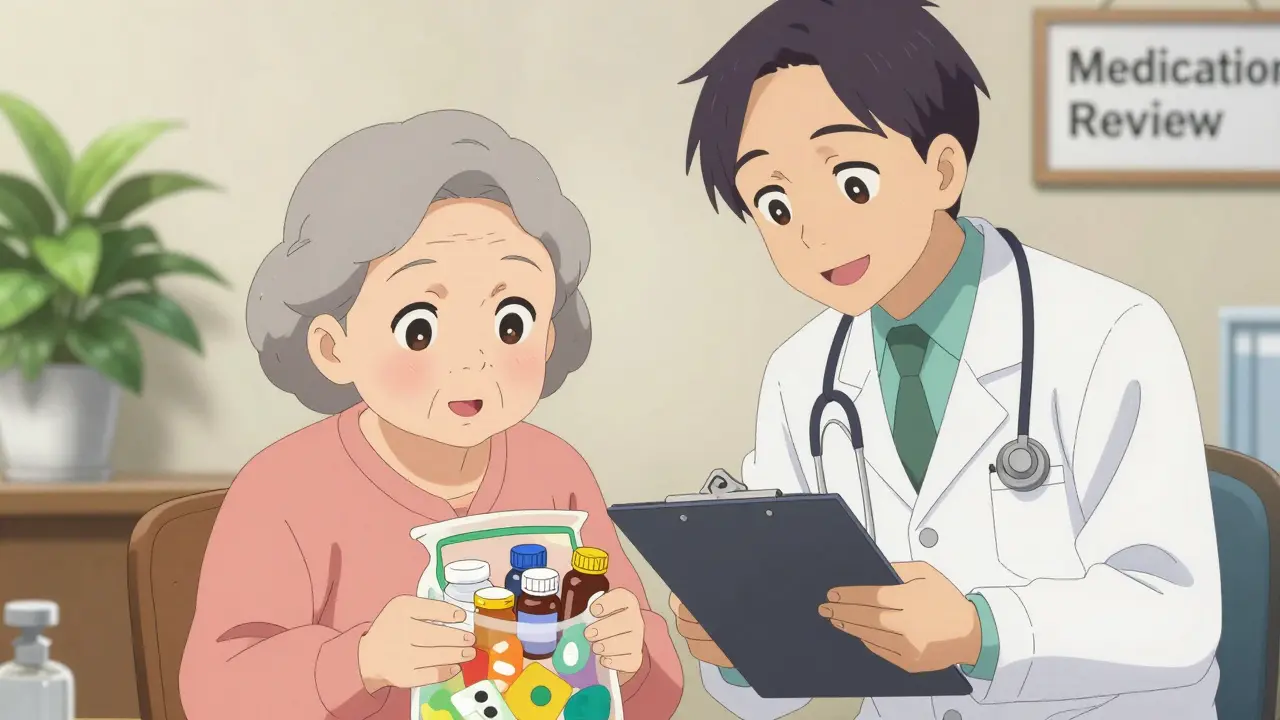
Walking into a doctor’s office with a list of meds in your head isn’t enough. Memory fails. Labels fade. Pills look similar. That’s why bringing the actual bottles is critical.
Before your visit, gather every pill, capsule, patch, or liquid you take. That includes:
- Prescription drugs
- Over-the-counter pain relievers like ibuprofen or acetaminophen
- Vitamins and minerals
- Herbal supplements like ginkgo, garlic, or turmeric
- Any creams, eye drops, or inhalers
Put them all in one bag. Don’t rely on a list you wrote down. The labels on the bottles tell your provider the exact name, dose, and manufacturer. Studies show that when patients bring their real meds to appointments, discrepancies-like wrong doses or meds they’ve stopped taking-are found in 25% of cases.
Write down three to five concerns ahead of time. Not just "my pills are confusing," but specific things like:
- "I’ve been dizzy since starting the new blood pressure pill."
- "I forgot to take my heart medication twice last week."
- "My stomach hurts after taking the arthritis pill."
Bring a notebook and pen. Or use your phone to take notes. And if possible, bring someone with you. A family member or friend can help remember what was said, ask questions you might forget, and spot things you don’t notice.
Ask These Four Questions at Every Appointment
Doctors are busy. They won’t always explain everything unless you ask. Don’t be shy. These four questions are the most important ones you can ask about any medication:
- "How does this medicine help my specific health problem?"-You need to know why you’re taking it. Is it to lower blood pressure? Reduce joint pain? Prevent a stroke? If you don’t understand the purpose, you won’t stick with it.
- "What are the possible side effects?"-Some side effects are mild. Others can be dangerous. Ask for the most common ones, and the ones that need immediate attention. For example, if you’re on a blood thinner, bleeding gums or dark stools could be warning signs.
- "Could this interact with any other meds, supplements, or foods?"-Grapefruit can interfere with heart meds. St. John’s wort can cancel out antidepressants. Even common painkillers like NSAIDs can harm kidneys when mixed with blood pressure drugs.
- "What should I do if I miss a dose?"-Some pills are okay to skip. Others need a strict schedule. Never guess. Ask now, before you forget.
These questions aren’t just for the first visit. Bring them up every time you see your provider-even if you’ve been taking the same meds for years. Your body changes. New conditions appear. What was safe last year might not be safe now.

Know the Risks: The Beers Criteria and Overmedication
Not all meds are safe for seniors. The American Geriatrics Society updates its Beers Criteria every few years to list drugs that carry higher risks for people over 65. The 2023 version highlights 30 medication classes that should be avoided or used with extreme caution. These include:
- Benadryl and other first-generation antihistamines (can cause confusion and falls)
- Long-acting benzodiazepines like diazepam (increase fall risk and memory problems)
- Nonsteroidal anti-inflammatory drugs (NSAIDs) like ibuprofen for long-term use (can damage kidneys and stomach)
- Some sleep aids and muscle relaxants (linked to dizziness and accidents)
If you’re on any of these, ask: "Is there a safer alternative?" Sometimes, a different drug, a lower dose, or even non-drug options like physical therapy or sleep hygiene can work better.
Polypharmacy-taking five or more meds-is common, but it’s not always necessary. One 2022 study found that when seniors had regular reviews of their meds, 27% were able to stop at least one drug safely. That’s not cutting corners. That’s smart medicine.
Use Tools to Stay on Track
Remembering when to take five or six pills a day is hard. It’s easy to double-dose or skip a pill. That’s where tools help.
Here are three proven options:
- Pill organizers-Look for ones with compartments for morning, afternoon, evening, and night. Some even have alarms.
- Medication apps-Apps like Medisafe, Round Health, and MedAdherence Pro send phone alerts, track refills, and let you share your schedule with a caregiver. The FDA cleared 12 such apps for seniors between 2023 and 2024.
- Automated dispensers-These devices lock pills inside and release them at set times. Some even call a caregiver if a dose is missed.
Another simple trick? Link your meds to daily habits. Take your morning pills right after brushing your teeth. Take your evening ones with dinner. Routine turns medicine into a habit, not a chore.

How Caregivers Can Help
If you’re helping a parent, spouse, or friend manage meds, you’re not just a helper-you’re a vital part of their care team.
Here’s how to step up:
- Go to appointments with them. Even if you just sit quietly, you’ll catch things they miss.
- Ask the provider: "Can we schedule a full med review every six months?"
- Keep an updated list of all meds and share it with every new doctor or pharmacist.
- Watch for changes: confusion, falls, loss of appetite, or mood swings. These can be signs of a bad drug reaction.
- Call the pharmacy if something doesn’t look right. Pharmacists are medication experts and often catch errors before they happen.
Studies show that seniors with active caregivers have 18% fewer adverse drug events. Your voice matters.
What to Do After the Appointment
Don’t wait until the next visit to check in. After each appointment:
- Review your notes. Did you understand everything? If not, call the office and ask for clarification.
- Set reminders for follow-ups. If your doctor said "let’s check your kidney function in a month," put it on your calendar.
- Watch for new symptoms. If you start feeling strange after starting a new med, don’t wait. Call your provider or pharmacist right away.
- Ask about medication synchronization. Many pharmacies now offer this free service-they align all your refill dates so you can pick up everything in one trip. It cuts down on missed doses by 28%.
Also, ask if you qualify for Medicare’s Medication Therapy Management (MTM) program. If you take eight or more prescriptions, you’re eligible for a free, in-depth review with a pharmacist. This service is free for Medicare beneficiaries and can uncover hidden risks.
Final Thought: You’re the Boss of Your Meds
Your health isn’t something your doctor does to you. It’s something you manage-with their help. You know your body best. If something feels off, say so. If you’re overwhelmed, ask for help. If you think a med isn’t working-or is causing more harm than good-speak up.
There’s no such thing as too many questions. No such thing as being "too picky." The goal isn’t to argue. It’s to understand. And when you do, you take back control. You protect your health. You live better.
What should I do if I can’t afford my senior medications?
Talk to your pharmacist or doctor right away. Many drug companies offer patient assistance programs that give free or low-cost meds to those who qualify. Some pharmacies also have discount cards or generic alternatives. Never stop taking a med because of cost-ask for help first.
Can I stop a medication if I think it’s not helping?
Never stop a prescription on your own. Some meds, like blood pressure or antidepressants, can cause serious withdrawal symptoms if stopped suddenly. Always talk to your provider first. They may suggest a gradual taper or a safer alternative.
How often should I have a full medication review?
At least once a year, but every six months is better if you take five or more medications. If you’ve had a hospital stay, changed doctors, or started a new treatment, schedule a review right away.
Are over-the-counter meds safe for seniors?
Not always. Many OTC drugs carry hidden risks. Pain relievers like ibuprofen can harm kidneys or cause stomach bleeding. Sleep aids often contain antihistamines that cause dizziness and confusion. Always check with your pharmacist before taking any new OTC product-even if it’s "natural."
What if my doctor dismisses my concerns about my meds?
It’s okay to seek a second opinion. If you feel unheard, ask for a referral to a geriatrician-a doctor who specializes in older adults. Or schedule a medication review with your pharmacist. You have the right to be listened to. Your health is worth fighting for.
Diana Dougan
January 30, 2026 AT 04:52Sazzy De
January 30, 2026 AT 19:22Blair Kelly
February 1, 2026 AT 19:13Rohit Kumar
February 1, 2026 AT 22:23Lily Steele
February 2, 2026 AT 01:25Gaurav Meena
February 2, 2026 AT 04:35Jodi Olson
February 3, 2026 AT 17:55Carolyn Whitehead
February 5, 2026 AT 14:00Amy Insalaco
February 6, 2026 AT 20:59Beth Beltway
February 8, 2026 AT 16:16Marc Bains
February 10, 2026 AT 13:37kate jones
February 12, 2026 AT 04:15