
Stopping your medication because of side effects is one of the most common mistakes people make - and it’s often unnecessary. You might feel nauseous after taking your blood pressure pill, get dizzy when you stand up, or have trouble sleeping after your antidepressant. It’s tempting to just quit. But medication side effects don’t always mean you need to stop. Many are temporary, manageable, or even signs that the drug is working. The key isn’t to ignore them - it’s to talk about them the right way.
Why Most People Stop Too Soon
About half of all people on long-term medications stop taking them as prescribed. Side effects are the top reason. But here’s the truth: 68% of common side effects fade within 7 to 14 days as your body adjusts. That means if you quit after three days of nausea, you’re likely quitting before your body even had a chance to adapt. The problem isn’t just the side effect - it’s the fear. You hear "dry mouth" or "fatigue" on the pill bottle and assume it’s permanent. But what you don’t see are the people who kept going, adjusted their routine, or got a small change that made all the difference. One woman on a statin for cholesterol had muscle pain so bad she planned to quit. Her pharmacist suggested taking it at night instead of in the morning. The pain disappeared within a week. She stayed on the medication - and her cholesterol dropped to a healthy level.How to Prepare Before You Talk to Your Doctor
Don’t walk into your appointment and say, "I don’t feel good." That’s too vague. Instead, come prepared with three things:- A complete list of everything you take - including supplements, over-the-counter meds, and even herbal teas. A 2022 GoodRx study found that having this list cuts adverse interactions by 32%.
- A symptom diary - even a simple notebook works. Write down: When did it happen? How bad was it (1 to 10)? What were you doing when it started? Did anything make it better or worse? Patients who track symptoms like this are 23% less likely to quit their meds, according to the Journal of the American Medical Informatics Association.
- Specific questions - not just "Is this normal?" but: "What percentage of people on this drug get this side effect?" "Is this likely to go away?" "Is there a different time of day to take it?" "Can we try a lower dose?"
The Four-Step Conversation That Works
Use this simple framework - developed by UCSF’s Medication Safety Program - to structure your talk:- Describe it objectively. "I’ve had nausea every morning for the past 10 days, right after I take my pill."
- Rate the severity and impact. "It’s a 7 out of 10. I can’t eat breakfast, and I’ve missed two work meetings."
- Track the timing. "It happens 30 to 45 minutes after I take it, but not if I eat a small snack first."
- Propose a solution. "Could we try taking it with food? Or switch to nighttime dosing? I’ve read that some people do that successfully."

Side Effects Aren’t Always Bad - Sometimes They’re a Sign
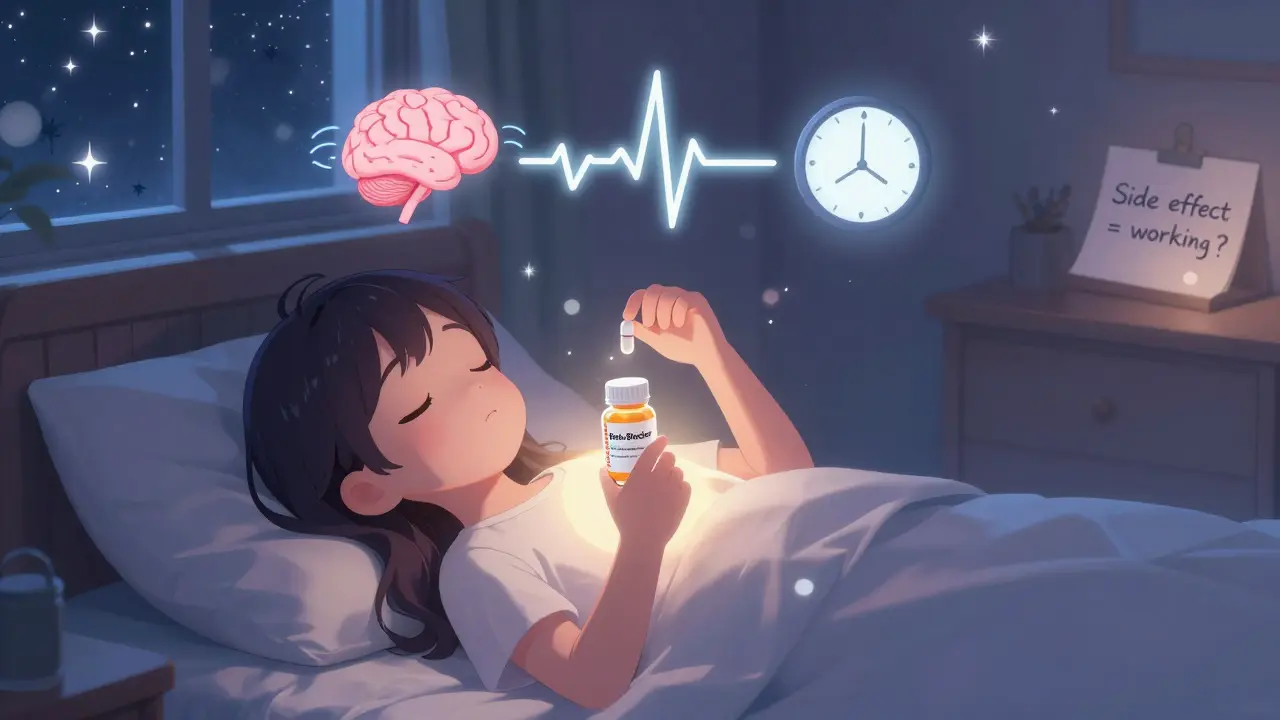
Here’s something most people don’t know: Some side effects mean the medication is working. A 2021 study published in PMC showed that when patients were told minor side effects like mild headaches or fatigue were "a sign the treatment is active in your body," their anxiety dropped by 37%, and 29% fewer stopped their medication. For example:- Antidepressants often cause fatigue or nausea at first - because they’re adjusting your brain chemistry.
- Beta-blockers for heart conditions can cause dizziness - because they’re lowering your heart rate and blood pressure.
- Thyroid meds might make you feel jittery at first - because your metabolism is finally returning to normal.
Small Changes, Big Results
You don’t always need a new drug. Often, the fix is simple:- Change the time of day. A 2022 HealthUnlocked survey found patients who switched their pill time (like taking it at night instead of morning) were 4.2 times more likely to stick with it.
- Take it with food. Many stomach issues vanish if you take the pill with a small snack - even just a cracker. One patient on a blood pressure med reduced nausea from 6 times a day to 1-2 times a week just by eating before taking it.
- Try a lower dose. Some medications can be safely halved for a few weeks while your body adjusts. Ask your doctor if that’s an option.
- Add a helper. If nausea is the issue, ask about a short-term anti-nausea pill. If insomnia is the problem, maybe a low-dose melatonin at night helps. These aren’t "add-ons" - they’re part of a smart treatment plan.
What to Avoid
There are dangerous myths out there. Don’t fall for them:- Don’t stop cold turkey. Some meds - like antidepressants, blood pressure pills, or steroids - can cause serious withdrawal effects if stopped suddenly.
- Don’t assume your doctor won’t care. A 2021 Mayo Clinic study found 61% of people who quit meds without telling their doctor did so because they thought they "wouldn’t be taken seriously." That’s false. Providers see this every day.
- Don’t rely on Reddit or Google alone. Online forums are full of extreme stories. Stick to FDA medication guides, reputable health sites like the CDC or NIH, or talk to your pharmacist.
When It’s Time to Switch
Not every side effect is manageable. If you’re having severe reactions - chest pain, trouble breathing, swelling, severe rash - stop immediately and call your doctor. But if it’s fatigue, dry mouth, mild nausea, or sleep changes? Those are usually fixable. Ask yourself: "Is this side effect worse than the condition I’m treating?" If your high blood pressure could lead to a stroke - and the side effect is just a headache - then staying on the med is the safer choice. Your doctor isn’t asking you to suffer. They’re asking you to give the treatment time - and to work with them to make it tolerable. That’s not compliance. That’s partnership.Technology Can Help Too
Apps like Medisafe, MyTherapy, or even Apple Health can track when you take your pills and log side effects. A 2023 JAMA Internal Medicine study found users of FDA-authorized medication apps had 18% higher adherence rates than those who didn’t use them. Set daily reminders. Log symptoms. Share the report with your doctor. It’s not magic - but it makes your concerns impossible to ignore.Final Thought: You’re Not Alone
Millions of people are sitting in the same spot - scared, confused, and ready to quit. But the ones who stay on their meds? They didn’t just "tough it out." They learned how to speak up. They tracked their symptoms. They asked the right questions. And they found solutions that worked for them. Your health isn’t about perfect compliance. It’s about smart, informed choices. You don’t have to choose between feeling awful and getting better. You can have both - if you know how to talk about it.What if my side effect is really bad but I need the medication?
If a side effect is severe - like chest pain, swelling, difficulty breathing, or a rash - stop the medication and contact your doctor immediately. For less severe but persistent issues (nausea, dizziness, fatigue), don’t quit. Instead, schedule an appointment and bring your symptom diary. Many side effects can be managed with timing changes, dose adjustments, or added medications - not by stopping the treatment entirely.
How long should I wait before deciding a side effect won’t go away?
Most common side effects improve within 7 to 14 days as your body adjusts. If it’s still bothering you after two weeks, it’s time to talk to your provider. But don’t wait longer than four weeks without action - that’s when risks of stopping outweigh the benefits of waiting. Your doctor can help you decide if it’s worth continuing, adjusting, or switching.
Can I lower my dose instead of stopping the medication?
Yes - in many cases. Some medications can be safely taken at a lower dose while your body adjusts. This is especially common with antidepressants, blood pressure drugs, and thyroid medications. Never change your dose on your own, but do ask your doctor if a reduced dose is an option. Many patients find that half the dose still works - with far fewer side effects.
Should I take my medication with food or on an empty stomach?
It depends on the drug. Some are better absorbed on an empty stomach. Others cause nausea if taken without food. Check the FDA medication guide that came with your prescription. If it’s unclear, ask your pharmacist. A simple change - like taking your pill with a small snack - can cut nausea by 80% in some cases.
Why does my doctor say some side effects mean the drug is working?
Some side effects are actually signs your body is responding. For example, antidepressants can cause nausea or fatigue at first because they’re changing brain chemicals. Beta-blockers can cause dizziness because they’re lowering your heart rate - which is the goal. The key is whether the side effect is dangerous or just uncomfortable. Your doctor can help you tell the difference.
Is it okay to switch the time I take my medication?
Yes - if your doctor approves. Many side effects are tied to timing. Taking a pill that causes drowsiness at night instead of in the morning can turn a problem into a benefit. A 2022 survey found patients who changed their dosing time were over four times more likely to stay on their medication. Always check with your provider first, especially for medications like blood thinners or diabetes drugs.
Brandon Vasquez
February 27, 2026 AT 21:32Eimear Gilroy
February 28, 2026 AT 23:56Ajay Krishna
March 2, 2026 AT 19:08Noah Cline
March 3, 2026 AT 22:34Lisa Fremder
March 5, 2026 AT 13:27Ben Estella
March 7, 2026 AT 10:35Jimmy Quilty
March 8, 2026 AT 04:45Sneha Mahapatra
March 8, 2026 AT 08:04