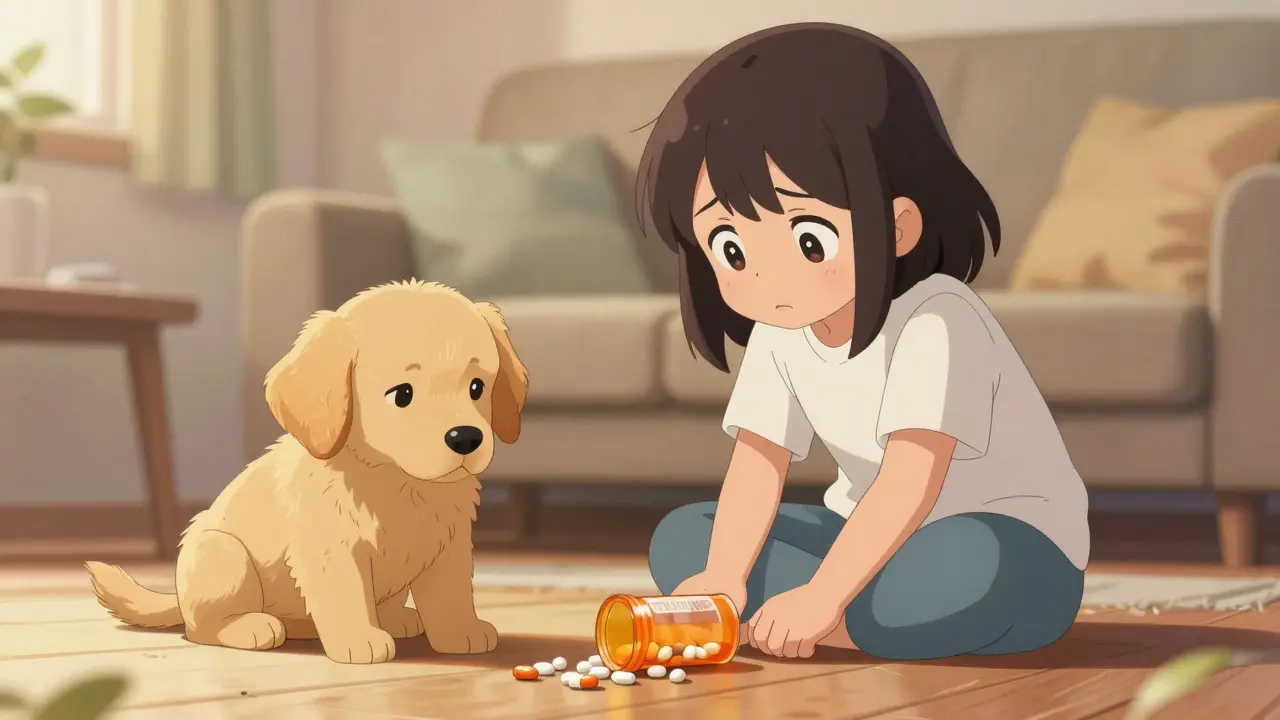
The first thing to understand is that pets don't react to our meds the way we do. A pill that helps you sleep might make a dog hyperactive, or a common painkiller that's safe for you could shut down a cat's liver in hours. To save your pet, you need to know how to spot the specific "clusters" of symptoms associated with different drug classes. Because many drugs cause similar signs-like tremors-knowing the timing and accompanying symptoms is the only way to give your vet a head start.
The Danger Zone: Behavioral and Brain Medications
Medications for mental health, like antidepressants and ADHD drugs, are incredibly dangerous because they affect the central nervous system almost instantly. If your pet gets into these, you aren't looking for sleepiness; you're looking for a "system overload."
If they've eaten Selective Serotonin Reuptake Inhibitors (SSRIs), such as Prozac or Lexapro, they may develop serotonin syndrome. This isn't just a mood shift. You'll see a high fever (often between 103-106°F), disorientation, and a strange, repetitive vocalization. If you see your dog pacing and shaking, don't mistake it for anxiety; it could be a chemical storm in their brain. Without treatment, about 78% of these cases slide straight into seizures.
Stimulants like Adderall or Concerta are even faster. Within 30 to 60 minutes, your pet's heart rate can rocket past 220 beats per minute. Their pupils will be fixed and dilated, and they may shake violently. Many owners mistake these tremors for "shivering," but if the dog is panting heavily and their skin feels hot to the touch (sometimes hitting 107°F), it's a medical emergency.
Then there are the Benzodiazepines like Xanax. You'd expect a sedated pet, right? Actually, about 52% of dogs have a "paradoxical reaction," meaning they become agitated and aggressive instead of sleepy. In cats, these drugs are a different story-they can trigger hepatic failure, sending liver enzymes skyrocketing far beyond normal levels.
| Medication Type | Key Symptoms | Typical Onset | Danger Signal |
|---|---|---|---|
| SSRIs (e.g., Prozac) | Tremors, vocalization, fever | Minutes to 12 hours | Progression to seizures |
| Stimulants (e.g., Adderall) | Tachycardia, dilated pupils | 15-60 minutes | Body temp > 105°F |
| Benzodiazepines (e.g., Xanax) | Agitation (dogs), liver failure (cats) | Rapid | Paradoxical hyperactivity |
Painkillers: The Silent Organ Destroyers
Pain relief is the number one cause of pet medication poisoning. The problem is that Nonsteroidal Anti-inflammatory Drugs (NSAIDs), like ibuprofen, don't always cause a scene immediately. Instead, they attack the stomach lining and the kidneys.
Watch for the "classic triad": vomiting, lethargy, and melena (which looks like black, tarry stools). About 92% of dogs who overdose on ibuprofen will vomit within 1 to 6 hours. However, the real damage-acute kidney injury-often doesn't peak until 24 to 72 hours later. If your dog is suddenly refusing to eat and has dark stools, their kidney function may already be crashing.
Then there's Acetaminophen (Tylenol), which is a nightmare for cats. Cats lack a specific enzyme called glucuronyl transferase, meaning they can't break this drug down. Even a tiny dose can cause methemoglobinemia. The most critical sign to look for is the color of their gums. If the mucous membranes look brown or grayish instead of pink, their blood can no longer carry oxygen. In dogs, the danger is more focused on the liver, leading to necrosis over a few days.

How to Perform a 5-Minute Emergency Assessment
If you suspect your pet has eaten human medication, don't just wait and see. Use this systematic check to gather the data your vet will need to save your pet's life.
- Scan the Area: Look for pill fragments, open bottles, or chewed blister packs. Note the exact name of the drug and the dosage (mg) on the label.
- Check the Gums: Gently lift the lip. Pink is normal. Brown, blue, or pale gray suggests acetaminophen toxicity or severe shock.
- Look at the Pupils: Are they wide open and unresponsive to light? This is a huge red flag for stimulants or certain antidepressants.
- Feel the Temperature: If you have a rectal thermometer, use it. A temperature over 103.5°F in a dog or cat is a sign of hyperthermia, often linked to SSRI or stimulant overdose.
- Note the Timeline: When was the medication last seen? When did the first weird behavior start? This temporal relationship is the most reliable way for vets to diagnose the toxin.
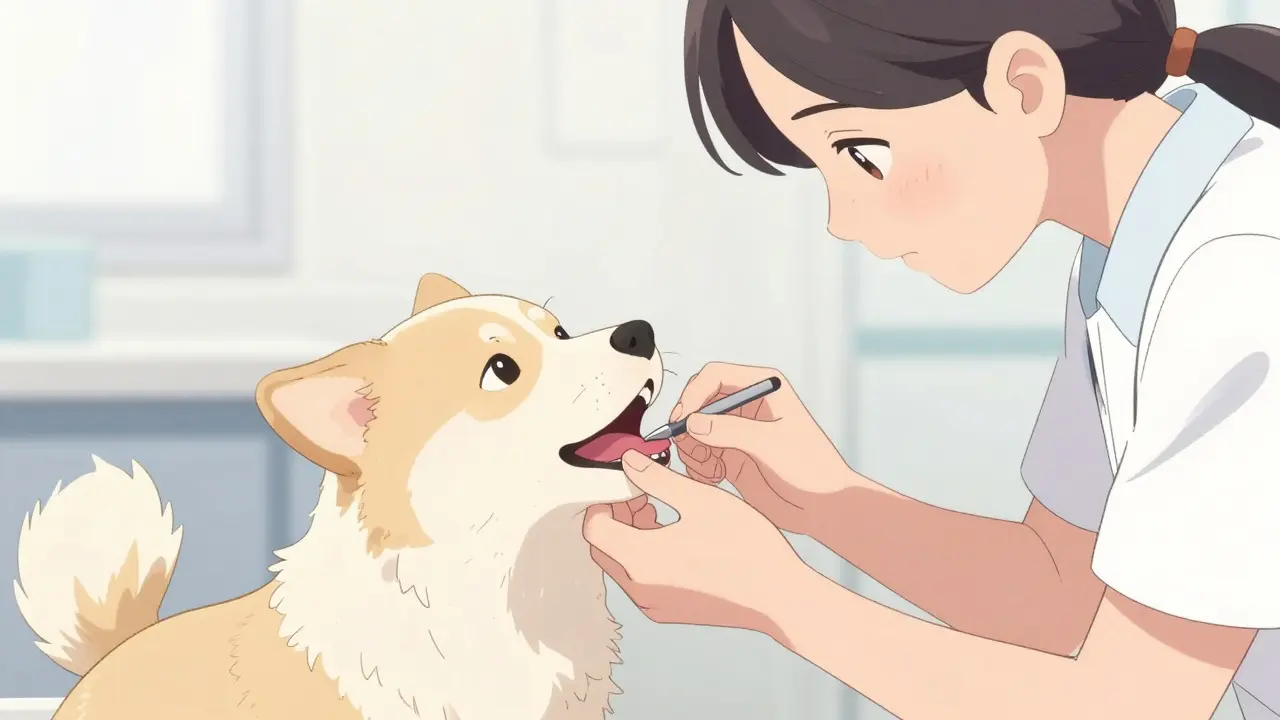
Common Recognition Pitfalls
One of the hardest parts of this process is that many medications produce the same signs. Tremors, for example, appear in nearly 80% of antidepressant cases and over 80% of stimulant cases. How do you tell them apart? Look at the frequency. Stimulant-induced tremors are typically faster (8-10Hz) compared to the slower, more rhythmic movements of a seizure (2-3Hz).
Another trap is the "excitement" fallacy. Many owners see a dog acting erratic after eating a pill and assume they are just "hyper." In reality, that's often the early stage of serotonin syndrome or a stimulant reaction. If the behavior is uncharacteristic-like a calm cat suddenly bumping into walls or a quiet dog suddenly howling-treat it as a poisoning, not a mood swing.
Immediate Steps and Prevention
If you identify any of these signs, your first move should be calling a professional. The Pet Poison Helpline or the ASPCA Animal Poison Control Center can provide immediate triage instructions while you are in the car on the way to the clinic.
To stop this from happening again, stop relying on "out of reach" shelves. Pets are surprisingly good at opening cabinet doors or knocking bottles off counters. Use airtight plastic containers or locking medicine boxes. Also, be aware of extended-release (XR) formulations. These are significantly more dangerous because they release the toxin slowly over time, meaning your pet stays toxic for much longer, complicating the treatment process.
Can I induce vomiting at home if my pet ate human meds?
Only if specifically instructed by a veterinarian. Inducing vomiting can be dangerous depending on the medication (especially if it causes seizures or sedation) or the animal's condition. Always call a poison control center first.
Why are cats more sensitive to Tylenol than dogs?
Cats lack the liver enzyme glucuronyl transferase, which is required to process acetaminophen. This leads to the buildup of toxic metabolites that destroy red blood cells and cause liver failure at doses that might not affect a dog.
What is the most common human medication pets accidentally eat?
NSAIDs (like ibuprofen and naproxen) are the most common, accounting for over 28% of reported cases, followed by antidepressants and acetaminophen.
How quickly do stimulants affect a dog?
Stimulants like Adderall often show signs within 15 to 60 minutes, including rapid heart rate, dilated pupils, and severe tremors.
What does "melena" look like in a dog?
Melena refers to dark, tarry, or black stools. It is a sign of digested blood, often indicating gastrointestinal bleeding caused by NSAID toxicity.
Vijay AGarwal
April 25, 2026 AT 15:16This is absolutely terrifying! Imagine the sheer horror of realizing your beloved companion is slipping away because of a simple pill bottle left on a counter! It's an absolute nightmare scenario that no pet parent should ever endure! 😱
Sharyl Foster
April 27, 2026 AT 07:56Everyone always panics about the 'two hour window' but some pets have way more resilient livers than others so it's not always a death sentence if you're a bit late.
Ben Jima
April 28, 2026 AT 15:08It is vital to emphasize that keeping medications in child-proof locks is the most effective preventative measure. Many pet owners underestimate the intelligence and dexterity of their dogs when it comes to raiding cabinets.
Carol Yang
April 28, 2026 AT 16:35thanks for the heads up!
Nila Sawyer
April 28, 2026 AT 21:06Oh my goodness, this is such a wonderful and detailed guide that truly helps us all become better pet parents, and I just love how it breaks down the symptoms so clearly because our fur babies are just the most precious things in the world and we have to protect them at all costs!! 🐾💖✨
Brittney Prince
April 29, 2026 AT 11:03Bet the big pharma companies love these 'guides' because it just makes us more paranoid and spends more money at the emergency vets who are probably in on the whole thing anyway.
Michael Deane
May 1, 2026 AT 08:05I don't get why people can't just be responsible and lock their stuff up in the first place, it's common sense and we're losing the basic ability to just manage our own households without needing a full-blown manual to tell us how not to kill our dogs with ibuprofen.
James Harrison
May 2, 2026 AT 01:46It's interesting how the biological differences between species turn a healing agent into a poison. Just a reminder of how disconnected we are from the natural chemistry of other living things.
Jaclyn Vo
May 2, 2026 AT 07:52Um, actually, you forgot to mention that some cats react differently to certain brands of the same drug based on the filler ingredients... typical that this list is so basic 🙄
Elle Torres Sanz
May 4, 2026 AT 00:21I appreciate the inclusion of the different drug classes. It's important to remember that veterinary care varies by region, so having a universal checklist like this is a great step toward inclusive pet health education.
Andre Ojakäär
May 5, 2026 AT 22:33the gum color thing is literally the most important part of this whole list and people just ignore it until the pet is basically gone... absolutely tragic
sachin singh
May 7, 2026 AT 22:26The detailed breakdown of the metabolic pathways in cats is quite enlightening. It is encouraging to see such a structured approach to emergency triage for animal care.