Getting your meds ready for a take-back event isn't complicated, but there are a few specific rules you need to follow to make sure the collection site actually accepts your items. If you show up with a bag of loose pills and no labels, you might be turned away, which wastes your trip and keeps those chemicals in your home. Here is exactly how to prepare medications for take-back so the process is quick, safe, and legal.
The Golden Rule: Protect Your Privacy
Before you even look at the bottles, you need to handle your personal data. Your prescription bottles contain your name, address, and prescribing doctor's info-essentially a goldmine for identity thieves or people looking to forge prescriptions.
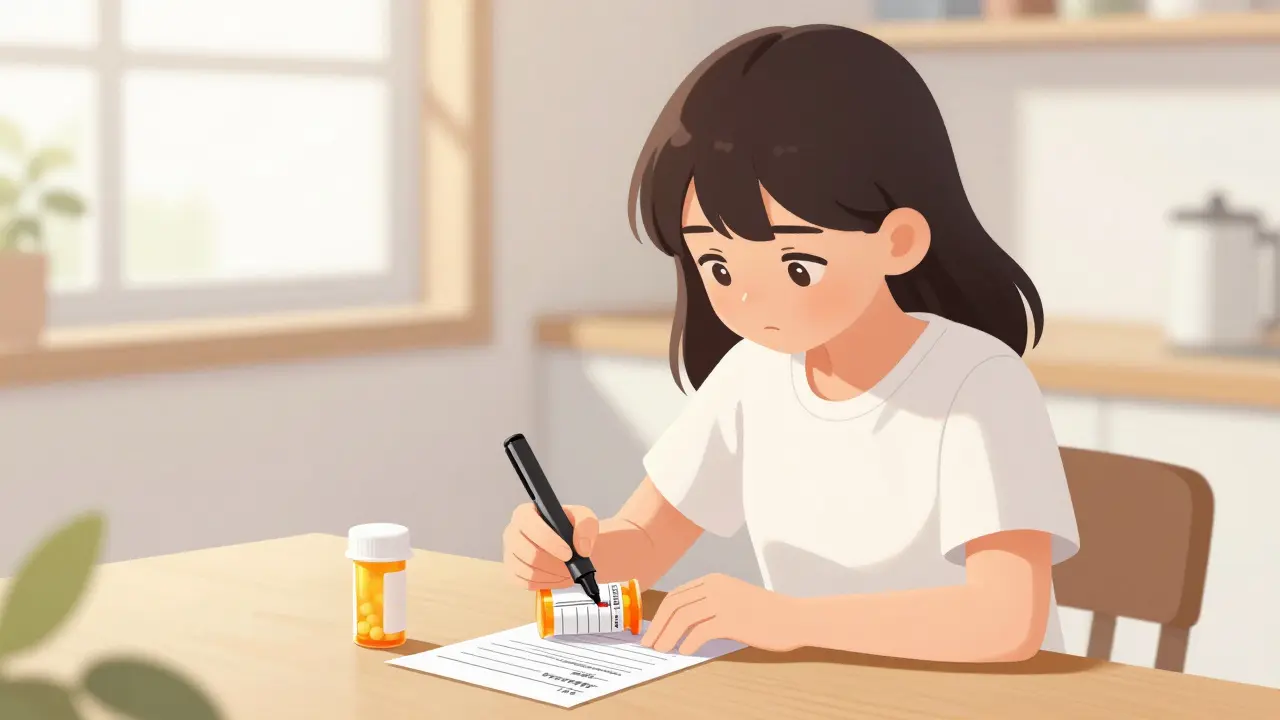
Use a permanent black marker to completely cover your name and any identifying details on the label. If the label is a sticker that can be peeled off without ruining the bottle, go ahead and remove it. However, don't remove the drug name or the dosage, as collection sites need to know what they are handling for safety reasons. Experts from Massachusetts General Hospital emphasize that this isn't just about your privacy; it's about preventing drug diversion by making sure prescription info doesn't fall into the wrong hands.
Handling Different Types of Medication
Not all meds are created equal, and they shouldn't all be packed the same way. Depending on what you're tossing, you'll need a different approach to keep things leak-proof and organized.
- Pills and Capsules: Whenever possible, keep these in their original pharmacy bottles. About 92% of authorized collection sites prefer this because it's the safest way to identify the substance. If you've lost the bottle, a clean, sealed plastic container or a sturdy zip-lock bag is usually the next best option.
- Liquids: Leaks are a nightmare for take-back coordinators. Ensure liquid medications are in their original containers with the caps tightened firmly. If you're using a secondary container, it must be securely sealed and leak-proof. If a cap is missing or loose, use clear packing tape to seal the lid to the bottle.
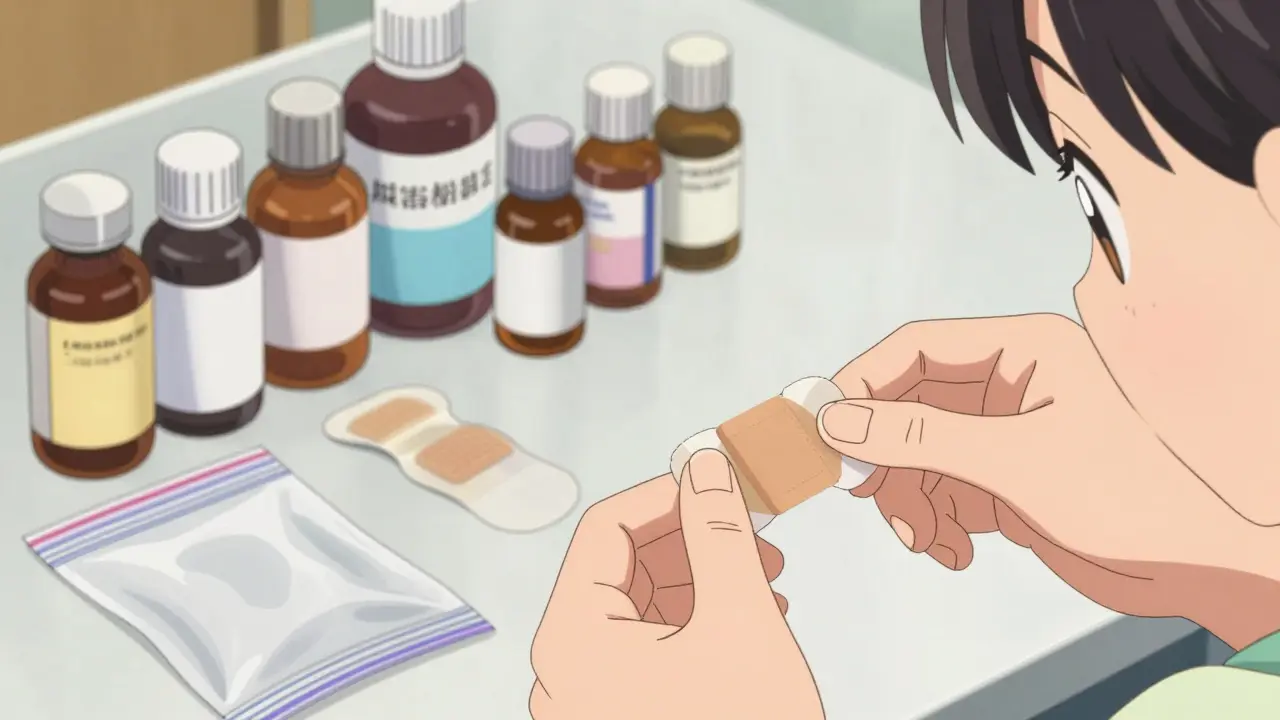
- Transdermal Patches: These are tricky because the medication stays active on the adhesive. All collection sites require patches to be folded in half with the adhesive side facing inward. This prevents the drug from accidentally touching the skin of the person handling the waste.
- Ointments and Creams: Keep these in their original tubes or jars. Make sure the lids are screwed on tight to avoid messy spills in the collection bin.
If you're dealing with specialty items like insulin pens, be aware that retail pharmacies are less likely to take them than hospitals. Check with the site beforehand, as only about a third of retail pharmacies are equipped to handle them.
What You Absolutely Cannot Bring
It might seem like a good idea to clear out everything in the bathroom cabinet, but certain items are strictly prohibited at take-back events. Bringing these can actually cause safety hazards for the staff.
Hazardous Waste is a broad category that includes items take-back sites simply cannot process. You should leave the following at home and look for a dedicated hazardous waste facility:
Choosing the Right Disposal Site
Not every drop-off point has the same rules. Depending on where you go, you might encounter different levels of strictness. For example, some retail kiosks, like those at Walgreens, have a very simple "just bring it in" approach. On the other hand, some state-run programs or military health systems are much more rigid about original packaging and the complete removal of all identifying marks.
| Site Type | Container Preference | Privacy Requirement | Flexibility |
|---|---|---|---|
| Retail Kiosks | Flexible | High (Redact name) | Very High |
| Pharmacy Counters | Original Bottle | High (Redact name) | Moderate |
| Hospital Sites | Original Bottle | Very High | Low |
| Military Programs | Strict Original | Total Removal | Very Low |
Common Mistakes to Avoid
Most people who get rejected at a take-back event make one of three mistakes. First, they forget to redact their personal information. This is the most common reason for rejection-nearly 41% of rejected submissions are due to incomplete redaction.
Second, people often mix different medications into one big bag or bottle. While some sites might let it slide, many require that you don't mix different prescriptions. Keeping them separate makes it easier for the incinerators to categorize the waste if needed.
Third, people underestimate the risk of liquid leaks. A loosely capped bottle of cough syrup can leak all over other medications, potentially contaminating the entire batch and forcing the staff to reject everything. Double-check your lids.
The Big Picture: Why This Effort Matters
You might wonder if the few minutes spent scrubbing off a label really matters. It does. When pharmaceuticals are disposed of correctly, they are sent to high-temperature incinerators. This ensures that the active pharmaceutical ingredients are completely destroyed rather than leaching into the soil.
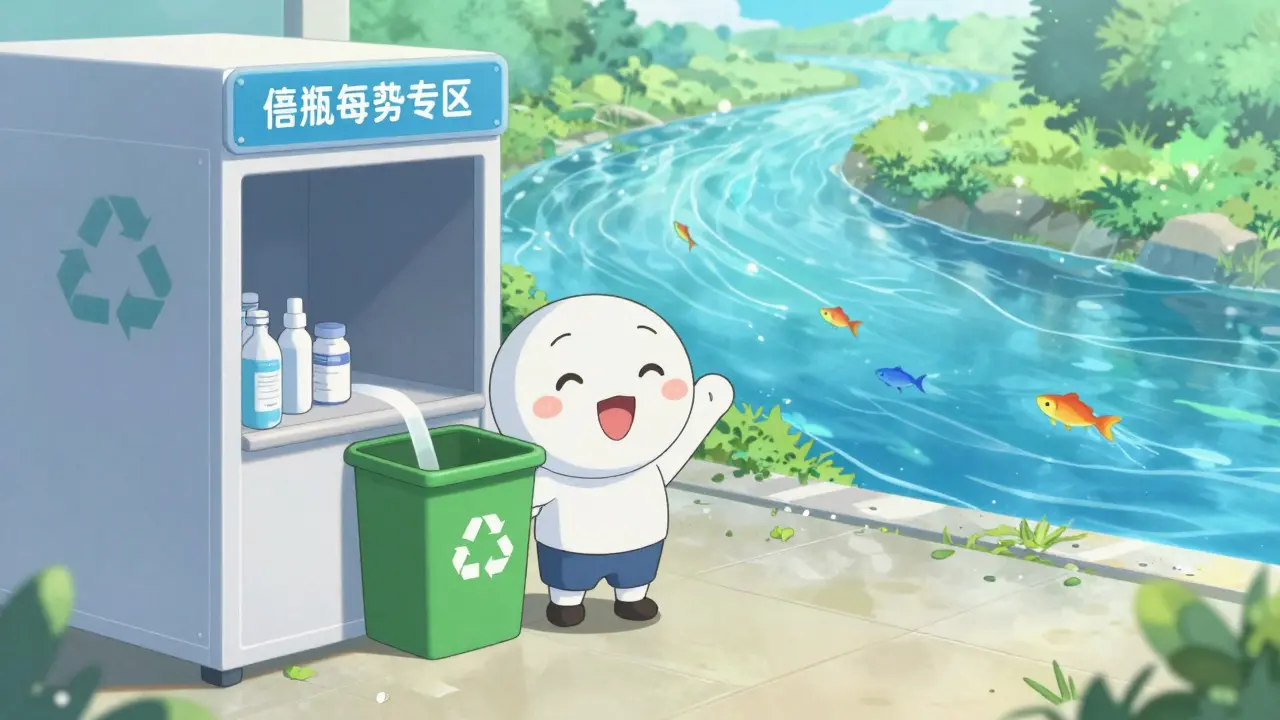
According to the EPA, flushing meds contributes to pharmaceutical pollution in about 80% of U.S. streams. By taking the time to prepare your meds for a take-back event, you're directly preventing pounds of chemicals from entering the water system. More importantly, you're removing the temptation for someone in your home to misuse a medication they weren't prescribed, which is a critical step in fighting the opioid crisis.
Final Checklist for Your Take-Back Trip
To make sure your trip is a success, run through this quick list before you leave the house:
- [ ] All names and addresses are blacked out with a permanent marker.
- [ ] All pills are in original bottles or sealed zip-lock bags.
- [ ] All liquid lids are tight (and taped if necessary).
- [ ] Patches are folded adhesive-side-in.
- [ ] No inhalers, aerosols, or thermometers are in the bag.
- [ ] No illicit drugs are included.
Can I put all my different pills into one large zip-lock bag?
While some sites may accept this, it's not recommended. Most authorized collection sites prefer medications to remain in their original containers. If you must use a bag, try to keep different prescriptions in separate smaller bags to avoid confusion and ensure the site doesn't reject your submission for mixing medications.
What if I don't have the original bottle anymore?
Don't worry, you can still dispose of them. Place the medications in a small, sealed plastic bottle or a secure zip-lock bag. Just make sure the container is sturdy enough that it won't break or leak during transport.
Are over-the-counter (OTC) medicines accepted?
Yes, 100% of DEA-registered collection sites accept both prescription and over-the-counter medications, as well as vitamins and pet medicines. The same preparation rules regarding privacy and containers apply to OTC meds.
Why can't I just flush my medications down the toilet?
Flushing medications sends active chemicals into the wastewater system, which isn't designed to filter out pharmaceutical compounds. This leads to these chemicals appearing in streams and rivers, harming aquatic life and potentially contaminating drinking water.
Do I need to bring a photo ID to a take-back event?
Generally, no. Take-back events are designed to be anonymous to encourage people to dispose of medications without fear. In fact, the goal is to remove all identifying information from the containers before you drop them off.
Mark Dueben
April 15, 2026 AT 12:16It's really great to see a clear guide on this. Taking a few extra minutes to black out personal info helps everyone stay safe and makes the volunteers' jobs way easier.
Sam Dyer
April 17, 2026 AT 08:28Finally some common sense advice! Most folks just throw stuff in the trash like total amateurs 🙄. Keep the US clean and do it right or don't do it at all! 🇺🇸
Scott Lofquist
April 17, 2026 AT 14:49Actually, some people think the 'original bottle' rule is overkill but you have to realize that pharmacy-grade containment is the only way to ensure zero cross-contamination during the logistics phase 🙄💊. If you can't follow basic instructions, you're basically sabotaging the whole system. It's just basic ethics at this point 🙄.
rupa das
April 17, 2026 AT 20:15who cares about a few pills in the water
Kenzie Evans
April 19, 2026 AT 17:50This is such a basic list. Obviously, anyone with a brain knows not to flush meds. Also, the part about the marker is a joke-some labels are plastic-coated and the ink just rubs right off. Use a solvent or just rip the label off, you lazy people.
Brooke Mowat
April 20, 2026 AT 15:23Omg this is so helpfull!! 🌟 I always felt so bad just tossin stuff out but now i can do it the right way. Its like a little gift to the planet and our collective soul!! Lets all just clean out those cabinets and feel the good vibes of decluttering for a cause!! ✨
Mary Johnson
April 22, 2026 AT 02:18Wait a second. Why are they so obsessed with us removing our names? They probably just want to track who is taking what and then link it to our medical records through the pharmacy database. These 'take-back' events are just a front for the government to gather data on what prescriptions are actually being used versus what's sitting in cabinets. It's all about surveillance and control. Don't trust the 'official' sites, they probably just keep the meds for their own secret labs.
Randy Ryder
April 22, 2026 AT 20:17The emphasis on preventing drug diversion is key here. From a pharmacovigilance perspective, maintaining the integrity of the chain of custody-even during disposal-reduces the risk of illicit re-entry into the community. I wonder if there's a standardized protocol for the thermal decomposition of the polymers used in the transdermal patches to ensure no hazardous byproducts are released during incineration.
Milo Tolley
April 23, 2026 AT 09:33The sheer audacity of the risk regarding liquid leaks!!! It's absolutely catastrophic if a bottle of syrup bursts in the bin!!! Complete and utter chaos for the staff!!! 😱
Becca Suttmiller
April 23, 2026 AT 16:57I appreciate the reminder about the patches. I had no idea they remained active. It's a simple step that keeps the workers safe.
Billy Wood
April 23, 2026 AT 21:14Get it done!!! Clean cabinets!!! Safe water!!! Let's go!!!
Olivia Lo
April 24, 2026 AT 02:49It's interesting to look at this through a lens of systemic responsibility. While the burden of preparation is placed on the individual, the real issue is the lack of integrated pharmaceutical waste management at the point of sale. We're essentially asking the consumer to perform a triage service that should be built into the healthcare infrastructure. However, in the absence of such a system, these community-led events are a pragmatic compromise to mitigate ecological toxicity and prevent the systemic failure of our water treatment facilities. By focusing on the micronutrient and chemical load of our runoff, we can see that this individual effort is a necessary stopgap. It's about finding a balance between the ideal administrative solution and the immediate need for public safety. We must encourage this behavior while simultaneously pushing for better legislation on drug packaging and disposal. It is the only way to move from a reactive model to a proactive one. Each person who follows these steps is contributing to a larger cultural shift toward environmental stewardship. Let's keep the dialogue open and the process safe. It's a small act but a significant contribution to the global effort of reducing chemical pollutants in our biosphere.
Rim Linda
April 24, 2026 AT 21:49Omg I just found a bottle from 2012 in my cabinet!!! 😱😂’