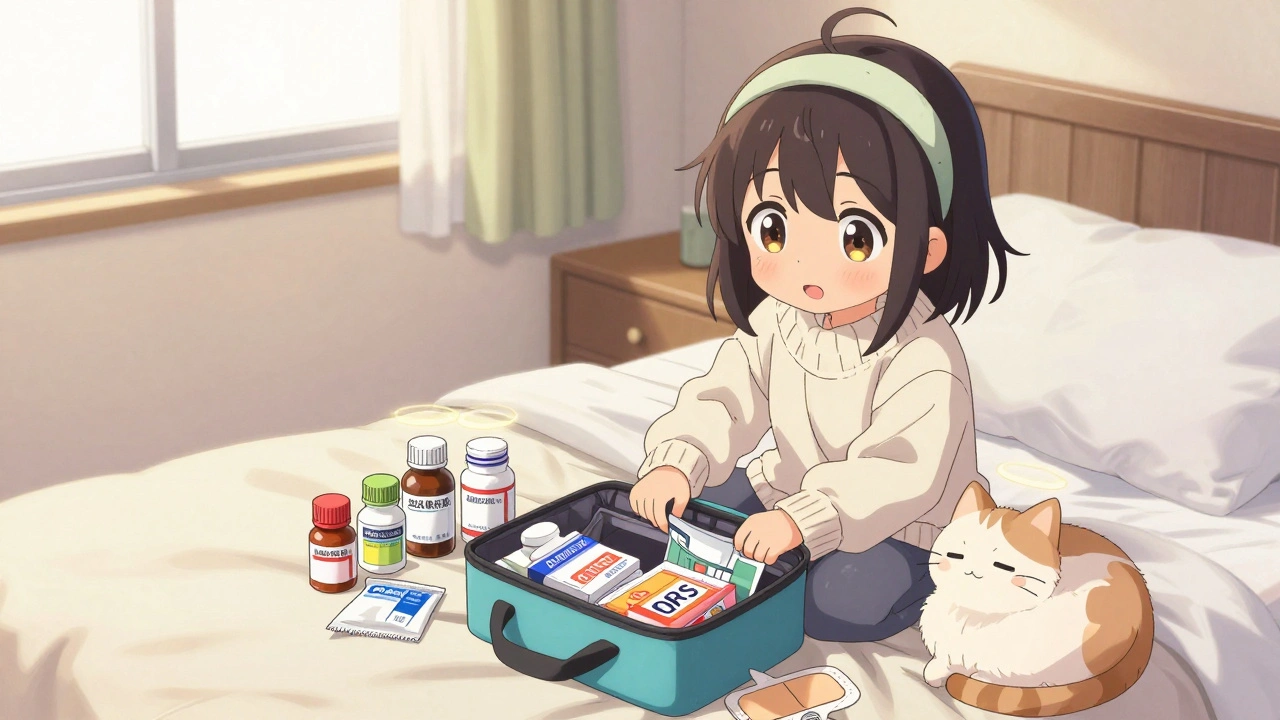
Why You Need a Travel Medication Kit
Imagine this: you’re halfway through your trip, miles from home, and suddenly you’re stuck with stomach cramps, a bad sunburn, or a sudden allergic reaction. No pharmacies nearby. No one speaks your language. You didn’t bring anything to help.
This isn’t rare. Around 1 in 3 travelers experience a health issue while abroad, and most of them are minor - diarrhea, headaches, insect bites, or minor cuts. But without the right supplies, these small problems can turn into big disruptions. A well-packed travel medication kit keeps you moving, saves you money on overpriced local pharmacies, and reduces stress when you’re far from your usual care.
Essential Medications for Common Travel Problems
Your kit doesn’t need to be a pharmacy. It needs to cover the most likely issues. Start with these core items:
- Pain and fever relief: Ibuprofen (200-400mg) or acetaminophen (500mg). Pack at least 10 tablets each. These handle headaches, muscle aches, and fevers. Avoid mixing them unless you know how they interact with your body.
- Diarrhea treatment: Loperamide (Imodium, 2mg tablets) for quick relief. Add a 3-day course of an antibiotic like ciprofloxacin (500mg) or azithromycin (500mg) - only if prescribed by your doctor. Don’t use antibiotics unless you’re sure it’s bacterial. Overuse creates resistance.
- Allergy and insect bite relief: Loratadine (10mg) or cetirizine (10mg) tablets for runny nose, hives, or swelling. Add a small tube of 1% hydrocortisone cream (15g) for itching and redness. These work fast and are safe for most adults.
- Dehydration prevention: Oral rehydration salts (ORS). These aren’t just for kids. When you have diarrhea or sweat heavily in heat, your body loses electrolytes. WHO-formulated packets (5-10) are cheap, lightweight, and lifesaving. Just mix with clean water.
- Heartburn and indigestion: Antacids like calcium carbonate (500mg) or famotidine (10mg). Pack 7 tablets. These help when you’re eating unfamiliar foods or eating on the go.
Wound Care and Skin Protection
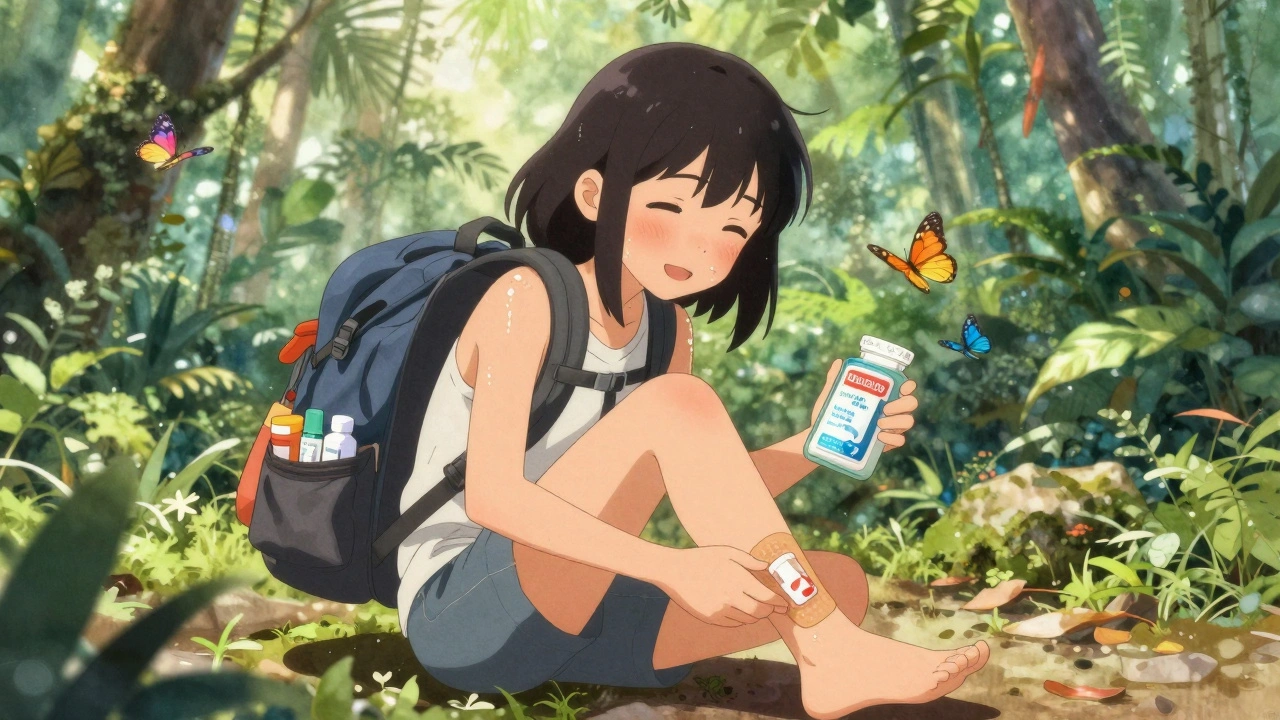
Minor cuts, scrapes, and blisters happen - especially if you’re hiking, walking long distances, or carrying heavy bags. Don’t wait until you’re bleeding to realize you forgot bandages.
- Adhesive bandages: Get a mix of sizes - small, medium, and large. At least 10 total. Stick-on ones with waterproof backing are best.
- Gauze pads and tape: 4x4 inch gauze pads (4 pieces) and 1-inch medical tape. Use these for larger wounds or to hold dressings in place.
- Antiseptic cleaner: Chlorhexidine or povidone-iodine (1oz bottle). Clean wounds before applying bandages. Alcohol wipes are fine too, but can sting.
- Antibacterial ointment: Bacitracin or neomycin (0.5oz tube). Apply after cleaning to prevent infection.
- Blister pads: If you’re walking a lot, pack hydrocolloid blister pads (like Compeed). They cushion and protect, letting you keep going.
Destination-Specific Add-Ons
Where you’re going changes what you pack. A beach trip isn’t the same as a mountain hike.
- Tropical or developing countries: Add water purification tablets (iodine or chlorine dioxide). Even bottled water can be tampered with. Also pack DEET-based insect repellent (20-30% concentration). Mosquitoes carry dengue, chikungunya, and Zika. Reapply every few hours.
- High-altitude destinations: If you’re going above 8,000 feet (like the Andes or Himalayas), talk to your doctor about acetazolamide (125-250mg). It helps prevent altitude sickness. Don’t wait until you’re dizzy to start it.
- Cold or dry climates: Pack lip balm with SPF and a small tube of moisturizer. Cold air and indoor heating dry out skin and lips fast.
- Traveling with kids: Never use adult medications for children under 2. Ask your pediatrician for child-safe versions of pain relievers, antihistamines, and rehydration solutions. Pack a digital thermometer and saline nasal drops.
Prescription Medications and Legal Rules
If you take regular prescriptions - for diabetes, high blood pressure, anxiety, or birth control - you need a plan.
First, bring at least twice as much as you’ll need. Delays happen. Flights get canceled. Pack half in your carry-on, half in your checked bag. That way, if one gets lost, you’re not stranded.
Second, keep everything in original bottles. No pill organizers for prescription drugs. Airlines and customs want to see the pharmacy label. If you must use a pill box, bring the original bottles with you too.
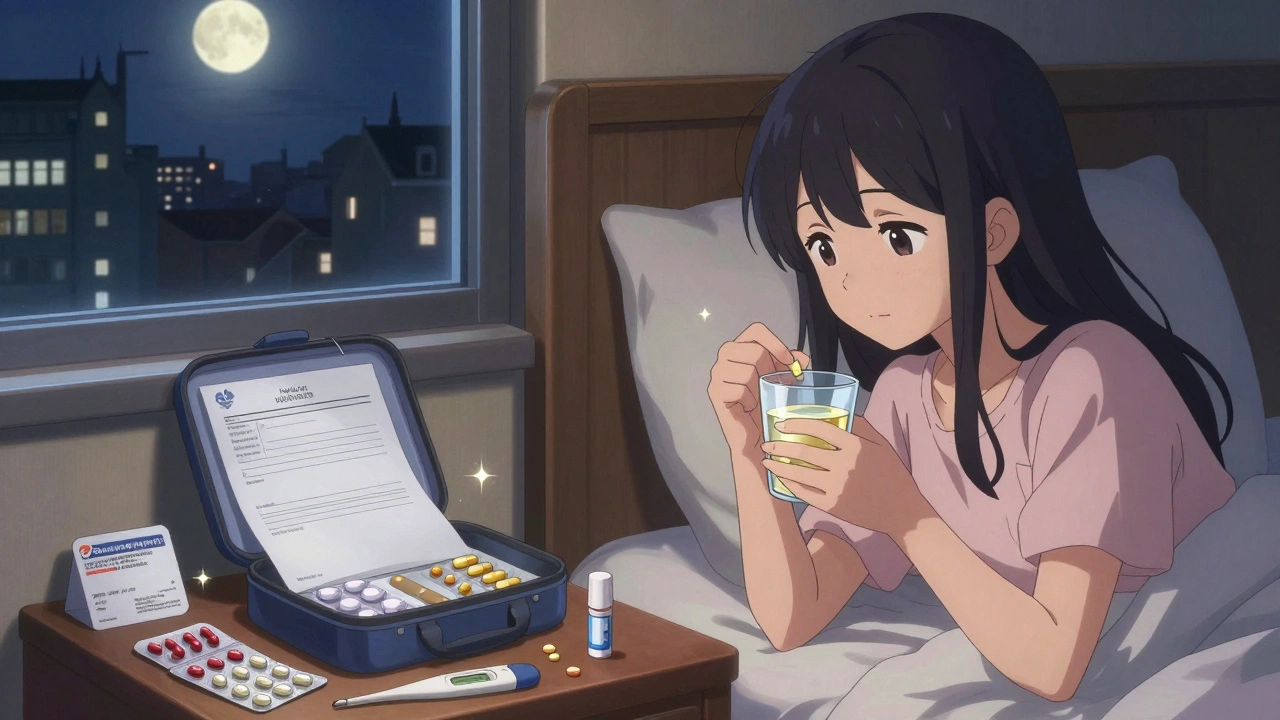
Third, carry a doctor’s letter. It should list your name, the medication, the dosage, and that it’s for personal use. If you have insulin or needles, this letter is non-negotiable. Some countries, like Japan and the UAE, ban common cold medicines with pseudoephedrine or strong painkillers. Check with the embassy of your destination before you go.
Use generic names on your prescriptions. Tylenol is acetaminophen. Advil is ibuprofen. Brand names vary by country - generic names don’t.
How to Pack and Store Your Kit
It’s not just what you pack - it’s how you pack it.
- Use a small, waterproof plastic box or zip-top bag. Clear is best - you can see what’s inside without opening it.
- Keep meds cool. Heat ruins pills. Don’t leave your kit in a hot car or direct sunlight. If you’re carrying insulin, use a small insulated cooler with a cold pack.
- Store your kit in your carry-on. Checked luggage can get lost, delayed, or left in extreme temperatures.
- Include a printed list: medication names, dosages, frequency, and your doctor’s contact info. This helps if you need emergency care abroad.
- Carry a contact card with emergency numbers: family, local hospital, your doctor, and your country’s embassy.
Also, check TSA and airline rules. Safety pins, scissors, and tweezers can’t go in your carry-on. Put them in checked baggage. Liquid medications over 100ml are allowed if declared, but keep them in your original containers.
What Not to Pack
Less is more. Don’t bring:
- Unused antibiotics from past illnesses - they’re expired, ineffective, or wrong for your current problem.
- Herbal supplements without knowing local laws - some countries ban them.
- Large bottles of liquids - use travel-sized containers or refillable ones.
- Medications you’ve never taken before - test them at home first. Some cause side effects you didn’t expect.
Final Checklist Before You Leave
Do this 3 days before departure:
- Check expiration dates on all meds.
- Confirm you have enough of your prescriptions - plus 2 extra weeks.
- Print your doctor’s letter and prescriptions (generic names only).
- Fill your kit with the right items for your destination.
- Put half in carry-on, half in checked luggage.
- Test your water purification tablets at home - make sure you know how to use them.
- Leave a copy of your kit list with someone at home.
When to See a Doctor
Your kit is for minor issues. If you have:
- Fever over 102°F (39°C) that lasts more than 2 days
- Bloody diarrhea or severe vomiting
- Difficulty breathing or swelling of the face
- Severe headache with stiff neck or confusion
- Any injury that won’t stop bleeding or looks infected
- get medical help. Your kit helps you manage, not replace, professional care.
Keep It Simple. Stay Safe.
You don’t need to be a doctor to travel safely. You just need to be prepared. A small, smartly packed kit gives you control when things go wrong. It lets you enjoy your trip instead of worrying about what might happen. Pack smart, stay aware, and get back home with good stories - not a hospital bill.
Taylor Dressler
December 11, 2025 AT 09:20I’ve been using this exact kit for 8 years across 27 countries. The ORS packets are non-negotiable - I’ve seen people collapse from dehydration in Bangkok, and a simple mix of salt, sugar, and clean water saved two tourists last year. Also, always carry extra loperamide. One time in Peru, I gave half a tablet to a guy who was sprinting to the bathroom every 10 minutes. He hugged me. No joke.
Aidan Stacey
December 11, 2025 AT 15:21LET ME TELL YOU ABOUT THE TIME I FORGOT MY ANTIBIOTICS IN BANGKOK. I WAS SWEATING, SHAKING, AND EATING STREET NOODLES LIKE A MAN possessed. Then I got diarrhea so bad I cried into a plastic bag. No pharmacy had azithromycin. I had to buy a whole bottle of some Thai mystery powder that tasted like burnt plastic. I swear, I saw angels that night. DON’T BE THAT PERSON. PACK THE MEDS.
Jean Claude de La Ronde
December 12, 2025 AT 10:00so uhhhh… we’re telling people to carry antibiotics like they’re snacks now? cool cool. next you’ll say ‘just bring a defibrillator and a therapist’ for your trip to the beach. i mean, sure, if you want to turn your vacation into a pharmaceutical scavenger hunt. also, who even uses ‘loratadine’? it’s claritin, bro. stop talking like a drug rep.
Courtney Blake
December 13, 2025 AT 06:31Why do Americans think they can just bring meds anywhere? Japan bans ibuprofen. UAE locks people up for having codeine. You think your ‘doctor’s letter’ means anything when you’re in a cell with a translator who doesn’t speak English? This isn’t ‘pack smart’ - it’s ‘hope for the best’ with extra steps. You’re not a hero. You’re a liability.
Doris Lee
December 13, 2025 AT 08:33Frank Nouwens
December 13, 2025 AT 17:27It is imperative to note that the storage of pharmaceuticals in environments subject to thermal fluctuation may result in degradation of active ingredients. While the recommendation to retain medications in carry-on luggage is prudent, one must also ensure that the container is not exposed to direct solar radiation or ambient temperatures exceeding 30°C. I have personally observed a 17% reduction in potency of acetaminophen after a 48-hour exposure to 42°C in a checked bag.
Kaitlynn nail
December 15, 2025 AT 10:27Aileen Ferris
December 17, 2025 AT 00:42Michelle Edwards
December 17, 2025 AT 10:31I used to skip the kit until I got sick in Mexico and had to walk 2 miles to a pharmacy with no cash. Now I keep it in my backpack at all times - even on weekend trips. It’s not about being paranoid. It’s about being kind to your future self. You’ll thank yourself when you’re not curled up on a hostel floor.
Sarah Clifford
December 18, 2025 AT 07:41