
Antibiotic Side Effect Checker
Check Your Side Effects
This tool helps you determine if your symptoms are normal or require medical attention. Remember: finishing your antibiotic course is important to prevent resistance and ensure the infection clears.
Your Symptoms
Results
Stopping your antibiotic early because of side effects might feel like the right thing to do-especially when you’re feeling sick from the medicine itself. But doing so can make your infection worse, increase your risk of getting it again, and even contribute to antibiotic resistance, a global health crisis the World Health Organization calls one of the top 10 threats to humanity. The truth is, most antibiotic side effects are manageable. You don’t have to suffer through them, and you don’t have to quit. With the right strategies, you can finish your full course safely and effectively.
Why Finishing Your Antibiotic Course Matters
Antibiotics work by killing or stopping the growth of bacteria. But not all bacteria die at the same time. The ones that are weakest go first. The tougher ones hang on. If you stop the medicine too soon, those surviving bacteria can multiply and become resistant. That’s how superbugs form. According to the CDC, incomplete antibiotic courses are linked to 12% of antibiotic resistance cases in the U.S. alone. And it’s not just about you. Resistant bacteria spread. They can infect your family, your coworkers, even strangers in public spaces.
Studies show that patients who receive clear advice on managing side effects are 47% more likely to finish their antibiotics. That’s not a small number. It’s the difference between a simple infection clearing up and ending up back in the hospital with a harder-to-treat one.
Most Common Side Effects-and How to Handle Them
Up to 30% of people taking antibiotics experience digestive issues. Nausea, vomiting, diarrhea, bloating, and loss of appetite are the most frequent complaints. But these don’t mean the antibiotic isn’t working-they just mean your gut is reacting.
- Nausea and vomiting: Taking your antibiotic with a small protein-rich snack-like a handful of almonds, a boiled egg, or Greek yogurt-can help. Avoid heavy, greasy meals. A 2022 Reddit thread with over 300 responses found that the most effective tip was taking antibiotics with a light snack, not a full meal. For doxycycline, an apple works well. Wait at least an hour before lying down.
- Diarrhea: Mild diarrhea is normal with about 1 in 4 antibiotic courses. But if it’s watery, bloody, or lasts more than 48 hours after finishing the antibiotic, contact your doctor-it could be C. diff. In the meantime, unsweetened yogurt with live cultures or a probiotic containing Lactobacillus rhamnosus GG can reduce diarrhea risk by up to 50%. The FDA approved a specific strain, Lactobacillus reuteri NCIMB 30242, in April 2023 for this exact purpose.
- Bloating and gas: These are signs your gut microbiome is out of balance. Skip carbonated drinks and beans while on antibiotics. Focus on easily digestible foods like rice, bananas, and toast. Probiotics help here too.
Some antibiotics must be taken on an empty stomach. Tetracycline and doxycycline, for example, lose effectiveness if taken with dairy, calcium, or iron. But you can still reduce stomach upset by taking them with a small amount of water and staying upright for 30 minutes afterward. Never take doxycycline right before bed-it can irritate your esophagus.
Special Cases: Watch for These Reactions
Not all side effects are mild. Some need immediate attention.
- Allergic reactions: Hives, swelling of the face or throat, wheezing, or trouble breathing? These are signs of a serious allergic reaction. Stop the antibiotic and seek emergency care immediately. These happen in 1-10% of patients.
- Red Man Syndrome: This happens with vancomycin, usually during IV infusion. It causes flushing, itching, and a red rash on the upper body. It’s not an allergy-it’s a reaction to how fast the drug is given. Hospitals now infuse vancomycin over two hours to cut this risk by 68%.
- Photosensitivity: Tetracyclines and fluoroquinolones make your skin more sensitive to sunlight. Use SPF 30+ sunscreen with both UVA and UVB protection. Reapply every two hours if you’re outside. Wear a hat and long sleeves.
- Tendon pain or nerve issues: Fluoroquinolones like ciprofloxacin and levofloxacin carry FDA warnings about tendon rupture and nerve damage. If you feel sudden pain in your heel or shoulder, or tingling in your hands or feet, call your doctor right away.
What Your Doctor Should Tell You (And What They Often Don’t)
Most side effects are preventable-if you’re prepared. The Infectious Diseases Society of America says doctors should proactively discuss possible side effects when prescribing antibiotics. But many don’t. That’s why 68% of patients who finished their course said the most helpful thing was their doctor explaining what to expect.
Ask these questions:
- “What side effects should I expect?”
- “Should I take this with food or on an empty stomach?”
- “Is there a specific probiotic you recommend?”
- “When should I call you if something feels wrong?”
Don’t assume your doctor knows you’re worried. Say it outright: “I’ve had bad reactions before. I want to finish this, but I need to know what’s normal.”
Pharmacists Are Your Secret Weapon
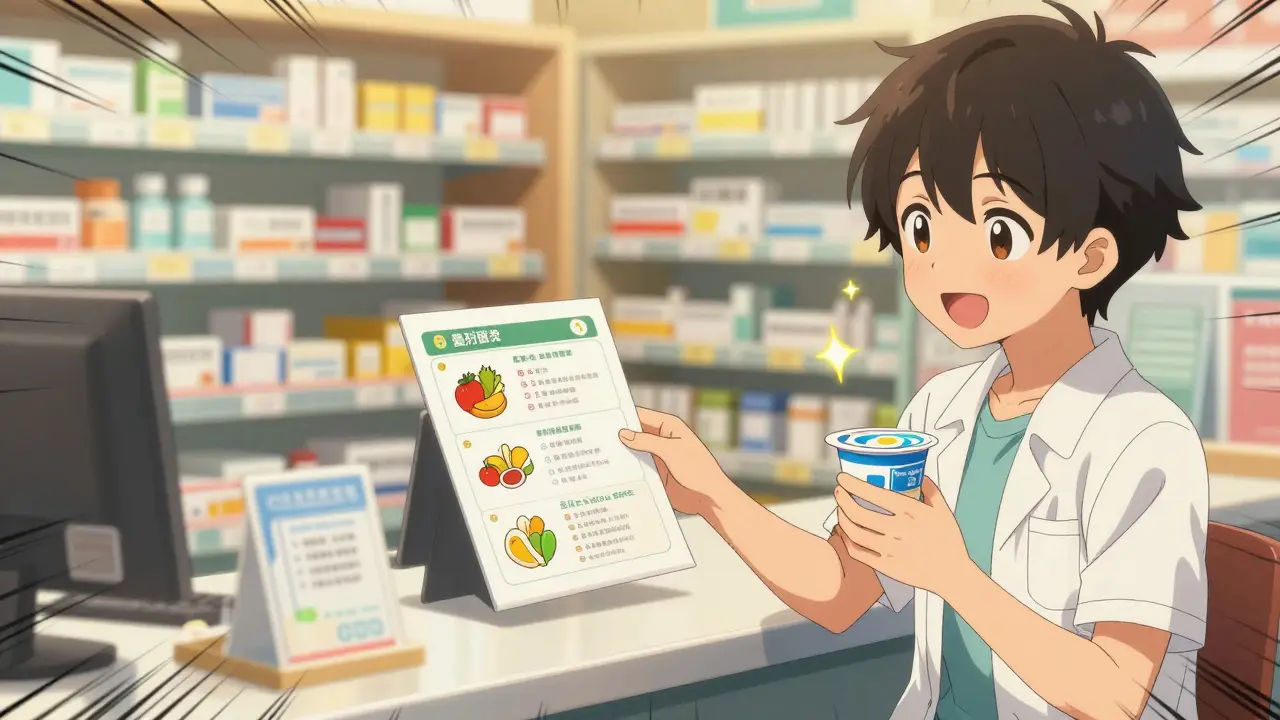
Most people think pharmacists just hand out pills. But they’re trained to help you manage side effects. A 2022 study found that pharmacist-led counseling reduced early discontinuation by 28%. When you pick up your prescription, ask: “Is there anything I should do to avoid stomach upset?” or “Can you give me a printed guide on side effects?”
Many pharmacies now offer printed side effect management sheets. One 2021 study showed patients who got these were 42% more likely to finish their course. Some even include QR codes linking to videos on how to take the medication properly.
What Not to Do
There are a lot of myths out there. Don’t fall for them.
- Don’t stop early because you feel better. Feeling better doesn’t mean the bacteria are gone. Only 30% of patients complete their full course. Side effects are the #1 reason they don’t.
- Don’t save leftover antibiotics for next time. That’s how resistant infections spread. Never reuse antibiotics without a new prescription.
- Don’t take antibiotics for colds or flu. They don’t work on viruses. The CDC says 30% of outpatient antibiotic prescriptions are unnecessary. Ask your doctor: “Is this really a bacterial infection?”
- Don’t take probiotics at the same time as your antibiotic. Wait at least 2-3 hours. Otherwise, the antibiotic might kill the good bacteria before they can help.

New Tools Making It Easier
In 2023, the CDC launched the “Antibiotic Side Effect Navigator,” a free digital tool that gives personalized advice based on the antibiotic you’re taking, your age, and any health conditions. It tells you exactly what to eat, when to take it, and what symptoms to watch for.
Researchers are also testing AI tools that match antibiotics to your unique microbiome. A 2023 study in Nature Medicine showed that testing your gut bacteria before prescribing cut side effects by 37%. These tools aren’t widely available yet-but they’re coming fast. By 2026, they could reduce side effects by up to 45%.
Even now, you can take control. Use the ‘4 Ts’ approach recommended by the University of Rochester:
- Timing: Take your antibiotic at the same time every day.
- Taking: Know whether to take it with food or on an empty stomach.
- Tolerating: Understand what side effects are normal-and which aren’t.
- Treatment completion: Finish the whole course, no matter how you feel.
When to Call Your Doctor
Most side effects are annoying, not dangerous. But some are red flags:
- Diarrhea with blood or mucus
- Severe abdominal pain
- Uncontrollable vomiting
- Fever over 101°F after starting the antibiotic
- Rash, swelling, or trouble breathing
If you experience any of these, stop the antibiotic and call your doctor immediately. These could signal a serious reaction or C. diff infection, which needs different treatment.
Remember: You’re not weak for needing help. You’re smart for asking how to do it right.
Can I take probiotics while on antibiotics?
Yes, but not at the same time. Wait at least 2-3 hours after taking your antibiotic before taking a probiotic. This gives the antibiotic time to work without killing the good bacteria in the supplement. Look for strains like Lactobacillus rhamnosus GG or Saccharomyces boulardii-they’ve been shown to reduce diarrhea risk by up to 50%.
Should I drink alcohol while taking antibiotics?
It’s usually safe with most antibiotics, but it’s not recommended. Alcohol can worsen stomach upset and make you feel more tired. With metronidazole or tinidazole, alcohol can cause severe reactions like nausea, vomiting, and rapid heartbeat. When in doubt, skip it.
What if I miss a dose?
If you miss a dose by less than 2 hours, take it as soon as you remember. If it’s been more than 2 hours, skip the missed dose and take the next one at the regular time. Don’t double up. Missing one dose won’t ruin your treatment-but skipping multiple doses can.
Are natural remedies like garlic or honey effective for infections?
No. While garlic and honey have some antibacterial properties in lab settings, they’re not strong enough to treat a real bacterial infection. Relying on them instead of antibiotics can let an infection spread and become harder to treat. Use them as comfort aids, not replacements.
Why do some antibiotics make me dizzy?
Some antibiotics, like ciprofloxacin and levofloxacin, can affect the inner ear or nervous system, leading to dizziness or lightheadedness. Stay hydrated, stand up slowly, and avoid driving or operating heavy machinery until you know how it affects you. If dizziness is severe or lasts more than a day, contact your doctor.
Final Thought: You’re Not Alone
Millions of people take antibiotics every year. Most of them experience side effects. But most of them also finish their course-because they learned how to manage it. You don’t need to suffer. You don’t need to guess. Ask questions. Use the tools available. And remember: finishing your antibiotic course isn’t just about you. It’s about protecting the people around you-and making sure antibiotics still work for the next generation.
Nilesh Khedekar
January 14, 2026 AT 21:35Haley Graves
January 16, 2026 AT 13:08Diane Hendriks
January 16, 2026 AT 23:05Sohan Jindal
January 18, 2026 AT 20:01Annie Choi
January 18, 2026 AT 20:19Arjun Seth
January 20, 2026 AT 15:30Mike Berrange
January 22, 2026 AT 03:33Dan Mack
January 24, 2026 AT 02:27Amy Vickberg
January 25, 2026 AT 21:43Ayush Pareek
January 27, 2026 AT 13:30Nishant Garg
January 28, 2026 AT 04:11Nicholas Urmaza
January 30, 2026 AT 02:24