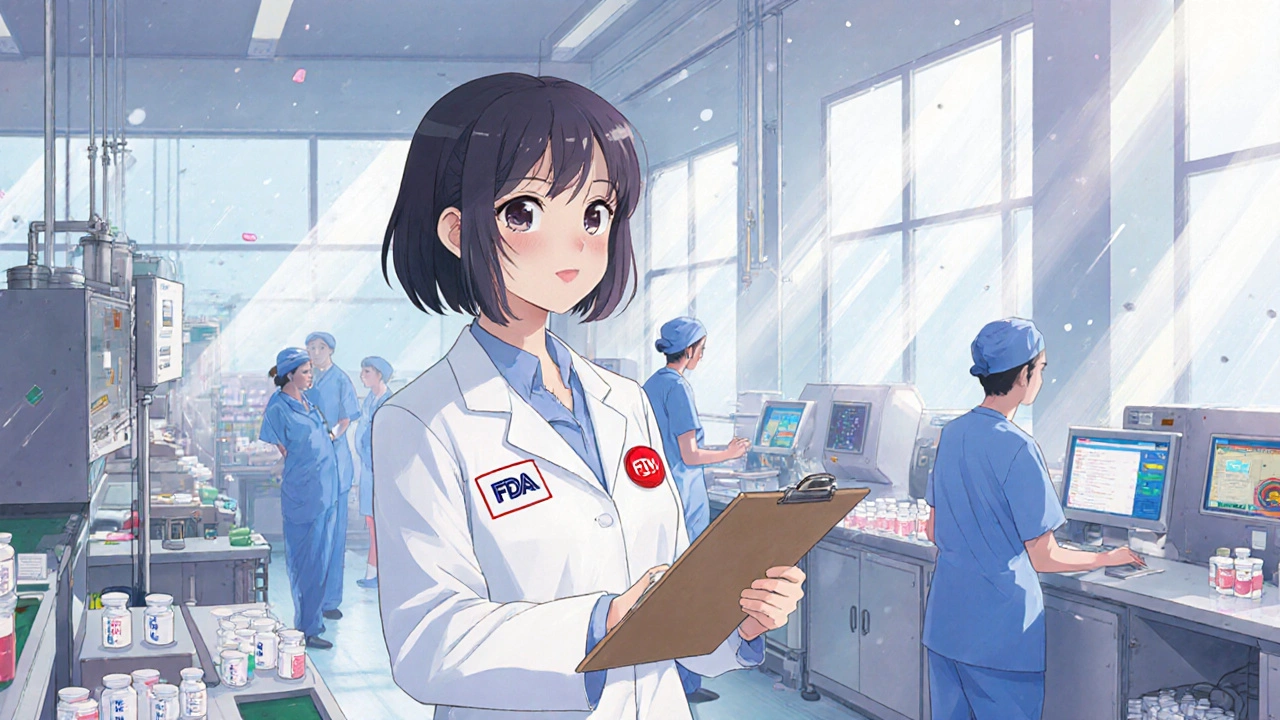
When you pick up a generic pill at the pharmacy, you expect it to work just like the brand-name version. You don’t want to wonder if it’s weaker, less safe, or made in a dirty factory. The truth is, the FDA doesn’t just approve generic drugs and walk away. It watches them-closely-from the moment the raw ingredients arrive at a factory in India or Ohio to the second the bottle lands on your counter.
How Generic Drugs Get Approved Without Full Clinical Trials
Most people assume that every new drug needs years of human testing before it hits the market. That’s true for brand-name drugs. But for generics? The process is different-and smarter. Under the Hatch-Waxman Act of 1984, generic manufacturers don’t have to repeat expensive clinical trials. Instead, they prove their drug is bioequivalent to the original. That means it delivers the same amount of active ingredient into your bloodstream at the same rate. The FDA requires this to be within 90-110% of the brand-name drug’s performance.
This isn’t guesswork. It’s science. Companies run tests using healthy volunteers, measuring blood levels over time. If the numbers match, the FDA accepts it. But here’s what most people don’t realize: bioequivalence alone isn’t enough. The FDA also checks the drug’s ingredients, how it’s made, how stable it is over time, and whether the label matches the original exactly. No shortcuts on the details.
The Hidden Rules: cGMP and Why They Matter
Imagine a factory where one worker skips a step, another uses a dirty machine, and no one checks the temperature during mixing. That’s not hypothetical. It’s happened. That’s why the FDA enforces Current Good Manufacturing Practices, or cGMP. These aren’t suggestions. They’re legal requirements.
Every generic drug maker must have three systems in place:
- Strict control of raw materials-from the moment they arrive, they’re tracked, tested, and stored properly to avoid contamination.
- Detailed written procedures for every single step of production, with real-time monitoring of critical factors like heat, pressure, and humidity.
- Lab testing of every batch, using validated methods, to confirm the drug contains the right amount of active ingredient and is free from harmful impurities.
The FDA doesn’t trust paperwork alone. They send inspectors-often unannounced-to factories around the world. In 2021, they conducted over 1,000 inspections globally. About 74% of those met their performance goals. But here’s the hard truth: in 2019, 15% of foreign facilities had serious quality issues. Domestic ones? Only 8%. That gap isn’t going away. That’s why the FDA is ramping up foreign inspections.
Why Foreign Factories Are a Big Deal
Nearly 80% of the active ingredients in U.S. generic drugs come from overseas-mostly India and China. The FDA knows this. That’s why they’ve spent the last decade trying to catch up. In 2013, they set a goal: inspect every high-risk facility every two years. They’re getting closer. Thanks to the Generic Drug User Fee Amendments (GDUFA), the FDA now has more money, more staff, and better tools.
GDUFA III, launched in 2022, commits $1.1 billion through 2027 to modernize inspections, improve data sharing, and reduce approval times. By 2025, the FDA plans to conduct 1,500 foreign inspections annually-up from 1,082 in 2021. They’re also using risk-based scheduling. Factories with past violations? They get visited more often. Factories with clean records? They get a little more breathing room. It’s not perfect, but it’s a system that adapts.

What Happens After the Drug Is Approved
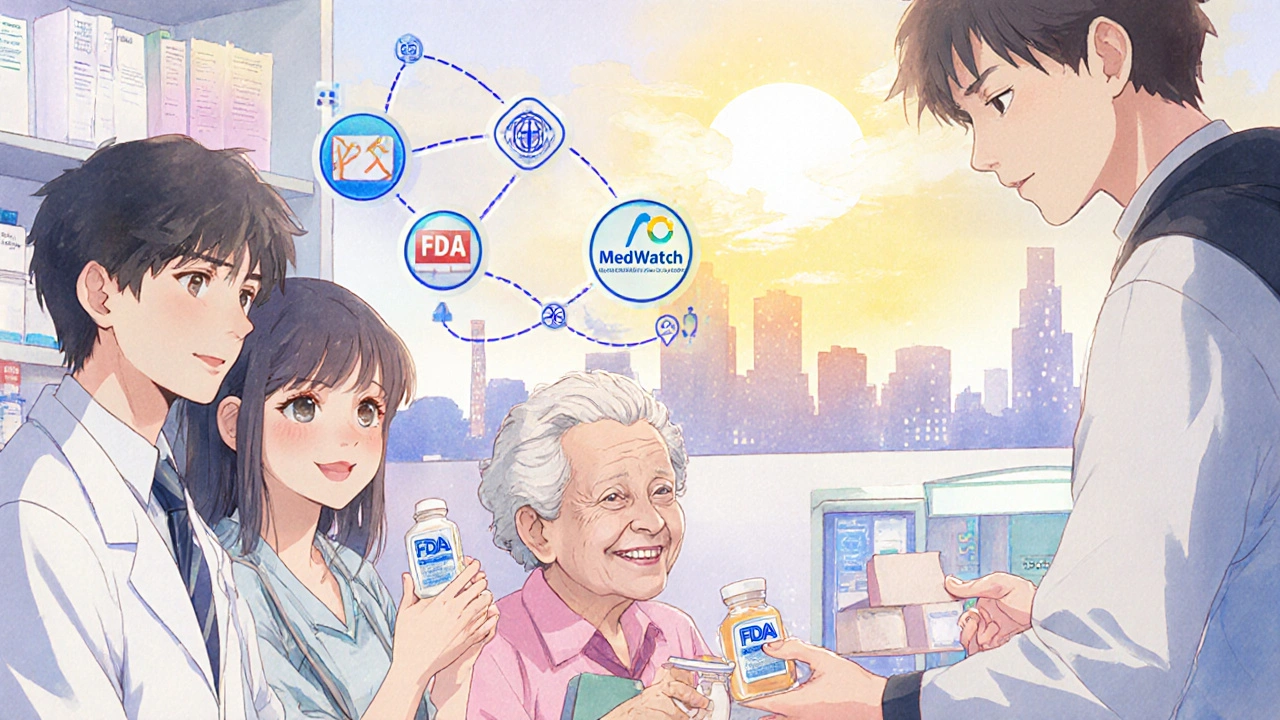
Approval isn’t the finish line. It’s the starting line. The FDA keeps watching. Every time someone has a bad reaction to a generic drug-whether it’s dizziness, rash, or worse-it can be reported through MedWatch. The FDA gets about 1.3 million reports a year. Analysts dig into them, looking for patterns. Did a batch of generic metformin cause more stomach issues than usual? Is a new supplier of an active ingredient linked to unexpected side effects?
If something looks off, the FDA doesn’t wait. They can demand a recall. They can update the drug’s label to warn doctors. Or they can send a letter directly to healthcare providers. In 2021 alone, they took action on dozens of safety concerns tied to generic drugs. And they’re not just reacting. They use proactive data analysis-looking at sales trends, pharmacy records, and even social media-to spot problems before they explode.
The People Behind the Scenes
Behind every approval is a team. The Office of Generic Drugs (OGD) leads the charge, but they don’t work alone. Pharmacologists, chemists, physicians, and quality engineers from across the FDA collaborate. The Clinical Safety and Surveillance Committee meets regularly to review new safety signals. The Drug Safety Oversight Board, made up of independent experts, advises the FDA on emerging risks.
Dr. Janet Woodcock, former head of the FDA’s drug center, put it plainly: “Generic drugs must be identical to their brand-name counterparts in dose, safety, strength, quality, performance, and intended use.” That’s not marketing. That’s the standard. And it’s enforced by people who check every step of the process.
How Much Does This Cost-And Who Pays?
Bringing a brand-name drug to market can cost over $2 billion. Generics? Around $1-5 million. That’s why they’re so cheap-and why they save the U.S. healthcare system $313 billion every year. But the FDA’s oversight isn’t free. The Generic Drug User Fee Amendments (GDUFA) let the FDA collect fees from manufacturers to fund inspections, reviews, and modernization. That’s key. It means the FDA isn’t just waiting for Congress to fund them. They have steady, predictable money to do their job.
Since GDUFA started in 2012, approval times have dropped from an average of 30 months to under 10 months for standard applications. The FDA now approves about 1,100 generic drugs a year. That’s more than ever. And the quality? It’s holding up.
What’s Next? The Future of Generic Drug Safety
The FDA is now focusing on harder-to-copy drugs-things like inhalers, complex injectables, and topical creams. These aren’t simple pills. They’re engineered products. Getting the texture, particle size, or delivery mechanism wrong can change how well they work. The FDA has launched the Complex Generic Drug Products Initiative to build specific guidance for these. They’ve published over 2,800 bioequivalence recommendations since 2018.
They’re also rolling out electronic tracking under the Drug Supply Chain Security Act. Every bottle will have a digital trail from factory to pharmacy. If a drug goes missing or turns up contaminated, they’ll know exactly where it came from-and where else it went.
The goal? No more surprises. No more recalls because of a dirty machine in a foreign plant. No more patients wondering if their generic is really the same. The FDA’s system isn’t flawless, but it’s one of the most comprehensive drug safety nets in the world. And it’s getting better every year.
Are generic drugs really as safe as brand-name drugs?
Yes. The FDA requires generic drugs to be identical to their brand-name counterparts in active ingredient, strength, dosage form, and how they work in the body. They must meet the same strict quality standards, and they’re held to the same safety requirements. Studies show they work the same way in patients.
Why do some people say generics don’t work for them?
Sometimes, it’s not the drug-it’s the inactive ingredients. Fillers, dyes, or coatings can vary between brands and generics. For most people, this doesn’t matter. But for those with allergies or rare sensitivities, it can cause mild side effects like stomach upset. If you notice a change after switching, talk to your doctor. It’s not usually a safety issue, but it can affect comfort.
Does the FDA inspect all generic drug factories?
The FDA inspects all facilities that make drugs for the U.S. market, but not all at once. They prioritize based on risk. Factories with past violations, those producing high-risk drugs, or those located in countries with a history of quality issues get inspected more often. The goal is to inspect every high-risk facility at least every two years.
Can a generic drug be pulled from the market after approval?
Yes. If the FDA finds a safety issue, contamination, or manufacturing defect after approval, they can require a recall. They’ve done this dozens of times. In 2021, they issued multiple recalls for generic blood pressure and diabetes drugs due to impurities. The system doesn’t just approve-it monitors and reacts.
How can I report a problem with a generic drug?
You can report side effects or problems through the FDA’s MedWatch program. This is open to patients, doctors, and pharmacists. You can file online, by phone, or by mail. These reports help the FDA spot patterns and act quickly. Your report matters.
Michael Segbawu
November 29, 2025 AT 14:16Aarti Ray
November 30, 2025 AT 21:33Alexander Rolsen
December 2, 2025 AT 11:33Leah Doyle
December 4, 2025 AT 09:51Alexis Mendoza
December 5, 2025 AT 10:50Michelle N Allen
December 5, 2025 AT 23:00Madison Malone
December 6, 2025 AT 06:19Graham Moyer-Stratton
December 6, 2025 AT 21:51tom charlton
December 8, 2025 AT 11:25Jacob Hepworth-wain
December 9, 2025 AT 12:37Craig Hartel
December 9, 2025 AT 18:51George Hook
December 10, 2025 AT 16:41jaya sreeraagam
December 11, 2025 AT 22:40Katrina Sofiya
December 13, 2025 AT 13:12kaushik dutta
December 14, 2025 AT 22:48