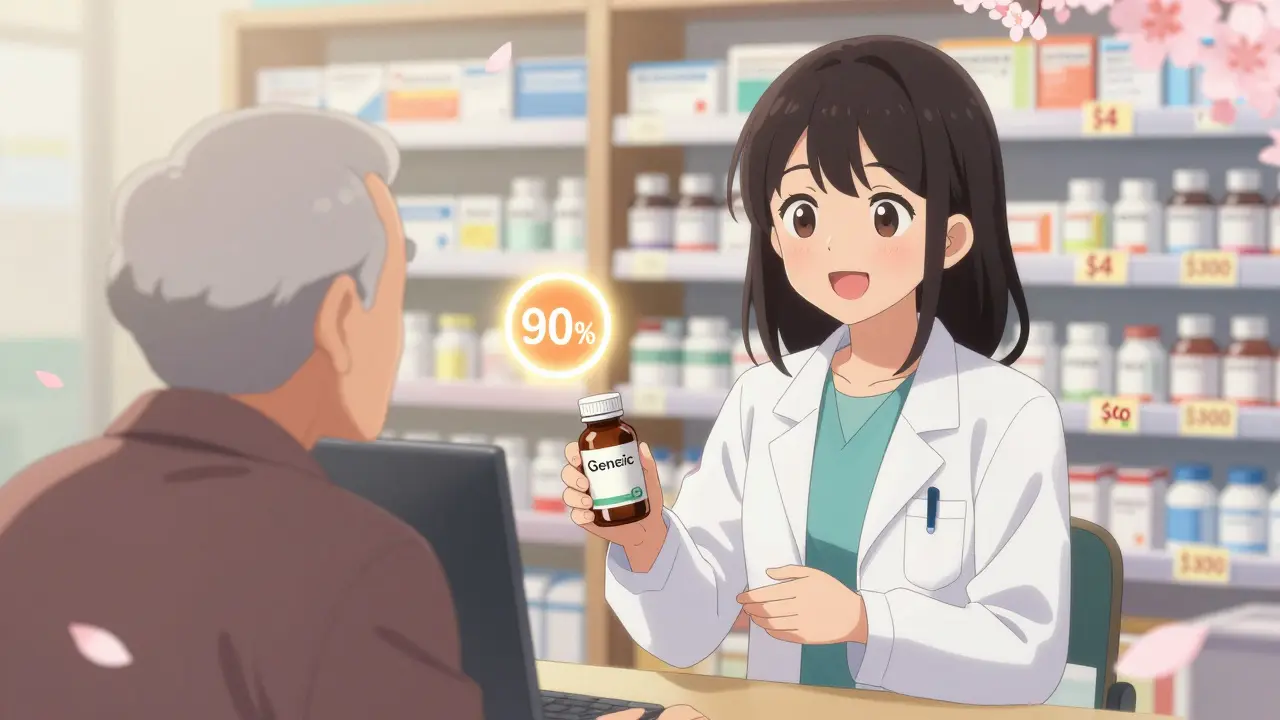
The Hatch-Waxman Act didn’t just change how drugs get approved in the U.S.-it rewrote the rules of the entire pharmaceutical market. Before 1984, generic drugs were rare. Fewer than 10 got FDA approval each year. Today, nine out of every ten prescriptions filled are for generics. That shift didn’t happen by accident. It was engineered by a law passed on September 24, 1984, designed to fix a broken system. The Drug Price Competition and Patent Term Restoration Act, better known as the Hatch-Waxman Act, struck a deal between two powerful forces: brand-name drug companies that needed time to recoup their R&D investments, and generic manufacturers who wanted a fair shot at entering the market.
Why the Act Was Needed
In the early 1980s, generic drug makers faced a legal wall. The Supreme Court had ruled in Roche v. Bolar that testing a patented drug-even just to prepare for FDA approval-counted as patent infringement. That meant generic companies couldn’t start developing their versions until the patent expired. For drugs with 20-year patents, that could mean waiting over a decade after the drug hit the market just to begin testing. Meanwhile, brand-name companies lost valuable patent time during the FDA’s own review process, which often took five to seven years. The result? Fewer generics, higher prices, and patients stuck paying more for life-saving medicines.The Two-Sided Solution
The Hatch-Waxman Act solved both problems at once. It gave brand-name companies a way to get back some of the patent time they lost during FDA review. They could apply for up to five years of patent term extension, with a cap of 14 years of total market exclusivity after approval. On average, the U.S. Patent and Trademark Office granted about 2.6 years of extension per drug. That gave innovators a real incentive to keep developing new medicines. At the same time, it created a fast track for generics: the Abbreviated New Drug Application, or ANDA. Instead of repeating full clinical trials, generic manufacturers only had to prove their drug was bioequivalent to the brand-name version. That meant showing it absorbed into the body at the same rate and to the same extent. This cut development costs by about 75% and slashed approval times. Suddenly, it made financial sense for companies to enter the generic market.The Safe Harbor That Changed Everything
One of the most powerful parts of the Act was a legal shield called the “safe harbor” provision. Under 35 U.S.C. §271(e)(1), generic companies could legally make, test, or use a patented drug during its patent term-if the only goal was to gather data for FDA approval. This reversed the Roche v. Bolar decision and let generics start preparing years before the patent expired. Some companies began testing as early as five years before expiration. That meant when the patent finally ran out, generics could launch immediately. No delay. No waiting. That’s why generic drugs started flooding the market after 1984.The 180-Day Exclusivity Game
To encourage the first generic company to challenge a patent, Hatch-Waxman offered a prize: 180 days of exclusive market access. The first company to file an ANDA with a “Paragraph IV certification”-claiming a patent was invalid or wouldn’t be infringed-got to be the only generic on the market for half a year. This created a rush. Companies would camp outside FDA offices to be the first to submit. In 2003, the FDA changed the rules to allow multiple companies to share the exclusivity if they filed on the same day. But the incentive still works. That 180-day window is why so many generic companies invest millions in patent lawsuits.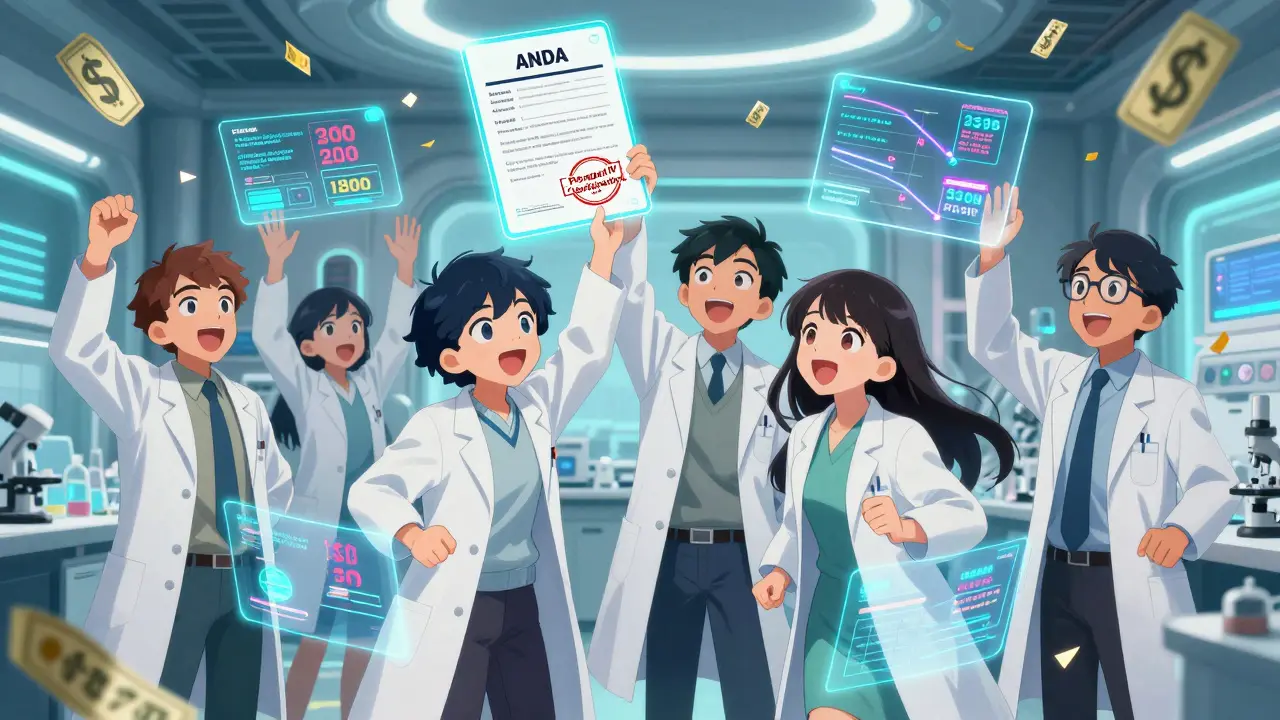
How It Changed the Market
The results speak for themselves. In 1984, generics made up less than 20% of prescriptions. By 2022, they accounted for 90%. And yet, they only cost 18% of what brand-name drugs do. The savings? Around $313 billion a year, according to the Association for Accessible Medicines. Between 1991 and 2011, the Act saved the U.S. healthcare system $1.18 trillion. That’s money that went back into people’s pockets, insurance premiums, and public health programs. But the system didn’t stay clean. As generics got smarter, so did brand-name companies. They began filing dozens of patents on minor changes-like a new coating, a different dosage form, or a new use for an old drug. These “secondary patents” weren’t always about innovation. Sometimes, they were just about delay. By 2016, the average drug had 2.7 patents listed in the FDA’s Orange Book. In 2022, some drugs had over 14. That’s called a “patent thicket.” It makes it hard for generics to enter without getting caught in years of lawsuits.The Dark Side: Pay-for-Delay and Product Hopping
One of the biggest abuses is “pay-for-delay.” That’s when a brand-name company pays a generic maker to stay off the market. Between 2005 and 2012, 10% of all patent challenges ended this way. The FTC called it anti-competitive. In 2013, the Supreme Court ruled these deals could be illegal, but they still happen. Another tactic is “product hopping.” A company slightly changes its drug-say, switching from a pill to a tablet-and then pushes doctors and patients to the new version. The old version’s patent expires, but the new one doesn’t. Patients get stuck on the pricier version.Who’s Winning and Who’s Losing
Generic manufacturers now spend $15-30 million per patent challenge. Some companies hire 15-20 full-time staff just to manage patent filings and litigation. Meanwhile, brand-name companies spend millions defending their patents. The average time from a Paragraph IV filing to generic entry rose from 28 months in 2000 to 42 months in 2018. That’s not because the science is harder. It’s because the legal system is overloaded. The FDA has tried to fix this. Its Generic Drug User Fee Amendments (GDUFA), launched in 2012, gave the agency more money to hire reviewers. Review times dropped from 36 months to 10 months on average. But 43% of initial ANDA submissions still have major flaws and get rejected. The FDA’s new QbR pilot program has helped some companies cut approval times by 35%.
What’s Changing Now
Reform is coming. The 2022 CREATES Act stopped brand companies from blocking generic makers from getting samples of their drugs-something some companies did to delay competition. In 2023, the House passed the Preserve Access to Affordable Generics and Biosimilars Act, which would ban pay-for-delay deals. The FDA also released new guidance in 2022 to tighten what patents can be listed in the Orange Book. If these changes stick, generics could enter the market 1.4 years faster, saving another $45 billion a year by 2030. Still, not everyone agrees. The Biotechnology Innovation Organization warns that too much reform could hurt innovation. After Japan passed similar rules in 2018, new drug approvals dropped 34%. The U.S. can’t afford to go that far. The core of Hatch-Waxman-the balance between innovation and access-is still sound. Most pharmaceutical executives still say so.What This Means for Patients
You don’t need to understand patent law to feel the impact of this law. When you pick up a $4 generic version of a drug that once cost $300, you’re seeing the Hatch-Waxman Act in action. When your insurance doesn’t deny coverage because the generic is cheaper, you’re benefiting from it. When you get your medication on time instead of waiting months because the brand-name version is still under patent, that’s Hatch-Waxman too. But when you see a drug’s price suddenly spike because a generic never came out, or when your doctor switches you to a new version of a drug you’ve been taking for years, that’s the dark side. The law was meant to help you. It still does-but it’s been bent, stretched, and sometimes broken.Looking Ahead
The Hatch-Waxman Act is 40 years old. It’s not perfect. But it’s still the backbone of how generic drugs get approved in the U.S. The next decade will decide whether it evolves-or collapses under its own weight. Will Congress crack down on patent abuse? Will the FDA enforce stricter listing rules? Will generics keep finding ways to break through thickets? One thing’s certain: without this law, millions of Americans would be paying far more for the medicines they need.What is the Hatch-Waxman Act?
The Hatch-Waxman Act, formally called the Drug Price Competition and Patent Term Restoration Act of 1984, is a U.S. law that created the modern system for approving generic drugs. It allows generic manufacturers to prove their drugs are bioequivalent to brand-name drugs using an Abbreviated New Drug Application (ANDA), while also giving brand-name companies extra patent time to make up for delays during FDA review.
How does the ANDA pathway work?
The ANDA pathway lets generic drug makers skip expensive clinical trials. Instead, they must prove their product is bioequivalent to the brand-name drug-meaning it delivers the same amount of active ingredient into the bloodstream at the same rate. The FDA compares the two using data from blood tests. This cuts development time and cost by about 75% compared to a full New Drug Application (NDA).
What is a Paragraph IV certification?
A Paragraph IV certification is a legal statement a generic company files with its ANDA, claiming that a patent listed for the brand-name drug is either invalid or won’t be infringed. This triggers a 45-day window for the brand-name company to sue for patent infringement. If they do, FDA approval is automatically delayed for up to 30 months, unless a court rules sooner.
Why do some generic drugs take years to come out after a patent expires?
Even after a patent expires, generic drugs can be delayed by legal battles, patent thickets (dozens of overlapping patents), or pay-for-delay deals. Brand-name companies often file extra patents on minor changes to extend exclusivity. Generic makers must challenge each one in court, which can take years. The FDA also takes time to review complex applications.
How has the Hatch-Waxman Act affected drug prices?
Generic drugs typically cost 80-85% less than brand-name versions. Once a generic enters the market, prices drop to about 15% of the original brand price within six months. Since 1984, the Act has saved U.S. patients and insurers over $1.18 trillion. However, patent abuse tactics like pay-for-delay and product hopping have added $149 billion in unnecessary drug spending since 2010.
swati Thounaojam
January 7, 2026 AT 14:19so like... generics saved my dad's life and i never even knew why? thanks for explaining
Joanna Brancewicz
January 9, 2026 AT 05:55The ANDA pathway is a brilliant regulatory innovation-bioequivalence thresholds are strictly defined under 21 CFR 320.23, and the statistical models for Cmax and AUC are rigorously validated. Without this, the entire cost structure of pharma would collapse.
Evan Smith
January 10, 2026 AT 08:05so brand companies pay generics to NOT sell cheaper stuff? and we call this capitalism? lol
Lois Li
January 11, 2026 AT 21:23I’ve seen this play out in my family-my mom got her blood pressure med for $4 after 10 years of paying $300. But then they switched her to a new version with a different coating and suddenly it’s $120 again. It’s not just about access-it’s about manipulation.
Ken Porter
January 12, 2026 AT 05:39America invented this system. Other countries are just freeloaders now. Stop whining about patents.
Luke Crump
January 12, 2026 AT 08:28What if the real tragedy isn’t the patents… but the fact that we’ve turned medicine into a chess game played by lawyers with billion-dollar stakes? We’re not curing disease-we’re negotiating access like it’s a luxury car.
Dave Old-Wolf
January 12, 2026 AT 19:04My cousin works at a generic company. They spend more time in court than in the lab. It’s insane. The science is simple, but the system? Broken.
Donny Airlangga
January 13, 2026 AT 15:06It’s wild to think that a 1984 law still holds up most of the U.S. drug market. The fact that it’s still working-despite all the loopholes-is kind of amazing.
Molly Silvernale
January 14, 2026 AT 21:10Patent thickets… like a legal jungle where every vine is a lawsuit, every thorn a delay, and every fruit-medicine-locked behind barbed wire… and we call this progress?
Kristina Felixita
January 16, 2026 AT 05:15my grandma’s insulin used to cost her half her social security… now she gets it for 12 bucks. i cry every time i think about it. thank you hatch-waxman
Annette Robinson
January 16, 2026 AT 12:32While the Hatch-Waxman Act established a foundational framework for market balance, contemporary challenges-including regulatory inefficiencies and strategic patent extensions-require systematic reform to preserve both innovation incentives and equitable access.
christy lianto
January 18, 2026 AT 03:22They gave brand companies 5 extra years of monopoly time… and then let them file 14 patents on a pill’s color? This isn’t innovation-it’s extortion. And we’re paying for it. Every. Single. Month.