Most of us don't think twice when a pharmacist swaps a brand-name pill for a generic version. We trust that if the FDA approved it, it works the same way. But here is the catch: generic drugs aren't approved using the same massive, multi-year clinical trials that the original drug went through. Instead, they are approved based on bioequivalence, which basically means they get into your bloodstream at the same rate and concentration as the brand name. While that sounds sufficient, it leaves a gap in our knowledge about how these drugs behave across millions of different people over several years. That is where post-market studies come in. These are the "real-world" safety checks that happen after a drug hits the shelves, ensuring that the cost savings of generics don't come at the expense of patient safety.
The Safety Gap: Why Post-Market Monitoring Matters
Why can't we just rely on the initial approval? The reality is that pre-approval trials usually involve a few thousand people in highly controlled settings. They often miss specific groups-like the elderly, children, or pregnant women-who might react differently to a medication. Because generic drugs skip the full-scale safety trials, the market becomes the actual trial. This makes pharmacovigilance-the science of detecting and preventing adverse effects-absolutely critical. If a generic version has a slight difference in how it dissolves, it might not show up in a lab, but it could cause a real issue for a patient with a sensitive stomach or a specific kidney condition.
A study in JAMA Internal Medicine highlighted a sobering fact: 68% of serious adverse event reports for cardiovascular generics weren't actually in the product labeling when they were first approved. This proves that the only way to find these "hidden" risks is through constant, clinical follow-up once the drug is being used by the general public.
How the FDA Tracks Generic Safety
The monitoring process isn't just a passive waiting game for complaints. The FDA uses a mix of mandatory reporting and high-tech data mining. The backbone of this is the FDA Adverse Event Reporting System, also known as FAERS. When a doctor or patient notices something wrong, they report it via MedWatch, and that data is fed into FAERS to look for patterns.
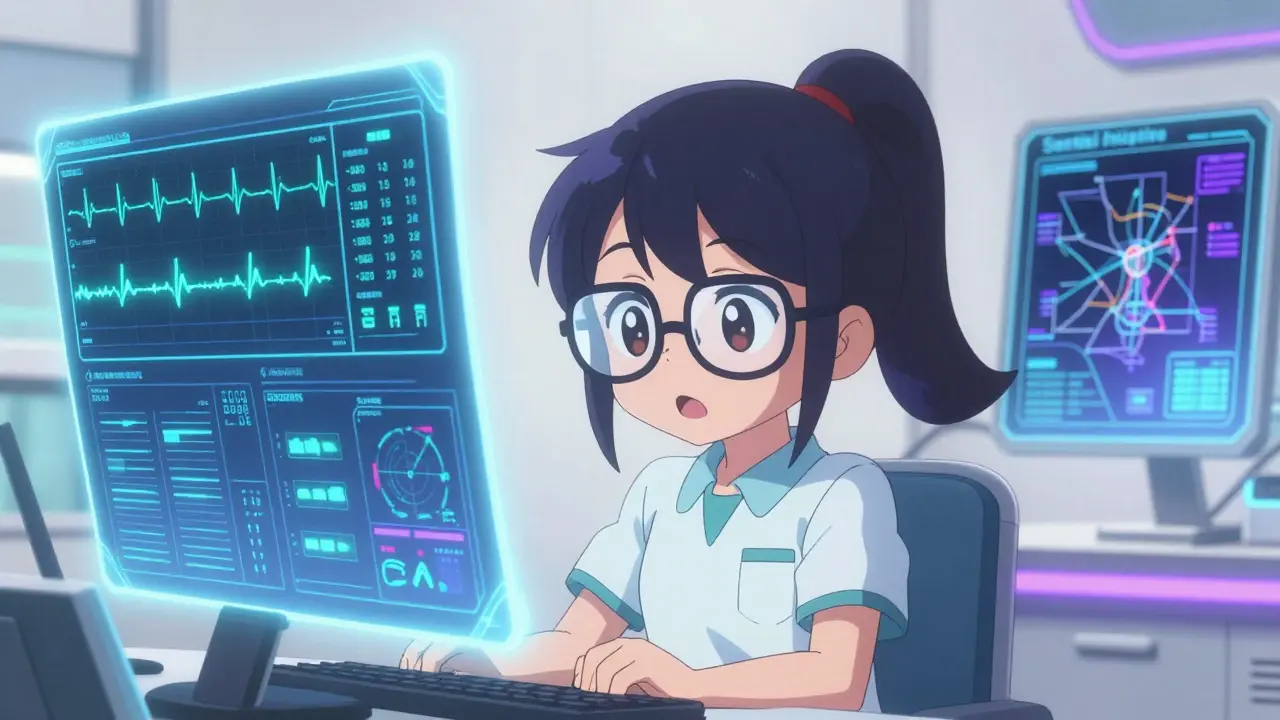
For a more proactive approach, the FDA uses the Sentinel Initiative. Think of this as a massive digital safety net that monitors over 300 million patient records in near real-time. Instead of waiting for a doctor to file a report, Sentinel allows the FDA to query insurance claims and electronic health records to see if a specific generic is causing more issues than its brand-name counterpart.
| Tool | Method | Primary Use |
|---|---|---|
| MedWatch / FAERS | Spontaneous Reporting | Detecting unexpected or rare side effects from user reports. |
| Sentinel Initiative | Active Surveillance | Mining millions of health records for real-time safety signals. |
| GDUFA III Plan | Regulatory Funding | Specifically targeting safety reviews for complex generics. |
The Challenge of Complex Generics
Not all generics are created equal. A simple tablet is one thing, but "complex generics"-like inhalers, transdermal patches, or drug-device combinations-are a different beast. These products rely heavily on the delivery system. If a patch doesn't stick properly to the skin for the full 24 hours, the patient doesn't get the full dose, which can be dangerous for medications like nicotine or hormone replacements.
In 2022, the FDA saw 1,247 generic drug recalls, which was a staggering 78% of all drug recalls that year. Many of these weren't due to the active ingredient being wrong, but rather quality-related safety issues like tablet dissolution problems or precipitates in liquids. This is why the FDA is now focusing more heavily on product-specific surveillance plans for high-risk generics.
The "Manufacturer Maze" and Attribution Issues
One of the biggest headaches in post-market safety is the fragmented nature of the industry. For any given generic drug, there might be ten different companies making it. If a patient has a bad reaction, the report often just says "Generic Drug X," without specifying which company made that specific batch. According to a 2023 GAO report, only 35% of generic drug reports actually specify the manufacturer.
This creates a massive blind spot. If Company A has a quality issue but Company B is doing everything right, the "noise" from Company A can make the entire class of generic drugs look unsafe, or worse, hide a specific manufacturer's failure. To fix this, some major companies are piloting blockchain technology to create a transparent supply chain, making it easier to trace a bad reaction back to the exact factory and batch.
What Manufacturers Must Do to Stay Compliant
Generic drug companies can't just sell a product and forget about it. They are legally required to maintain a pharmacovigilance system. This involves a rigorous schedule of reporting: serious adverse events must be reported to the FDA within 15 calendar days. Other events are bundled into periodic reports.
When a company wants to change how a drug is made, they can't just do it. They must file supplements based on the level of risk:
- CBE-0: Moderate changes that can be distributed immediately after the FDA is notified.
- CBE-30: Changes that require a 30-day window before distribution.
- Prior Approval Supplements (PAS): Major changes that need a green light from the FDA before the product can even leave the warehouse.
Maintaining these systems isn't cheap. On average, generic companies spend about $1.2 million annually just to keep their safety monitoring compliant with federal regulations.
Patient Perspectives: Real-World Experiences
While the data is great, the human experience is where the real story is. Many patients switch to generics and never notice a difference; in fact, 89% of patients reported no issues when switching for common conditions like diabetes or hypertension. However, for drugs with a "narrow therapeutic index"-where a tiny change in dose can be the difference between a cure and a crisis-the experience varies.
Take levothyroxine (a thyroid medication) as an example. Pharmacists have reported cases where patients develop heart palpitations simply by switching from one generic manufacturer to another. This isn't because the drug is "fake," but because subtle differences in how the body absorbs different generic formulations can trigger physical reactions. It's a reminder that while generics are safe for the vast majority, clinical follow-up is the only way to identify those rare, sensitive cases.
Are generic drugs less safe than brand-name drugs?
Not necessarily, but they are approved differently. Because they are approved based on bioequivalence rather than new clinical safety trials, they rely more heavily on post-market surveillance to detect rare side effects that only appear when millions of people use the drug.
What should I do if I suspect a generic drug is causing a reaction?
You should contact your healthcare provider immediately and report the issue through the FDA's MedWatch program. Be sure to provide the specific manufacturer name from the prescription bottle, as this helps the FDA trace the problem to the correct source.
What is a "complex generic"?
Complex generics are drugs that are difficult to copy because of their delivery method, such as inhalers, injectable liquids, or transdermal patches. These are monitored more closely by the FDA because a failure in the device (like a patch not sticking) can lead to a safety issue.
How does the Sentinel Initiative work?
The Sentinel Initiative is an active surveillance system that uses a massive database of insurance claims and electronic health records to monitor the safety of drugs in real-time, rather than waiting for voluntary reports from doctors.
Why do some people react differently to different generic brands of the same drug?
This often happens with narrow therapeutic index drugs. Small differences in inactive ingredients or the rate at which a tablet dissolves can affect how much of the drug enters your bloodstream, which may cause side effects in sensitive patients.
Tanya Rogers
April 20, 2026 AT 17:38The naive assumption that 'equivalence' constitutes 'identity' is a textbook example of systemic reductionism. One must wonder if the masses truly grasp the ontological difference between a chemical formula and a pharmacological experience. This entire structure is merely a cost-saving facade masquerading as healthcare efficiency.
Don Drapper
April 21, 2026 AT 06:40Absolute catastrophe! The fact that only 35% of reports specify the manufacturer is a breathtaking failure of oversight! We are essentially gambling with human lives while companies hide behind a veil of anonymity. It is an utter disgrace to the very concept of public health!
Brigid Prosser
April 21, 2026 AT 19:33Spot on with the blockchain mention! That's the kind of spicy tech we need to shake things up and stop the guesswork. It's high time we get some real transparency in the supply chain before someone else gets the wrong batch and suffers for it. Keep pushing for the good stuff!
Charlotte Boychuk
April 23, 2026 AT 07:24Totally get why some people freak out about switching brands. My cousin had a whole ordeal with her thyroid meds where she felt like a different person just because the pharmacy changed the generic maker. It's a bit of a rollercoaster, honestly.
Tokunbo Elegbe
April 23, 2026 AT 13:42That is so true... it's really important to be mindful of those 'narrow therapeutic index' drugs!!! Always, always double check the manufacturer name on the bottle... it can make a huge difference in your overall wellbeing!!!
Bob Collins
April 23, 2026 AT 18:42Fair point.
aman motamedi
April 25, 2026 AT 01:07The mention of the Sentinel Initiative provides a necessary perspective on the integration of big data in medical safety. It is a commendable effort to utilize electronic health records for the greater good of patient safety.