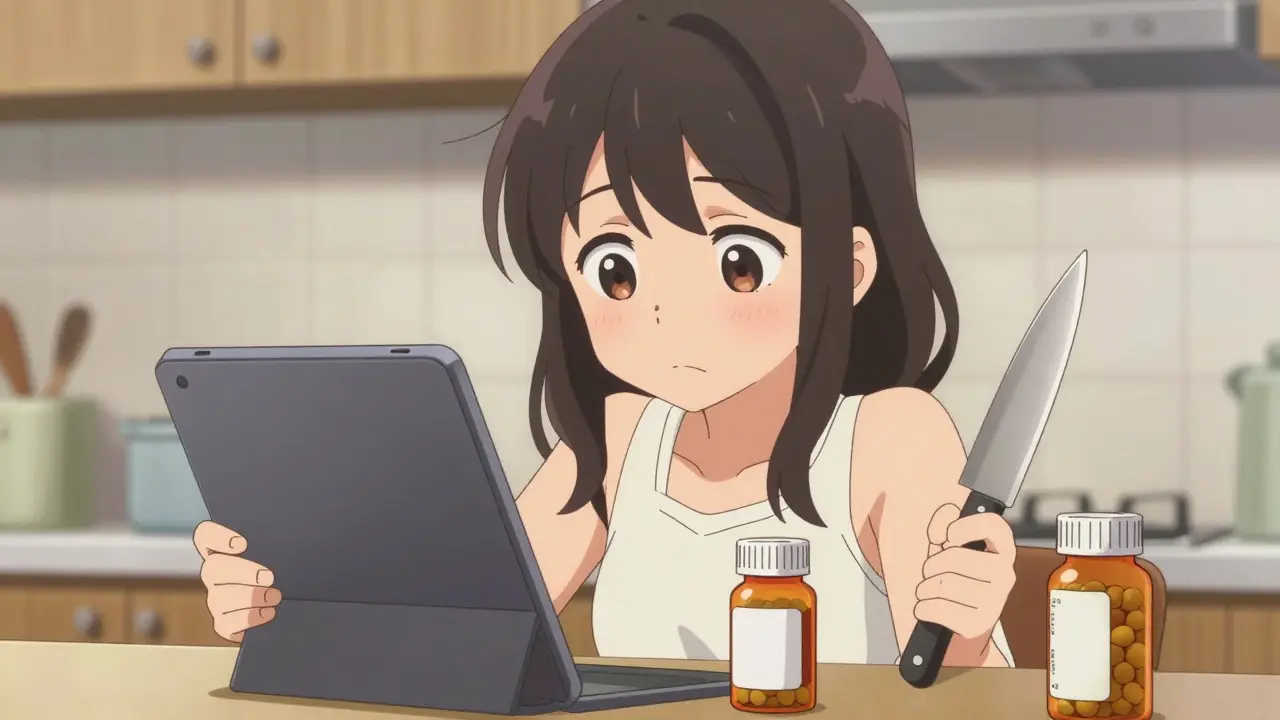
Have you ever looked at a pill bottle, saw the price tag, or struggled to swallow a large tablet, and thought, "I’ll just cut this in half"? You are not alone. According to recent surveys, up to 30% of older adults split pills at home, often without asking a doctor or pharmacist first. It feels like a smart hack-save money, get the right dose, make swallowing easier. But here is the catch: not every pill can be split. Some can’t even be crushed. Doing it wrong doesn’t just waste medicine; it can cause dangerous side effects, treatment failure, or even life-threatening overdose.
This isn't about scaring you away from managing your health. It’s about giving you the facts so you can stay safe while saving money or adjusting doses. Let’s break down what is actually safe, what is dangerous, and how to do it right if you have the green light from your healthcare team.
The Hidden Danger: Why Pill Form Matters
To understand why splitting some pills is risky, you need to know how they are built. A tablet isn’t just compressed powder. It’s an engineered delivery system. Manufacturers design pills to release medication in specific ways to maximize effectiveness and minimize harm.
When you crush or split a pill, you destroy that engineering. Here are the three main types of coatings and releases you need to watch out for:
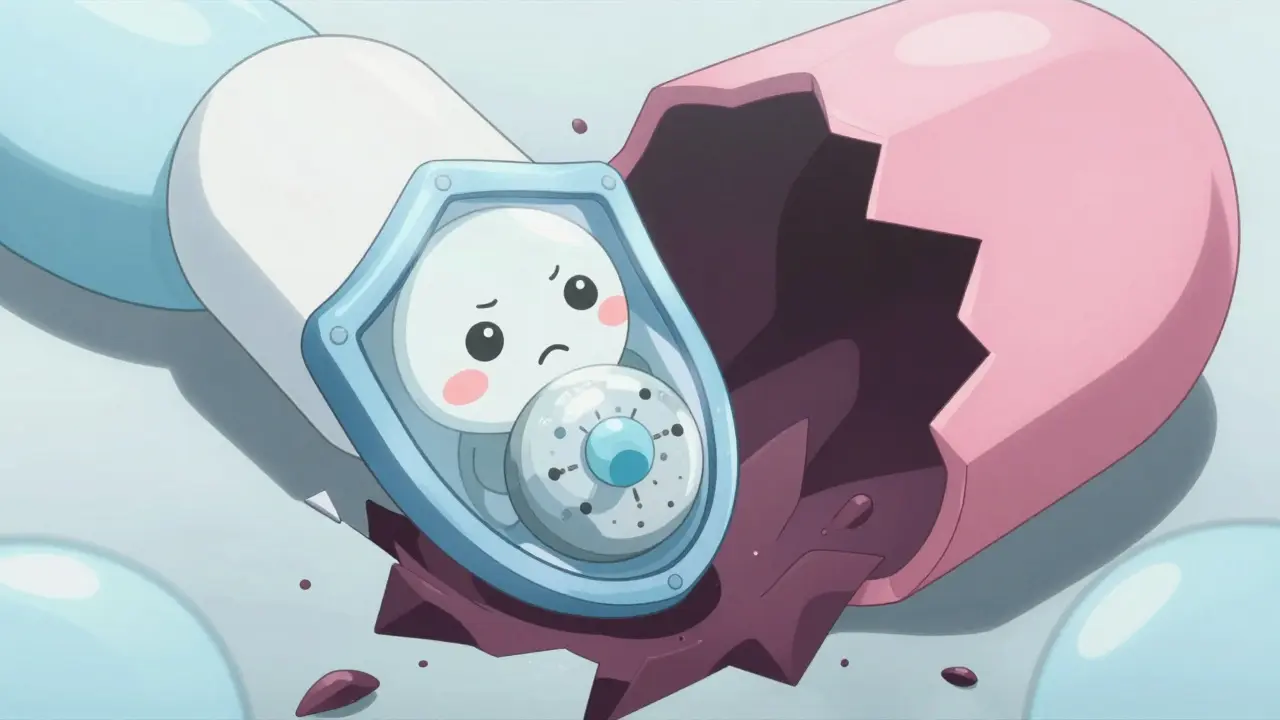
- Extended-Release (ER) or Sustained-Release (SR): These pills are designed to release medication slowly over hours or days. If you crush them, the entire dose dumps into your stomach at once. This is called "dose dumping." For drugs like oxycodone or certain blood pressure meds, this can spike blood levels by 300-500% within 30 minutes, leading to severe toxicity or overdose.
- Enteric-Coated: These have a special coating that protects the medication from stomach acid or protects your stomach from the medication. Crushing them removes this shield. For example, crushing potassium chloride can cause painful gastric ulcers, and crushing aspirin meant for the gut can irritate your stomach lining.
- Hazardous Drugs: Certain medications, including many chemotherapy agents and some antidepressants, are considered hazardous. Crushing them creates dust that can be inhaled or absorbed through skin. The National Institute for Occupational Safety and Health (NIOSH) warns that exposure to this dust-even once-can cause reproductive issues or other serious health problems for anyone handling the pill.
If a pill has any of these features, splitting or crushing it is generally unsafe. Always check the label or ask your pharmacist before altering the form.
Scored vs. Unscoed: Decoding the Line on the Pill
You’ve probably seen a line running down the middle of some tablets. This is a score line. It’s a helpful clue, but it’s not a guarantee of safety. Many people assume that if a pill has a line, it’s safe to split. That’s only true about half the time.
According to FDA data, while 70-80% of patients believe a score line means "safe to split," only 50-60% of those scored tablets are actually appropriate for splitting. Some manufacturers add score lines for manufacturing reasons, not dosing flexibility. Even when a pill is scored, splitting it manually can result in uneven halves. Studies show that even with professional splitters, 30-40% of splits have dose discrepancies exceeding 15%. That means one half might have significantly more drug than the other, leading to unpredictable effects.
| Medication Type | Can Split? | Can Crush? | Why/Why Not |
|---|---|---|---|
| Immediate-Release (Scored) | Yes* | Maybe | Safe if approved by pharmacist. Use a splitter for accuracy. |
| Extended/Sustained Release (ER/SR/XR) | No | No | Risk of dose dumping and overdose. |
| Enteric-Coated | No | No | Coating protects stomach or drug from acid. |
| Narrow Therapeutic Index (e.g., Digoxin) | No | No | Small dose changes can be dangerous. |
| Hazardous Drugs (Chemo, etc.) | No | No | Dust poses serious health risks to handler. |
| Sublingual (Under Tongue) | No | No | Designed to dissolve quickly under tongue, not swallow. |
*Always verify with a healthcare provider first.
Which Meds Are Safe to Split?
Not all hope is lost. Many common medications are safe to split if done correctly. Generally, immediate-release tablets with a wide therapeutic index (meaning there’s a safe range between effective dose and toxic dose) are good candidates. These include many statins, blood pressure medications, and antidepressants.
Common examples often cited as suitable for splitting include:
- Atorvastatin (Lipitor)
- Rosuvastatin (Crestor)
- Lisinopril (Prinivil, Zestril)
- Citalopram (Celexa)
- Sertraline (Zoloft)
However, "suitable" doesn’t mean "easy." Even safe pills can crumble. If a tablet is smaller than 1 cm in diameter, hard, or brittle, splitting it accurately becomes nearly impossible. In these cases, ask your doctor if a lower-strength formulation is available instead.
How to Split Pills Safely (If Approved)
If your doctor and pharmacist say yes, follow these steps to minimize errors and maintain drug potency.
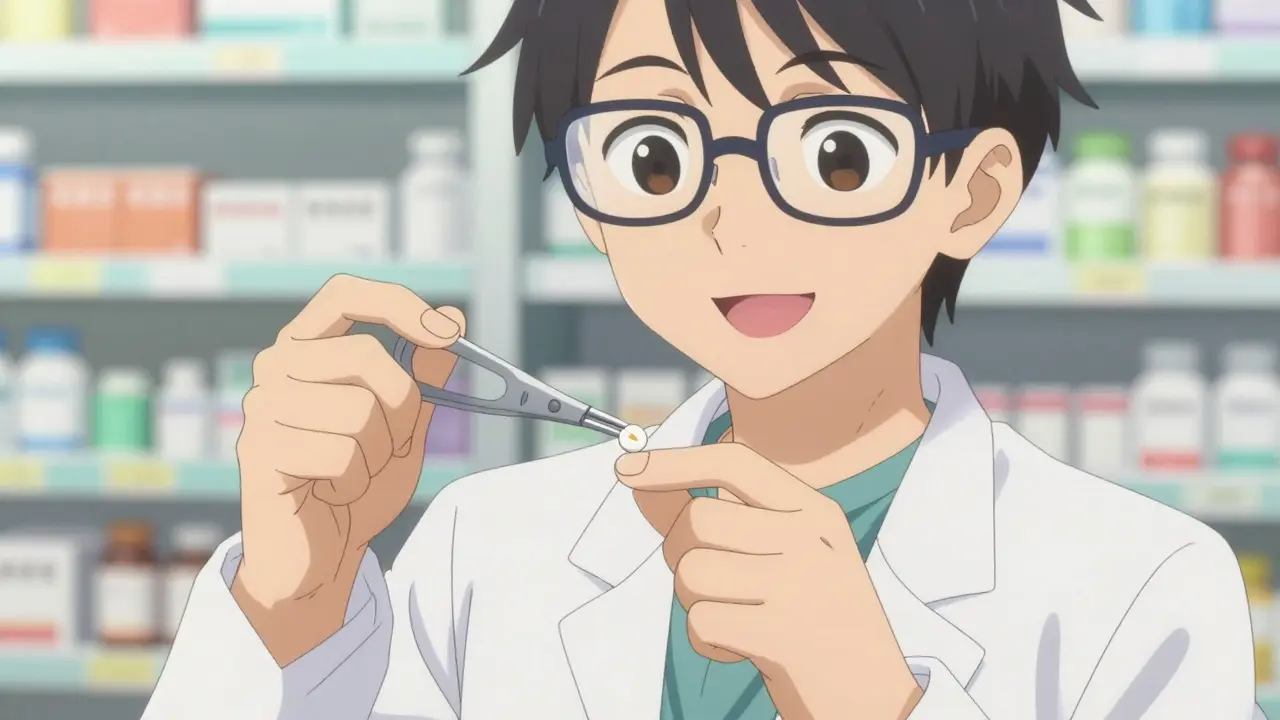
- Get the Right Tool: Ditch the kitchen knife or scissors. They create jagged edges and uneven splits. Buy a dedicated pill splitter. Look for one with a V-shaped holder and a retractable blade. Studies show these reduce dose variation to 5-8%, compared to 15-25% with manual methods.
- Check Your Vision and Hands: Splitting requires steady hands and good eyesight. If your corrected vision is worse than 20/40, your risk of improper splitting jumps significantly. If you have arthritis or tremors, ask someone else to help or consider liquid alternatives.
- Position Precisely: Place the pill in the splitter so the score line aligns perfectly with the center of the blade. Misalignment is the #1 cause of uneven halves.
- Apply Quick Pressure: Don’t press slowly. Slow pressure increases crumbling risk by 300%. Snap it shut quickly and firmly.
- Store Properly: Once split, the medication is exposed to air and moisture. Potency drops faster. Store split halves in a dry, cool place, ideally in a blister pack or airtight container. Some drugs, like clopidogrel (Plavix), lose effectiveness within 48 hours of splitting. Ask your pharmacist how long your specific split pill remains stable.
The Cost-Saving Trap: Is It Worth It?
Money is a huge driver for pill splitting. A 2022 survey found that 45% of people split pills primarily to save cash. For example, splitting a 40mg atorvastatin tablet might save you $35 a month compared to buying two 20mg tablets. Over a year, that adds up.
But consider the hidden costs. If you split incorrectly, you might not get enough medication, leading to higher blood pressure or cholesterol, which could result in hospital visits. Or you might get too much, causing side effects. The cost savings vanish if you end up paying for emergency care. Also, insurance plans sometimes cover lower-dose generics better than high-dose ones. Always check with your insurance provider or pharmacist about the cheapest *safe* option before resorting to splitting.
When to Absolutely Avoid Splitting or Crushing
Never attempt to alter these medications without explicit medical supervision:
- Chemotherapy agents: Hazardous dust risks.
- Opioids with extended release: High overdose risk.
- Blood thinners with narrow therapeutic indices: Small dose errors can cause bleeding or clots.
- Seizure medications: Unstable levels can trigger seizures.
- Effervescent tablets: Designed to fizz in water; crushing ruins the mechanism.
If you have a feeding tube or difficulty swallowing, don’t guess. Contact your pharmacist. They may recommend a liquid version, a dissolvable tablet, or a different medication entirely.
Troubleshooting Common Issues
My pill keeps crumbling. Try chilling the pill in the refrigerator for 10-15 minutes before splitting. Cold makes some tablets harder and less prone to crumbling. If it still crumbles, stop. It’s not a candidate for splitting.
I split it, but the halves look uneven. Throw it away. Do not take it. An uneven split means an uneven dose. Get a new pill and try again, or ask your pharmacist to split it for you using professional equipment.
I forgot to store the split half properly. If it’s been more than a few days in a humid environment, discard it. Moisture degrades many active ingredients. When in doubt, toss it out.
Can I crush any pill to put in food?
No. Only crush pills explicitly approved by your pharmacist. Extended-release, enteric-coated, and hazardous drugs should never be crushed. Crushing can also make bitter-tasting medications unpalatable, making them hard to administer, especially for children or elderly patients.
Does my insurance cover pill splitting?
Insurance doesn’t "cover" splitting, but it may cover the higher-dose generic medication cheaper than two lower-dose brands. Ask your pharmacist to run a cost comparison. Sometimes buying the larger strength and splitting it is the most economical route, provided it is safe.
How long do split pills last?
It depends on the medication. Some remain stable for weeks if stored in a dry, airtight container. Others, like clopidogrel, degrade within 48 hours. Always ask your pharmacist for the specific stability window for your medication.
Is it safe to split pills if I have bad eyesight?
Is it safe to split pills if I have bad eyesight?
Studies show individuals with corrected vision worse than 20/40 have a 4.7 times higher risk of improper splitting. If you have poor vision or shaky hands, ask a family member, caregiver, or pharmacist to split the pills for you.
What if I accidentally split an extended-release pill?
Do not take it. Contact your doctor or poison control immediately. Taking a crushed extended-release pill can lead to a rapid, dangerous surge of medication in your bloodstream.