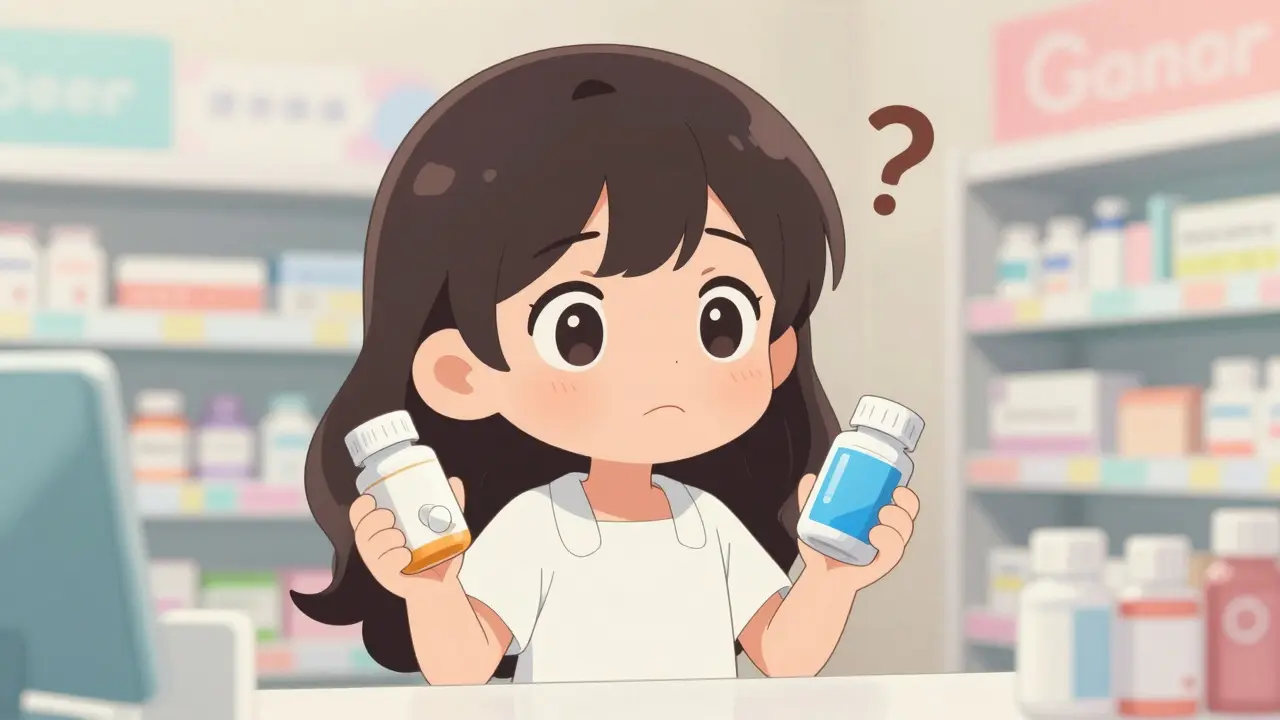
Imagine standing at a pharmacy counter, staring at a bottle of medication that looks nothing like the one you used last month. The color is different, the shape of the pill has changed, and the name on the label is something you've never heard of. You know it's a generic, but a nagging question remains: Does this actually work as well as the brand-name version? This confusion isn't just in your head. According to the American Pharmacists Association, nearly 43% of Americans believe generic drugs are less effective than their brand-name counterparts, even though regulatory standards require them to be essentially the same.
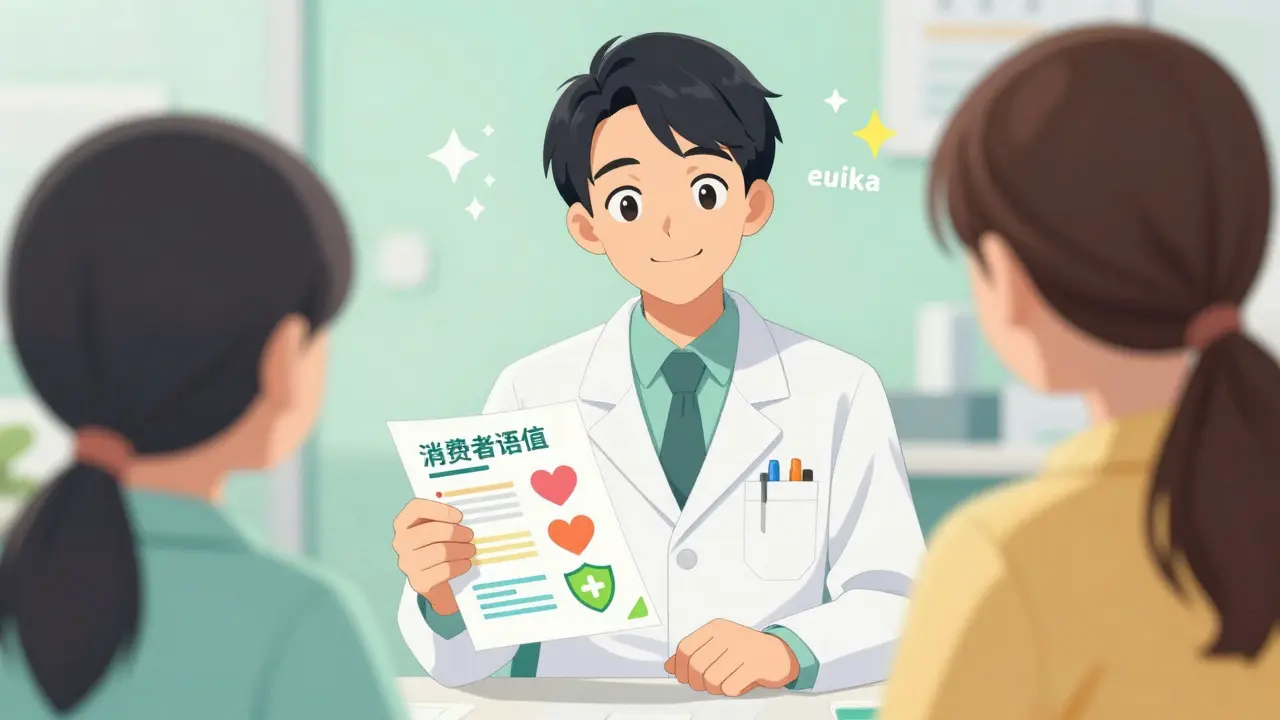
To bridge this gap, healthcare providers are turning to consumer language guides is a structured communication tool designed to translate complex pharmaceutical terminology into plain language that patients can easily understand. These guides move away from the dense, academic jargon of medical journals and instead use relatable analogies and clear visuals to explain how medications work. The goal is simple: remove the fear and confusion surrounding generics so people can save money without compromising their health.
What Exactly Makes a Generic Drug "The Same"?
When you see a generic drug, you aren't just getting a "cheaper copy." Under FDA rules, a generic drug is a medication created to be identical to a brand-name drug in its dosage form, safety, strength, route of administration, and quality. If the brand-name version is a 500mg tablet taken orally, the generic must also be a 500mg tablet taken orally.
The real magic-and the part that confuses most people-is bioequivalence. This is the technical standard ensuring that the generic drug delivers the active ingredient into your bloodstream at the same rate and to the same extent as the brand name. Specifically, the FDA requires that generics deliver between 80% and 125% of the blood concentration of the brand-name drug. While that range might sound wide, statistical analysis shows that for the vast majority of people, there is no clinical difference in how the drug performs.
You might notice that a generic pill is blue while the brand is white, or that it uses lactose as a filler instead of sucrose. These are "inactive ingredients." They change the look and taste but don't change how the medicine treats your condition. Think of it like store-brand cereal versus a name-brand version; the box looks different and the corn might be sourced from a different farm, but the nutritional value remains the same.
Why Simple Language Matters More Than Technical Accuracy
There is a massive gap between how a scientist describes a drug and how a patient perceives it. A study from the University of North Carolina School of Pharmacy highlighted this by comparing three types of documents. Technical FDA papers often require a college education to understand (readability level 14.2). Standard patient guides are better but still a bit stiff (level 10.7). Specialized consumer language guides, however, aim for a readability level of 6.2, which aligns with NIH recommendations for general health materials.
When information is simplified, comprehension jumps. The same study found that patients with limited health literacy saw a 37 percentage point increase in understanding when using these plain-language guides. When people understand why a drug is safe, they are more likely to stick with it. In fact, the FDA's Center for Drug Evaluation and Research noted that proper explanations can increase patient adherence by 22% and significantly reduce the number of people who insist on switching back to expensive brand names.
| Source Type | Readability Level | Target Audience | Primary Goal |
|---|---|---|---|
| Technical FDA Documents | 14.2 (College) | Clinicians/Scientists | Regulatory Compliance |
| Standard Patient Guides | 10.7 (High School) | General Patients | Basic Instructions |
| Consumer Language Guides | 6.2 (Elementary/Middle) | All Consumers | Accessibility & Trust |
When "Same" Isn't Quite Enough: The Exceptions
While most generics are interchangeable, a good language guide must also be honest about the exceptions. There is a category called narrow therapeutic index (NTI) drugs. These are medications where a tiny change in the dose or how the body absorbs it can lead to a big difference in effect-either the drug doesn't work or it becomes toxic.
Examples include warfarin (a blood thinner) or levothyroxine (for thyroid issues). For these specific drugs, some doctors prefer you stay on one specific brand or manufacturer to keep your levels perfectly stable. If a guide simply says "all generics are identical," it ignores the reality of these complex cases. This is why the most effective guides are moving toward medication-specific advice rather than a one-size-fits-all approach.
Another point of confusion is the authorized generic. This is actually a brand-name drug that the original manufacturer sells without the brand name on the label. These are essentially the gold standard of generics because they are the exact same product, just in a different bottle. Data shows these have 28% lower "switch-back" rates because patients feel more confident in their quality.

Practical Tips for Navigating Your Medications
If you are trying to figure out if a generic is right for you, or if you are a caregiver helping someone else, use these rules of thumb. Don't be afraid to ask your pharmacist for a "plain language" explanation. Most major chains like CVS or Walgreens now train their staff to use specific talking points to clear up confusion in under two minutes.
Here is a quick checklist to use during your next pharmacy visit:
- Ask for the active ingredient: Confirm that the generic has the same active chemical (e.g., atorvastatin) as the brand (e.g., Lipitor).
- Check the dosage: Ensure the milligrams (mg) match exactly.
- Request a visual: If the pill looks different, ask the pharmacist to show you a comparison chart to confirm it's the correct medication.
- Discuss NTI drugs: If you are taking a drug for thyroid or blood clotting, ask your doctor if you should stick to one specific manufacturer.
- Verify with "Teach-Back": After the pharmacist explains the drug, try explaining it back to them in your own words to make sure you've got it right.
The Future of Patient Education
We are moving toward a world where your medication guide is as personalized as your fitness tracker. By 2026, experts predict that 60% of generic education will be integrated directly into Electronic Health Records (EHR). This means instead of a generic pamphlet, you'll receive a digital guide tailored to your specific health history and literacy level.
We are also seeing the rise of AI-powered tools. Programs being piloted at places like Kaiser Permanente are designed to sense when a patient is confused and automatically simplify the language further. This shift is critical because consumer confusion is expensive-costing the healthcare system roughly $3.2 billion annually due to unnecessary brand-name prescriptions that people buy simply because they don't trust the generic.
Are generic drugs really as effective as brand-name drugs?
Yes. The FDA requires generic drugs to be bioequivalent to the brand-name version, meaning they must deliver the same active ingredient to the bloodstream within a range of 80% to 125%. For the vast majority of medications, this results in the exact same clinical outcome.
Why do some generic pills look different from the brand name?
Differences in color, shape, and size are due to inactive ingredients, such as fillers, binders, or dyes. These ingredients do not affect how the medicine works in your body and are used by different manufacturers for various reasons.
What is an "authorized generic"?
An authorized generic is a brand-name drug that the original manufacturer sells without the brand name. It is identical in every way to the brand-name version because it is the same product, just marketed under a generic label.
Are there any drugs where I should avoid generics?
In some cases, yes. Narrow Therapeutic Index (NTI) drugs, such as warfarin or levothyroxine, have a very small margin between an effective dose and a toxic one. For these, your doctor may recommend a specific brand to ensure consistency.
How can I find reliable, easy-to-read info on generics?
The FDA's "Generic Drug Facts" webpage is one of the most reliable and updated resources. Additionally, many major pharmacy chains provide standardized consumer language guides during the dispensing process.
Jay Vernon
April 8, 2026 AT 04:27This is such a great way to help people save money! 💊💰
Danielle Kelley
April 9, 2026 AT 12:11Bioequivalence is just a fancy word they use to trick you into taking cheap fillers and god knows what else. They say 80% to 125% is fine but that is a massive window for them to slip in garbage that doesn't work. I bet the big pharma companies just want us on the cheapest versions so they can pocket the difference while we suffer from side effects they don't report. Don't trust the FDA they are bought and paid for by the very people making these pills
Stephen Luce
April 9, 2026 AT 23:38I totally get the anxiety of seeing a different colored pill. It's a weird feeling when you're already not feeling well and then the medicine looks like a stranger. Glad to see there's a push for better communication here.
Timothy Burroughs
April 10, 2026 AT 20:42typical government nonsense trying to simplify things for people who cant even read a basic label anyway we need to stop coddling everyone and just let them learn the terminology if they want the medicine to actually work the same way the original was designed in america we used to value excellence not just accessibility
Toby Sirois
April 12, 2026 AT 06:33Everyone knows that the fillers matter more than the FDA admits. I've seen plenty of people react to the dyes in generics. It's not just about the active ingredient and anyone who says otherwise is just ignoring basic chemistry. You people are so naive if you think it's all the same stuff
Christopher Cooper
April 14, 2026 AT 06:17The concept of a "Teach-Back" method is actually brilliant for healthcare. It transforms the interaction from a lecture into a collaborative dialogue, ensuring the patient isn't just nodding along while feeling confused. I wonder if this could be scaled to other medical procedures beyond just prescriptions.
Brady Davis
April 16, 2026 AT 05:11Oh sure, let's just let an AI decide how to explain my meds to me. That'll definitely go smoothly and not be a total disaster 🙄
Srikanth Makineni
April 16, 2026 AT 08:22NTI drugs are the real deal breaker here
Jitesh Mohun
April 17, 2026 AT 20:11stop worrying about the color and look at the active ingredient you people act like its rocket science just read the label and stop complaining
Laurie Iten
April 19, 2026 AT 17:33the idea of a reading level 6.2 is interesting because it acknowledges that stress lowers cognitive ability we often forget that people in a pharmacy are usually anxious or sick which makes a 10th grade level feel like a foreign language
Ruth Swansburg
April 20, 2026 AT 11:19This is truly wonderful. Clear communication saves lives!
shelley wales
April 21, 2026 AT 21:49It is so heartening to see a focus on health literacy. Many people just feel intimidated to ask questions at the pharmacy, so having these guides available by default is such a supportive move for the community.
Alexander Idle
April 23, 2026 AT 10:22Absolute madness that we've reached a point where we need a 6th grade guide to understand a pill bottle. The sheer degradation of the general public's intellect is honestly a tragedy of Shakespearean proportions. I find it utterly exhausting that we must spend billions of dollars to explain that a blue pill does the same thing as a white pill. Truly a marvelous time to be alive in this era of incompetence!
Sarabjeet Singh
April 24, 2026 AT 01:59Keep pushing for these guides, it really helps the newcomers in the system
charles mcbride
April 25, 2026 AT 18:34The shift toward digital guides in EHR is a fantastic step forward for patient autonomy.