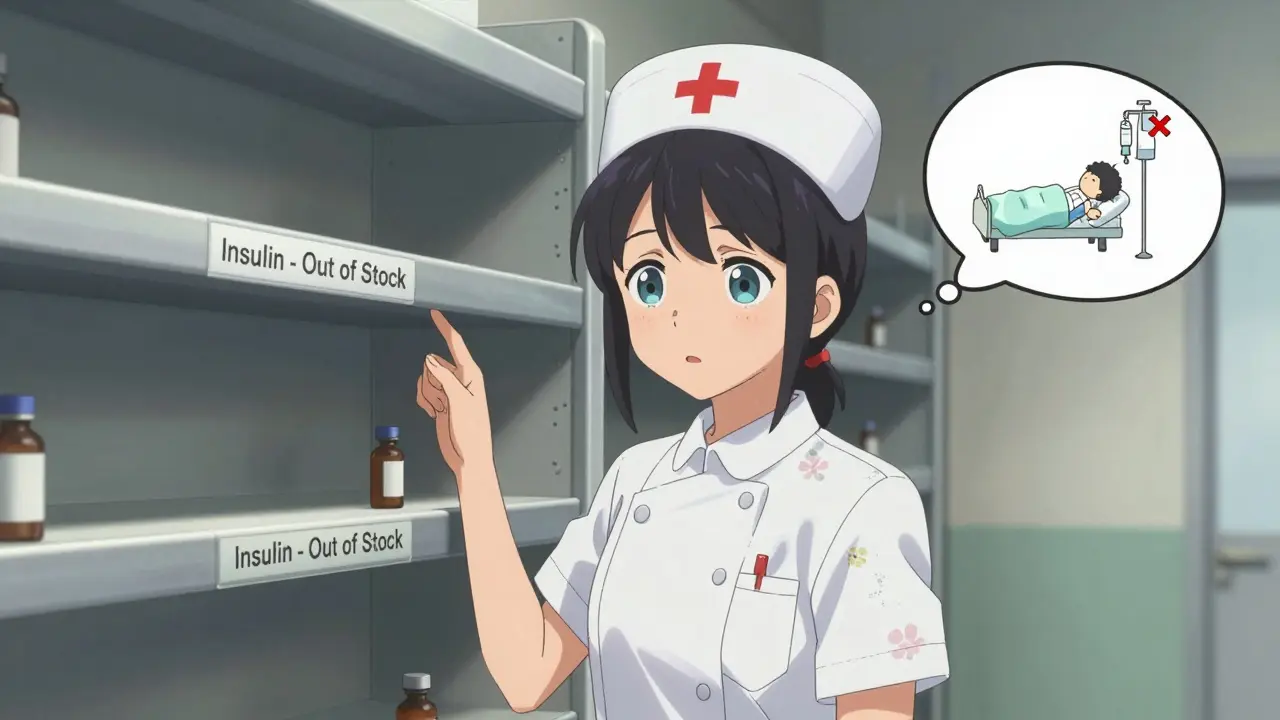
As of January 2026, nearly 300 drugs remain in short supply across the U.S., with almost half of them being essential for treating life-threatening conditions like cancer, heart failure, and severe infections. Hospitals are rationing medications. Doctors are scrambling for alternatives. Patients are delaying treatments. And Congress? Two bills were introduced last year to fix this - but they’re stuck in limbo.
What’s Actually in the Proposed Laws?
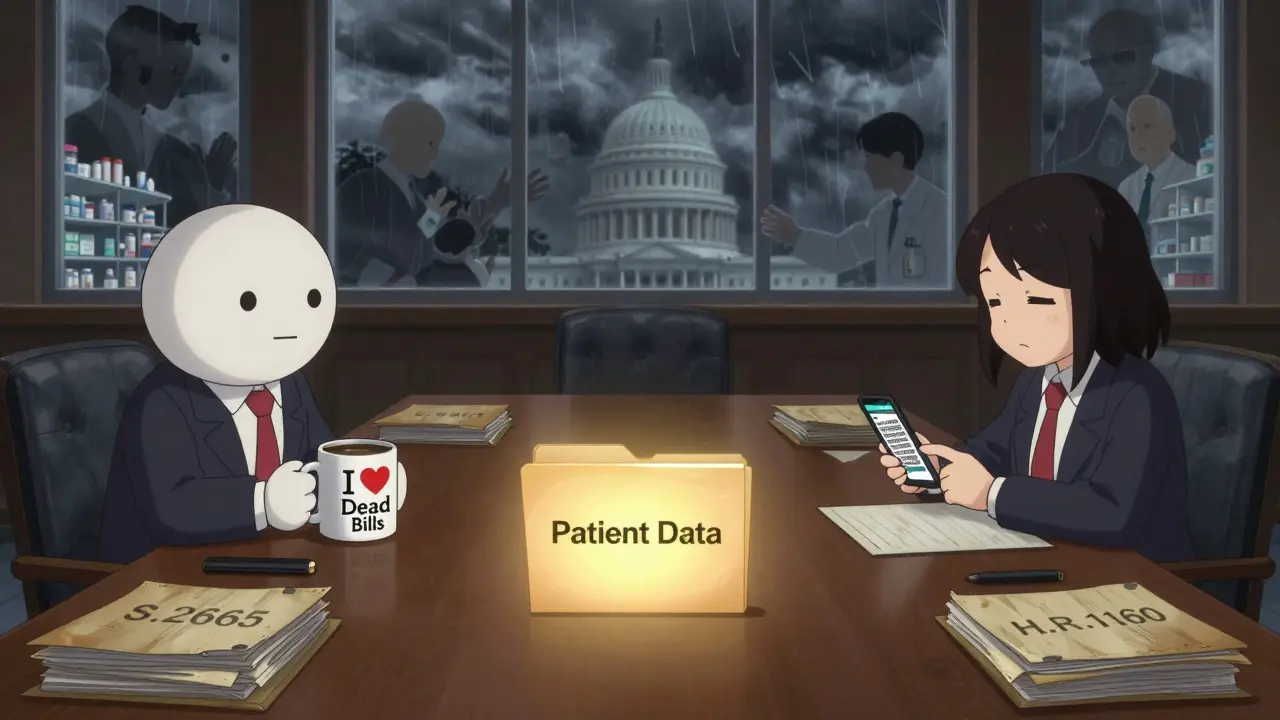
The two main bills targeting this crisis are the Drug Shortage Prevention Act of 2025 (S.2665) and the Health Care Provider Shortage Minimization Act of 2025 (H.R.1160). They don’t sound flashy, but their goals are urgent.S.2665 would force drug manufacturers to tell the FDA as soon as they see a spike in demand for critical medicines. Right now, companies aren’t required to report anything until it’s too late - often after shortages have already hit pharmacies and hospitals. The bill wants early warnings so the FDA can step in: find backup suppliers, speed up approvals, or even temporarily relax import rules. It’s not about creating new drugs - it’s about making sure the ones we already have get where they’re needed before they vanish.
H.R.1160 is different. It’s aimed at the people, not the pills. The bill’s title suggests it’s about fixing the shortage of doctors, nurses, and other frontline workers. But here’s the problem: no one knows what’s actually in it. The full text hasn’t been released. No committee has reviewed it. No sponsor has given a press statement. It exists as a number and a name - a ghost bill in a system already overwhelmed.
Why These Bills Are Stuck
The biggest reason these bills aren’t moving? The longest government shutdown in U.S. history - still ongoing as of January 2026. It began on October 1, 2025, and has shut down nearly every federal agency that could help. The FDA, which tracks drug shortages, has furloughed most of its staff. The Health Resources and Services Administration, which maps where doctors are needed, can’t update its data. Even the website where hospitals report shortages is glitchy.Without staff to review, analyze, or even just read these bills, they’re sitting idle. S.2665 was referred to the Senate Health Committee on August 1, 2025 - and hasn’t moved since. H.R.1160? No committee assignment. No hearings. No public record of who even wrote it.
Meanwhile, Congress keeps debating things like whether senators can sue over phone records or how to cut $9 billion from foreign aid. Not one of those debates touches drug access. Not one.
Who’s Feeling the Pain?
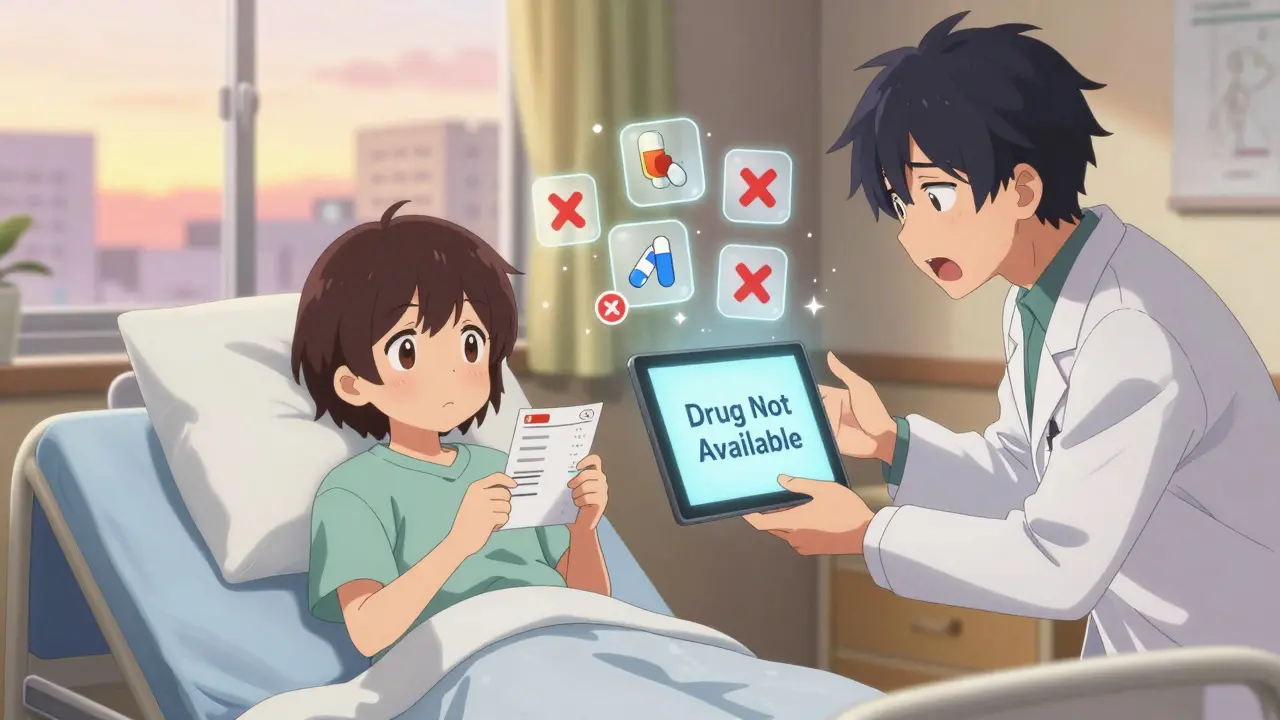
The numbers don’t lie. In Q3 2025, 98% of U.S. hospitals reported at least one critical drug shortage. Eighty-seven percent of physicians say they’ve had to change a patient’s treatment plan because a drug wasn’t available. And it’s not just hospitals - pharmacies in rural towns are running out of insulin, antibiotics, and even painkillers.And it’s not just drugs. Over 122 million Americans live in areas with not enough primary care providers. That’s nearly 1 in 3 people. The American Association of Medical Colleges predicts a shortage of 124,000 doctors by 2034. H.R.1160 might have been meant to help with that. But without details, we can’t tell if it’s a real solution or just a political placeholder.
What’s Missing From the Bills
Even if S.2665 passed tomorrow, it wouldn’t solve everything. The bill doesn’t say what counts as a “critical drug.” Does it include antibiotics? Mental health meds? Insulin? What happens if a company doesn’t report? Is there a fine? A shutdown? A warning? Nothing’s defined. The FDA would need about $45 million a year just to run the new system - money that’s not in the budget. And with the federal deficit hitting $1.74 trillion last year, funding isn’t coming from anywhere.H.R.1160? We don’t even know what it’s trying to fix. Is it about loan forgiveness for doctors who work in underserved areas? Expanding telehealth training? Fast-tracking visas for foreign-trained nurses? Without a bill text, it’s impossible to say. And that’s dangerous. When lawmakers introduce bills with no details, it looks like they’re trying to look like they’re doing something - without actually doing anything.
Why This Keeps Happening
Drug shortages aren’t new. They’ve been getting worse since the 2010s. The root causes are clear: manufacturing delays (63% of shortages, according to the Association for Accessible Medicines), reliance on overseas suppliers, low profit margins for generic drugs, and a broken supply chain that’s too fragile to handle disruptions.Instead of fixing the system, Congress keeps treating symptoms. One bill says: “Tell us sooner.” Another says: “We need more workers.” But neither addresses the core problem - the economic incentives that make it cheaper for companies to let a drug run out than to keep making it.
And now, with the shutdown dragging on, the system’s broken even further. The FDA can’t inspect factories overseas. The CDC can’t track where shortages are spreading. The government’s supposed to be the safety net - but right now, the net has holes, and the people falling through are patients.
What Can You Do?
If you’re a patient, you’re not powerless. Talk to your pharmacist. Ask if there’s an alternative. Ask if your doctor has access to emergency stockpiles. Join patient advocacy groups like the American Cancer Society or the National Alliance for Caregiving - they’re pushing Congress to act.If you’re a healthcare worker, document every shortage you encounter. Save emails, notes, patient records. This data matters. It’s the only thing that might force Congress to take these bills seriously when the shutdown ends.
And if you’re a voter? Ask your representatives: What happened to S.2665? Where’s the text for H.R.1160? Why are we letting patients suffer while lawmakers argue over things that don’t save lives?
What Happens Next?
The current government funding extension expires on January 30, 2026. If Congress doesn’t pass a new deal by then, the shutdown continues - and both bills die. They’ll vanish into the legislative graveyard, where hundreds of other good ideas go to rot.Even if funding is restored, these bills won’t become law overnight. They’ll need hearings, amendments, votes, and compromise. But right now, they’re not even on the table. They’re not being discussed. They’re not being debated. They’re just… there.
Drug shortages aren’t an accident. They’re a policy failure. And until Congress stops treating them like a footnote in a budget fight, they’ll keep getting worse.
What is the Drug Shortage Prevention Act of 2025?
The Drug Shortage Prevention Act of 2025 (S.2665) is a Senate bill that would require pharmaceutical manufacturers to notify the FDA when they see a sudden increase in demand for critical drugs. The goal is to give regulators time to respond before shortages hit hospitals and pharmacies. It’s designed to work within the existing FDA framework under the Federal Food, Drug, and Cosmetic Act, but the full text hasn’t been released, and key details like penalties and definitions are still unknown.
Why isn’t H.R.1160 moving forward?
H.R.1160, the Health Care Provider Shortage Minimization Act of 2025, has no public bill text, no sponsor statements, and no committee assignment. Without details, it can’t be reviewed, amended, or debated. It’s effectively stalled because Congress hasn’t prioritized it - and the ongoing government shutdown has frozen all non-essential legislative activity.
How many drugs are currently in short supply?
As of September 30, 2025, the FDA listed 287 drugs in shortage, with 47% classified as critical - meaning they’re used to treat life-threatening conditions like cancer, heart disease, and severe infections. That number hasn’t dropped since then, and new shortages continue to be reported.
Is the government shutdown causing the drug shortages?
No, the shutdown isn’t causing the shortages - but it’s making them worse. The FDA, which monitors and responds to shortages, has furloughed most of its staff. Systems that track drug availability are down. Inspections of overseas manufacturing plants have stopped. Without government oversight, it’s harder to fix problems, even if the root causes existed before the shutdown.
What can patients do if their medication is unavailable?
Patients should talk to their pharmacist and doctor immediately. Pharmacists often know about alternative brands, compounding options, or emergency stockpiles. Some hospitals have drug shortage hotlines. Patient advocacy groups also maintain updated lists of available alternatives. Never stop a prescribed medication without medical advice - even if it’s in short supply.
Kathy Scaman
January 28, 2026 AT 21:43Just saw my neighbor’s mom wait 3 weeks for her chemo refill. She’s 72. No one’s talking about this like it’s a crisis. It is.
fiona vaz
January 29, 2026 AT 17:44I work in a rural pharmacy. We’ve been rationing insulin for months. Patients come in crying because they can’t afford the $400 alternative. This isn’t politics-it’s survival. S.2665 could’ve helped, but without funding, it’s just a press release.
Sue Latham
January 30, 2026 AT 19:44Oh sweetie, H.R.1160? That’s not a bill-it’s a LinkedIn post with a number. Someone in a DC lobby probably typed it into the system to check a box. No text? No sponsor? That’s not negligence, that’s theater. And we’re all just clapping along.
Mindee Coulter
February 1, 2026 AT 16:19My sister’s a nurse in Ohio. She documented every shortage last quarter. 87 pages. Sent it to her rep. Got a form letter back. The system doesn’t care until it hits their own family.
Bryan Fracchia
February 2, 2026 AT 02:22It’s funny how we treat drug shortages like a glitch instead of a feature. The system was designed this way-cheap generics, no profit, no production. Companies don’t *accidentally* stop making drugs. They *choose* to. And we’re mad they’re not fixing the problem they helped create.
Lance Long
February 2, 2026 AT 02:45Look. I get it. You want to fix this. But you can’t fix a broken economy with a bill that says ‘tell us sooner.’ We need to pay drugmakers to make the stuff. We need to pay nurses to stay. We need to stop pretending that regulation alone will fix capitalism’s math. This isn’t about transparency-it’s about incentives. And nobody wants to talk about that.
jonathan soba
February 2, 2026 AT 17:42Let’s be honest: 47% of shortages are life-threatening? That’s not a crisis. That’s the natural outcome of deregulation, union-busting, and outsourcing. The FDA’s underfunded because we’ve spent $3 trillion on wars nobody asked for. Priorities, people.
Chris Urdilas
February 2, 2026 AT 18:03So H.R.1160 has no text? Cool. So does my last Tinder bio. At least mine was honest. At least I didn’t pretend it was a policy.
Phil Davis
February 4, 2026 AT 09:59They’ll pass a bill to let senators sue over phone records before they fix this. It’s not incompetence. It’s intentional.
Irebami Soyinka
February 5, 2026 AT 14:17USA crying over drugs while Nigeria’s hospitals get donated expired meds? 😒 We don’t need bills-we need a revolution. This system is built on blood and greed. You think Congress cares? They’re sipping champagne while kids skip insulin. 🇳🇬🔥
Mel MJPS
February 5, 2026 AT 19:12I lost my dad last year because they couldn’t find the right antibiotic. I don’t care about the bill numbers. I just want someone to make sure no one else has to go through that.
Anna Lou Chen
February 5, 2026 AT 23:21Let’s deconstruct the epistemic violence embedded in the pharmacopolitical apparatus. The FDA’s epistemological hegemony-reliant on neoliberal metrics of efficiency-renders the embodied suffering of patients as mere statistical noise. H.R.1160, as a spectral artifact of performative governance, embodies the ontological erasure of care as a human right. The very structure of legislative inaction is a symptom of late-stage biocapitalism’s collapse into symbolic representation. We are not failing to fix shortages-we are failing to *recognize* the body as a site of political struggle. The bill isn’t dead. The body is.
John Rose
February 7, 2026 AT 17:07Just want to add something real: if you’re a patient or caregiver, keep documenting everything. Every email, every missed refill, every time your doctor says ‘I don’t know where to get this.’ That’s the only evidence that will matter when the shutdown ends. Data doesn’t lie. Politicians do. Keep collecting it.