
Every winter, people start wondering: is this just a cold, or is it the flu? It’s a simple question, but the answer matters a lot. Mistaking one for the other can mean taking the wrong medicine, waiting too long to get help, or even ending up in the hospital. The common cold and influenza might feel similar at first-sore throat, cough, runny nose-but they’re different viruses with different risks. Knowing the difference isn’t just about comfort; it’s about staying safe.
What’s Really Causing Your Symptoms?
The common cold isn’t one virus-it’s a group of more than 200 types, mostly rhinoviruses. These tiny bugs are why you get stuffed up, sneeze nonstop, and feel like your nose is on strike. About 30% to 50% of colds come from rhinoviruses. Other culprits include coronaviruses (not the same as COVID-19), adenoviruses, and RSV. These infections build slowly. You might feel fine one day, then wake up with a scratchy throat and a dripping nose. By day two or three, you’re miserable-but you’re not bedridden.
Influenza, on the other hand, is caused by one family of viruses: influenza A, B, or C. Type A is the big one-it’s what causes seasonal outbreaks and, every few decades, a pandemic. The 1918 flu killed 50 million people. Even today, flu viruses change fast enough to slip past our immune systems each year. Unlike colds, flu doesn’t sneak up on you. It hits hard. One moment you’re fine; the next, you’re shaking with fever, aching all over, and too tired to sit up. The difference isn’t subtle-it’s dramatic.
How to Tell Them Apart
Here’s the real-world breakdown you can use right now:
- Onset: Cold symptoms creep in over 2-3 days. Flu symptoms show up in 1-4 days-often overnight.
- Fever: Colds rarely cause fever in adults. If you’re over 100°F, it’s probably not a cold. Flu? Fever is common-85% of cases hit 102°F to 104°F.
- Body aches: Mild soreness? Cold. Full-body pain that makes you groan? Flu.
- Fatigue: A cold leaves you tired. Flu leaves you drained for weeks. Sixty percent of flu patients report exhaustion so severe they can’t get out of bed.
- Chest discomfort: Colds cause mild coughing. Flu often brings deep, painful chest pressure-sometimes with wheezing.
- Other signs: Sneezing? More common with colds. Nausea or vomiting? Rare with flu in adults, but happens in 45% of flu cases during the 2022-2023 season, according to Mayo Clinic.
That last one matters. People think flu is just a bad cold with fever. But it can hit your stomach hard. If you’ve had the flu and threw up, you’re not alone.
What Happens When Things Get Worse
Colds usually end in a week. Sometimes they linger for two. The worst they do is trigger a sinus infection (5% of cases) or an ear infection (10% in kids). Most people bounce back on their own.
Flu? That’s a different story. Each year in the U.S., flu sends 140,000 to 710,000 people to the hospital. It kills between 12,000 and 52,000. The biggest risk? Pneumonia. It develops in 15% to 30% of hospitalized flu patients. That’s not rare-it’s common enough to be a major warning sign.
Who’s most at risk? Adults over 65. They make up 70% to 85% of flu deaths. Pregnant women are three times more likely to be hospitalized. People with asthma, diabetes, or weakened immune systems are also in danger. If you’re in one of these groups, a flu diagnosis isn’t something to brush off.
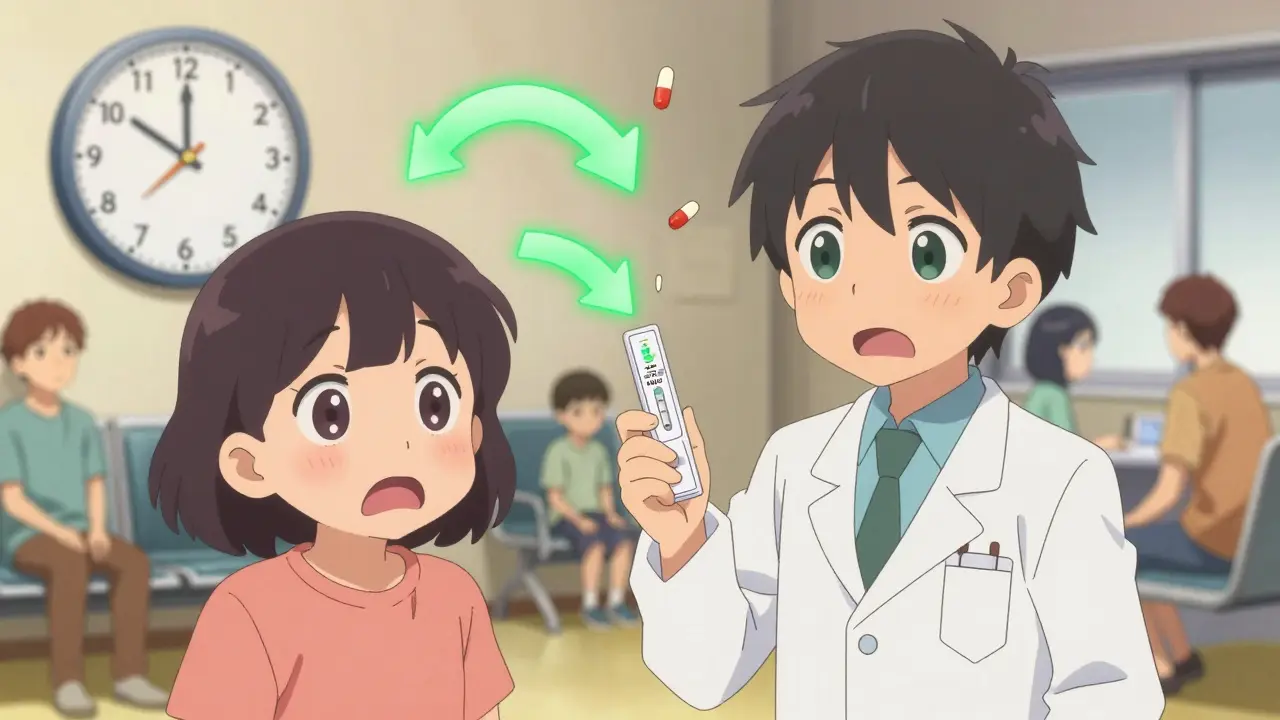
Antivirals: What Works, What Doesn’t
This is where most people get confused. There are antiviral drugs for flu-but none work for the common cold. That’s because cold viruses have over 160 different strains. Designing a drug that targets them all is impossible. Flu? It’s just a few types. That makes it possible to build drugs that stop it.
There are four FDA-approved antivirals for flu:
- Oseltamivir (Tamiflu): Taken as pills for 5 days. If you start within 48 hours of symptoms, it cuts your illness by about 30 hours. Generic versions cost $15-$30. Brand name? Around $105-$160.
- Zanamivir (Relenza): Inhaled powder. Works well for high-risk patients. Reduces illness by about 1.5 days.
- Peramivir (Rapivab): One IV dose. Used in hospitals for people who can’t swallow pills.
- Baloxavir (Xofluza): Single-dose pill. It slashes viral load by 99% in 24 hours. But it costs $150-$200, even with insurance.
Here’s the catch: timing is everything. These drugs only work if you take them within 48 hours of the first symptom. Wait longer? They barely help. And if you don’t have the flu? They do nothing. No benefit. No cure. No shortcut.
For colds, you’re on your own. The best you can do is ease symptoms:
- Pseudoephedrine (Sudafed) cuts nasal congestion by 30-40%.
- Acetaminophen (Tylenol) lowers fever and pain.
- Zinc lozenges? Some studies say they shorten colds by 1.6 days-if you start within 24 hours. But many people hate the metallic taste. One review called it "so bad I quit after day two."
What Experts Are Saying
Dr. William Schaffner, an advisor to the CDC, says flu antivirals are underused. Only 18% of high-risk patients get them within the critical 48-hour window. That’s a huge gap. He points out that getting antivirals early cuts hospitalization risk by 34%.
Meanwhile, Dr. Pritish Tosh from Mayo Clinic noticed something surprising: nearly half of flu patients in the 2022-2023 season had nausea or vomiting. That’s not something most people associate with the flu. It’s changing how doctors diagnose.
And there’s debate about zinc. Dr. Harri Hemilä says 33 clinical trials show it helps. The CDC warns that long-term zinc use might cause copper deficiency. So, if you try it, stick to the first day or two. Don’t make it a daily habit.

Real People, Real Experiences
Reddit threads and patient reviews tell a clear story:
- "Started Tamiflu 12 hours after my fever hit. Back to work in 3 days. Normally I’m out for a week." - u/HealthyDave
- "Xofluza cost $180 with insurance. Not worth it for my mild case." - GoodRx user
- "Doctors said it was a cold. I waited three days. On day five, I had pneumonia." - CDC case report
- "Nurse practitioner tested me at Urgent Care. Got Tamiflu within 24 hours. Symptoms gone in 48." - NIH patient testimonial
Seventy-eight percent of flu patients wish they’d sought help sooner. That’s not just regret-it’s a warning.
What You Need to Do Now
Here’s your action plan:
- If you feel fine one day and awful the next-with fever, body aches, and exhaustion-assume it’s flu. Don’t wait.
- Call your doctor or visit urgent care within 48 hours of symptoms starting. Ask for a rapid flu test. These tests give results in 15 minutes.
- If you’re over 65, pregnant, or have a chronic illness, don’t wait for a test. If flu is likely, start antivirals right away.
- If it’s a slow-onset cold with congestion and sneezing, skip antivirals. Use decongestants, rest, and fluids.
- Don’t take antibiotics. They don’t work on viruses. Misuse contributes to drug-resistant infections.
And remember: vaccines still matter. The 2023-2024 flu shot covers four strains, including new ones from the 2022-2023 season. Even if it’s only 40-60% effective, it cuts hospitalizations and deaths. That’s worth it.
What’s Coming Next
Scientists are working on better tools. mRNA flu vaccines-like the ones used for COVID-are in late-stage trials. One from Moderna could be available by late 2024. Universal flu vaccines are also in the works. These wouldn’t need yearly updates. They’d target parts of the virus that don’t change much.
But for now, the tools we have work-if we use them right. Antivirals aren’t magic. They’re time-sensitive. And knowing the difference between a cold and the flu? That’s your best defense.
Gabrielle Conroy
February 24, 2026 AT 06:41OMG this is SO helpful!! 😭 I always mix up cold and flu and end up dragging myself to work like a zombie... now I know to call the doc ASAP if I feel that sudden body-ache + fever combo. Just got my flu shot yesterday and felt weirdly proud 😊
Spenser Bickett
February 25, 2026 AT 16:22flu is just a cold that got a degree in drama. you’re telling me we pay $200 for a pill that works if you take it before you even know you’re sick? classic capitalism. also, zinc lozenges taste like licking a battery. why is this still a thing? 🤷♂️
Christopher Wiedenhaupt
February 27, 2026 AT 12:29Thank you for this detailed breakdown. The distinction between rhinoviruses and influenza is critical for public health messaging. I particularly appreciate the emphasis on timing for antiviral efficacy - early intervention remains the most underutilized tool in outpatient care. The data on pneumonia risk in high-risk populations is alarming and warrants greater awareness.
John Smith
March 1, 2026 AT 00:52Flu is just a virus that got a PR team. Cold? It’s honest. It sneezes in your face and leaves you alone. Flu? It shows up with a symphony of aches, a fever parade, and a choir of vomiting. And then you pay $180 to feel slightly less dead. We’re being played.
Brandice Valentino
March 1, 2026 AT 16:41so like... i got xofluza last year bc my doc was like "just in case" and it cost me 190 and i was fine in 3 days anyway?? i mean... was it worth it? idk. also why do they make it taste like plastic? 🤢
Larry Zerpa
March 2, 2026 AT 12:06You claim antivirals cut hospitalization by 34%. But correlation is not causation. Did those patients also get better nutrition? More sleep? Less stress? Or were they already in better health? The data is cherry-picked. Also, why is zinc still being pushed when the CDC warns of copper deficiency? Because Big Pharma needs another supplement market. The truth is inconvenient.
Gwen Vincent
March 3, 2026 AT 10:21I’ve had both. Cold: stayed home, drank tea, slept. Flu: woke up at 3 a.m. screaming because my spine felt like it was being crushed. I didn’t go to the doctor until day 3. I got pneumonia. I’m lucky I’m alive. Please, if you feel like you’ve been hit by a truck - get tested. Don’t wait. I wish I hadn’t.
Nandini Wagh
March 5, 2026 AT 02:59in india we just call it "seasonal fever" and take paracetamol. no tests. no antivirals. no drama. if you’re not dead in 5 days, you’re fine. why make it complicated? also, who has $200 for a pill? real talk.
Holley T
March 6, 2026 AT 21:36Okay, but let’s be real - how many people actually get tested within 48 hours? Most of us wait until we’re too miserable to function, which is usually day 3 or 4. And by then, the antiviral window is gone. So the whole system is built on an unrealistic expectation. We’re supposed to be medical detectives with zero training, while insurance companies make us wait 3 days for an appointment. It’s a joke. Also, the CDC says zinc helps but also says don’t overdo it. So... do we or don’t we? I’m confused.
Christopher Brown
March 8, 2026 AT 09:20Antivirals? We don’t need them. We need stronger borders. If flu came from outside, we should stop letting it in. Also, why is this article so long? Just say: if you feel bad, go to the doctor. Stop overcomplicating it. America’s overthinking everything.
Sanjaykumar Rabari
March 8, 2026 AT 13:18flu is a government tool to sell pills. they made it worse so we’d pay. they say vaccines work but last year 80% of people who got shot still got sick. they lie. i saw it on a video. also, zinc is from the moon. they dont want you to know.
Kenzie Goode
March 10, 2026 AT 06:19I cried reading this. Not because I’m dramatic (okay maybe I am) but because I remember being 22, ignoring my flu symptoms, and ending up in the ER with oxygen. I thought it was just a cold. I was wrong. Please. Please. If you feel like you’ve been run over by a bus - go get tested. I’m not okay with you being my next statistic.
Valerie Letourneau
March 11, 2026 AT 00:25While the clinical distinctions are well-articulated, I must commend the author for their nuanced understanding of public health communication. The emphasis on early intervention aligns with Canadian guidelines, where triage protocols prioritize high-risk populations within 36 hours. That said, the cost barrier to baloxavir remains a significant equity issue - particularly in rural and low-income communities. A universal vaccine, if viable, would be transformative.
Lisandra Lautert
March 11, 2026 AT 05:35I got the flu last year. Took Tamiflu. Was fine in 48 hours. Everyone else was like "oh that’s just a cold" and now they’re in bed. I’m just saying - be the person who acts. Not the one who says "I’ll wait."