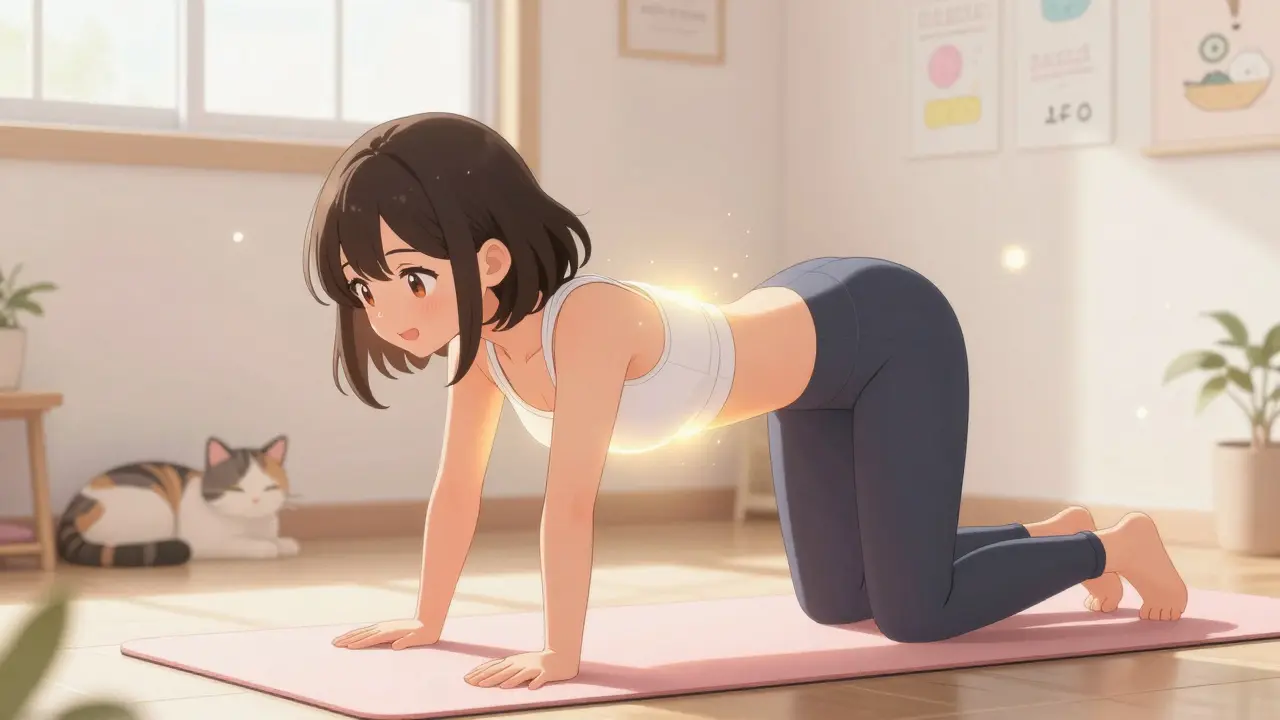
Chronic back pain isn’t just a sore back that won’t go away. It’s pain that lasts longer than 12 weeks - long after any injury should’ve healed. About 8% of adults in the U.S. live with it. And if you’re one of them, you’ve probably tried everything: heat packs, painkillers, rest, even that viral YouTube stretch. But nothing sticks. The truth? There’s no magic bullet. But there is a proven path - one that combines physical therapy, smart medication use, and daily self-management. Not as a last resort, but as the standard.
Why Physical Therapy Comes First
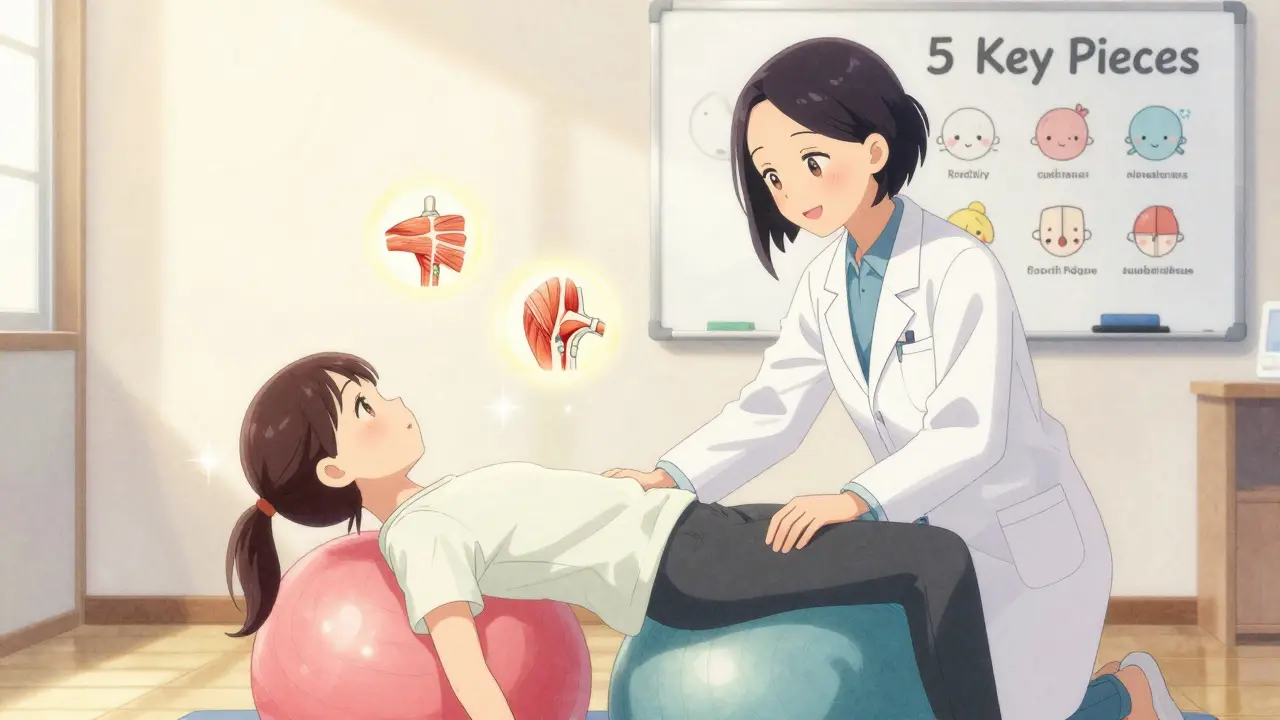
Most doctors start with painkillers. That’s outdated. The American College of Physicians has said since 2017: start with movement, not pills. And for good reason. A 2024 study from the Orthopedic Institute of Pennsylvania found that 78% of people with chronic back pain saw meaningful improvement after physical therapy - compared to just 52% using medications alone. Physical therapy isn’t just exercises. It’s a personalized plan built around your body’s specific patterns. A good therapist will look at how you stand, walk, sit, and lift. Then they’ll target the weak spots. Most chronic back pain comes from muscles that have forgotten how to work - especially the deep core muscles like the transverse abdominis and multifidus. These aren’t the six-pack abs you see in ads. They’re the hidden stabilizers. When they’re weak, your spine gets overloaded. A typical program includes five key pieces:- Pain tolerance assessment - Not about pushing through pain, but learning how much movement your body can handle without triggering flare-ups.
- Posture retraining - Correcting how you sit at your desk, stand in the kitchen, or drive to work. Small changes make big differences.
- Core strengthening - Not crunches. Think dead bugs, bird-dogs, and pelvic tilts. These rebuild stability without straining your spine.
- Flexibility work - Tight hamstrings or hip flexors pull on your lower back. Stretching these can improve spinal mobility by 15-25%, according to 2024 clinical data.
- Aerobic conditioning - Walking, swimming, or cycling. Just 20-30 minutes a day increases blood flow to spinal tissues by 30-40%. More blood = less inflammation = less pain.
Medications: The Right Tool, at the Right Time
Medications aren’t evil. They’re tools. But using them wrong - or relying on them too much - makes things worse. First-line: NSAIDs - Ibuprofen (400mg three times a day) or naproxen (500mg twice a day). These reduce inflammation and give 30-40% pain relief in about 65% of people. But they’re not safe for long-term use. Up to 20% of users get stomach ulcers, kidney issues, or high blood pressure. Don’t take them daily for months without checking in with your doctor. Second-line: Muscle relaxants and nerve meds - If NSAIDs aren’t enough, doctors might try cyclobenzaprine (for muscle spasms) or gabapentin (for nerve-related pain). Gabapentin helps about half of people, but side effects like brain fog, dizziness, and weight gain are common. One Reddit user said: “Gabapentin gave me 50% relief - but I couldn’t work because I felt drunk all day.” Third-line: Antidepressants for pain - Duloxetine (60mg daily) isn’t for depression here. It’s for chronic pain. In a 2022 NIH study of over 9,500 people, duloxetine helped 67% of chronic back pain patients. But 25% got nauseous, and 15% felt dizzy. It works best for people whose pain has a strong nerve component - tingling, burning, shooting. What’s off the table? Opioids. In 2016, nearly half of chronic back pain patients got opioids. In 2024? Just 12%. Why? Because they don’t work long-term. Worse, they can cause opioid-induced hyperalgesia - where your body becomes more sensitive to pain. The CDC says over 107,000 Americans died from drug overdoses in 2022. Most weren’t from heroin. They were from prescription pills. Doctors now see opioids as a last resort - only after everything else has failed.Self-Management: The Secret Weapon
You can’t therapy your way out of chronic pain forever. You need tools you can use every day. That’s self-management. The UCSF Chronic Pain Toolkit is one of the most studied. It’s not a magic app. It’s a daily 20-30 minute routine that includes:- Tracking your pain level (on a scale of 1-10)
- Doing your prescribed exercises
- Practicing breathing or mindfulness to calm your nervous system
- Planning one small, enjoyable activity - even if you don’t feel like it
What Doesn’t Work - And Why
Let’s cut through the noise. Bed rest - The old advice to “lie down and rest” makes pain worse. Movement is medicine. Even gentle walking helps. Massage alone - Feels good in the moment. Doesn’t fix the cause. Use it for stress relief, not treatment. Supplements like turmeric or CBD - Some people swear by them. But the science is thin. No major guidelines recommend them as primary treatment. Don’t spend money on them expecting miracles. Spinal injections or surgery - These help a small group: people with nerve compression, herniated discs, or spinal stenosis. For most with general chronic back pain? They offer short-term relief at high cost and risk. Only 60-70% get 3-6 months of relief from injections. Surgery has even lower success rates for non-specific pain.Putting It All Together: Your Realistic Plan
Here’s how to build a plan that lasts:- Start with physical therapy - Get a referral from your doctor. Aim for 2-3 sessions a week for 6-8 weeks. Ask for a home exercise plan you can do in 15 minutes.
- Add NSAIDs only as needed - Use them for flare-ups, not daily. Don’t exceed 10 days in a row without checking with your doctor.
- Try duloxetine if nerve pain is present - If you feel burning or tingling, ask about this. Give it 6-8 weeks to work.
- Start self-management on day one - Download a pain tracker app or use a notebook. Do your exercises. Breathe. Move. Even on bad days.
- Track your progress - Every two weeks, ask: Is my pain down? Can I walk farther? Sleep better? Do more with my kids? Those are real wins.

Barriers - And How to Beat Them
You might run into roadblocks:- Insurance won’t cover enough therapy sessions - Medicare only pays for 20 visits a year without special approval. Call your insurer. Ask for a “prior authorization” for more. Many clinics will help you fight for coverage.
- Side effects from meds - If gabapentin makes you foggy, tell your doctor. Switch to duloxetine. If NSAIDs hurt your stomach, ask about a stomach-protecting drug like omeprazole.
- You’re too tired to exercise - Start with 5 minutes. Walk around the block. Stretch while watching TV. Progress doesn’t require perfection.
- You feel like no one gets it - Join a group. The Chronic Pain Anonymous subreddit has 15,000+ members. PainConnection.org has 50,000+. You’re not alone.
Astha Jain
January 19, 2026 AT 15:23so like... i tried PT and it was just a bunch of weird poses while some guy in flip flops told me to 'engage my core' like i'm some yoga influencer?? i mean, i get it, but why does it feel like they're just selling me a lifestyle??
Erwin Kodiat
January 20, 2026 AT 09:05Man, this post hit different. I’ve been living with this for 7 years. PT didn’t fix me overnight, but the bird-dogs? Changed my life. Now I do them while my coffee brews. No drama, no fancy gear. Just consistency. And yeah, I still take ibuprofen when I’m feeling like a broken hinge. No shame.
Lydia H.
January 21, 2026 AT 11:17I love how this breaks it down without the usual toxic positivity. Chronic pain isn’t a mindset problem you can ‘think your way out of.’ It’s a biological loop. The self-management part? That’s the real hero. Not because it’s easy, but because it’s human. Doing the 5-minute stretch on a day you feel like garbage? That’s courage. Not laziness. Not weakness. Courage.
And the part about opioids? So true. I watched my uncle spiral from a back injury to a pill dependency. He didn’t want it. The system just handed it to him like candy. We need more of this kind of care - not less.
Also, walking while listening to audiobooks? Best therapy. My brain stops screaming when my feet are moving.
And yes, I track my pain. On a sticky note. Not an app. Sometimes analog is the only thing that doesn’t feel like another chore.
Thank you for writing this. It’s the first time I’ve felt seen in a medical article.
Jake Rudin
January 21, 2026 AT 20:44Let me be clear: physical therapy is not a panacea. It’s a tool. And like any tool, it requires competence, consistency, and-this is critical-proper assessment. Many therapists are underpaid, overworked, and trained to follow scripts, not individual biomechanics. A ‘standard’ program is a myth. Your transverse abdominis doesn’t care about protocol. It cares about neural activation. And if your PT doesn’t test for motor control deficits before prescribing bird-dogs? You’re wasting time. And money. And hope.
Also: duloxetine? Fine. But it’s not ‘for pain.’ It’s for serotonin-norepinephrine reuptake modulation. If you don’t understand that, you’re just taking a mood stabilizer and calling it a back fix. Knowledge matters.
And CBD? Still no robust RCTs. Don’t be fooled by influencers with back braces and hemp stickers.
Tracy Howard
January 23, 2026 AT 11:45Ugh. Another American medical article pretending ‘movement’ is the cure-all while ignoring the real problem: our broken healthcare system. In India, we don’t have 20 PT sessions covered. We have one guy with a rubber band and a prayer. Meanwhile, you guys are debating whether gabapentin causes brain fog while people here can’t even afford a heating pad.
And don’t get me started on ‘self-management.’ That’s code for ‘you’re on your own.’ You think a single mom working two jobs has time to do bird-dogs before coffee? Please. This whole post is rich people’s pain management fantasy.
Also, why is everyone ignoring acupuncture? I’ve seen it work miracles in Delhi. But no-Western medicine has to be the only ‘valid’ option. Classic colonial mindset.
Aman Kumar
January 24, 2026 AT 08:24It is imperative to recognize that the paradigm shift toward non-pharmacological interventions is not merely evidence-based-it is a necessary epistemological correction. The biomedical model has pathologized pain as a purely somatic phenomenon, thereby neglecting the neuro-immuno-endocrine axis. Physical therapy, when properly administered via a neuromuscular re-education protocol, demonstrates statistically significant modulation of central sensitization. However, the efficacy of NSAIDs is confounded by the presence of comorbid gastrointestinal dysbiosis, which is endemic in the Western diet. Moreover, the promotion of duloxetine as a first-line agent for neuropathic pain is a pharmacological overreach, given its propensity to induce serotonin syndrome in metabolically inefficient individuals. And let us not overlook the sociopolitical dimensions: the opioid epidemic is not an accident-it is the logical conclusion of pharmaceutical capitalism. You are being sold a solution that profits the system, not you.
Malikah Rajap
January 25, 2026 AT 17:58Wait-so you’re saying I don’t need surgery? I’ve been terrified of this for years… I thought I was broken forever. But you’re right… I’ve been doing the breathing thing before bed, and my pain’s been lower in the mornings. I didn’t think it mattered… but it does. Thank you. I’m going to start writing down my pain scores. I’ve never done that before. I think… I think I can do this.
sujit paul
January 26, 2026 AT 10:56There is a hidden agenda here. The NIH's $45 million study? It's not about personalization. It's about data harvesting. Every pain tracker app you use? It's feeding into corporate databases. The pharmaceutical industry is quietly funding these 'lifestyle' solutions because they know if you're managing pain with breathing and walking, you won't need their $2000/month nerve blockers. And don't you think it's suspicious that opioids were pushed for decades, then suddenly pulled? Coincidence? I think not. The real cure? Fasting. Cold exposure. And spiritual alignment. But they won't tell you that. Because it can't be patented.
Phil Hillson
January 27, 2026 AT 16:30PT is just stretching and being told to ‘move more’ like I’m a dog who forgot to pee. I did all that. I’m still in pain. So what? This whole thing is just feel-good fluff. Nobody’s fixing anything. Just sell me a damn pill already