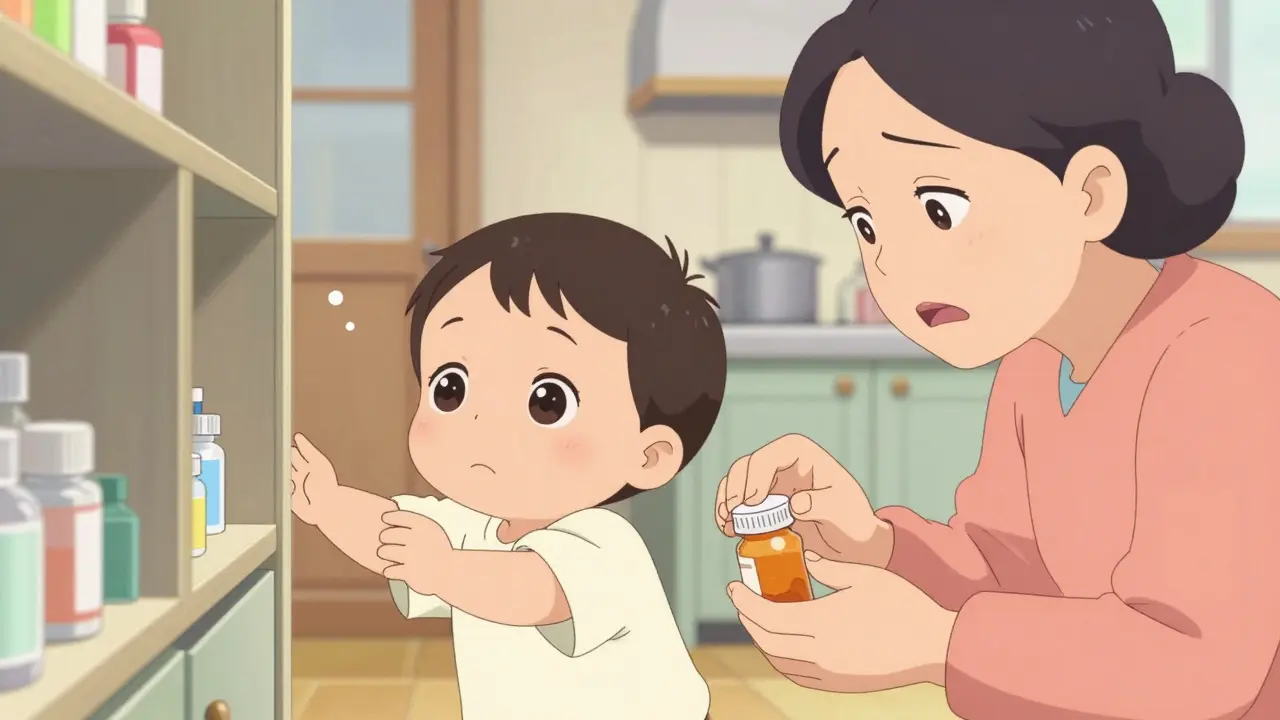
Every year, thousands of children under five accidentally get into medications meant for adults. Some of these cases end in emergency rooms. Others end in tragedy. But here’s the thing: child-resistant packaging has cut those numbers by nearly half since the 1970s. It’s not perfect. It’s not magic. But when used right, it saves lives.
What Exactly Is Child-Resistant Packaging?
Child-resistant packaging, or CR packaging, isn’t meant to be child-proof. That’s a common misunderstanding. No container can guarantee a curious toddler won’t get in. But CR packaging is designed to make it hard enough - and take long enough - that most kids under five can’t open it in a few minutes. The U.S. government set the standard back in 1970 with the Poison Prevention Packaging Act (PPPA). Before that, medicine bottles were just plain screw tops. Kids opened them like candy jars. Between 1961 and 1966, over 5,000 children died from accidental poisonings. Today, that number is a fraction of what it was - thanks to packaging that requires two separate motions to open. The most common design? The push-and-turn cap. You have to press down while twisting. That’s hard for small hands to coordinate. Other designs include squeeze-and-turn caps, or caps with internal locks that only release when pressure is applied in the right way. These aren’t just ideas - they’re tested. Every design must pass strict lab tests with real kids and real seniors.How CR Packaging Is Tested - And Why It Matters
The Consumer Product Safety Commission (CPSC) doesn’t just trust manufacturers’ claims. They test every new design. Here’s how it works:- 50 children, ages 42 to 51 months, are given 10 minutes to open the package. At least 85% must fail.
- Then, the kids who couldn’t open it get a 5-minute demonstration - and they still can’t open it. If they can, the design fails.
- Meanwhile, 100 adults aged 50 to 70 are given 5 minutes to open and close the package. At least 90% must succeed.
Not All Medications Are Created Equal
CR packaging isn’t required for every pill bottle. The rules depend on the drug.- Prescription meds: 100% of Schedule II-V controlled substances must have CR packaging. That includes opioids, ADHD meds, and sleep aids.
- OTC drugs: Only those with specific active ingredients need it - like aspirin, acetaminophen, ibuprofen, and iron supplements. If a product has 0.08 mg or more of imidazoline (found in some nasal sprays), it must be CR.
- Liquid medicines: These are the biggest problem. Nearly 39% of non-compliant packaging incidents involve liquids. Why? They’re often sold in dropper bottles or oral syringes that don’t have caps that meet CR standards.
- Nasal sprays: These are tricky. A simple pump doesn’t count. The cap or the pump itself must be child-resistant. Only about 22% of nasal sprays met the standard before special CR pumps were developed.
- Blister packs: Standard ones don’t qualify. But if the foil requires 15 pounds of force to peel, and the child can’t reach the pill without tearing the backing, it can be approved.
The Hidden Problem: Adults Can’t Open Them Either
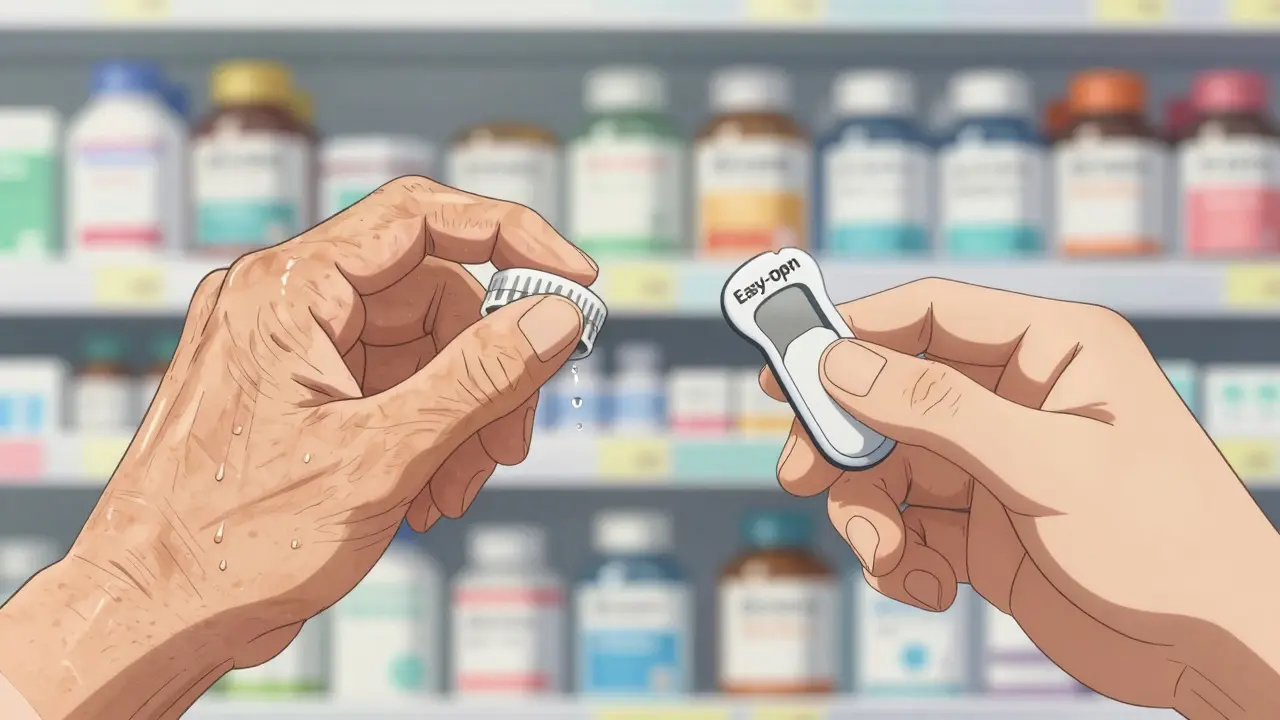
CR packaging works great - until someone tries to open it with arthritis, shaky hands, or limited strength. A 2022 survey by the Arthritis Foundation found 68% of people with hand problems struggled with CR caps. The average force needed to open one? Over 5 pounds. That’s more than lifting a full coffee mug. For many seniors, that’s impossible. You’ve probably seen it: Grandma gives up, uses pliers, or leaves the cap off. That’s when the danger spikes. CPSC data shows 73% of child access incidents happen because the cap was left loose or improperly closed. Newer designs are trying to fix this. Blisterpak’s Easy-Open system, for example, got 4.2 out of 5 stars on Amazon from over 1,200 reviews. One user wrote: “Finally a child-safe cap my 70-year-old mother can open without assistance.” That’s the balance we need: safety for kids, usability for adults.What Happens When It Fails?
In 2022, over 12,800 children accessed medications despite CR packaging. Most weren’t because the cap broke. They were because:- 73% of the time, the cap wasn’t re-closed properly after use.
- 18% of the time, the container was damaged - cracked, cut, or opened with tools.
- 9% of the time, kids got into meds stored on countertops or in unlocked cabinets.
What You Can Do - Right Now
You don’t need to be a pharmacist to keep your kids safe. Here’s what works:- Always re-close CR caps properly. Press down and twist until you hear or feel a click.
- Store all meds - even vitamins - in a locked cabinet, high up, away from sight.
- If a family member has trouble opening caps, ask your pharmacist for a non-CR version. They’re allowed to give them - but only if you sign a form acknowledging the risk.
- Check expiration dates. Old bottles can crack or warp, making them easier to open.
- Don’t transfer pills to pill organizers unless they’re CR-approved. Many plastic ones are easy for kids to pop open.
The Future of Medication Safety
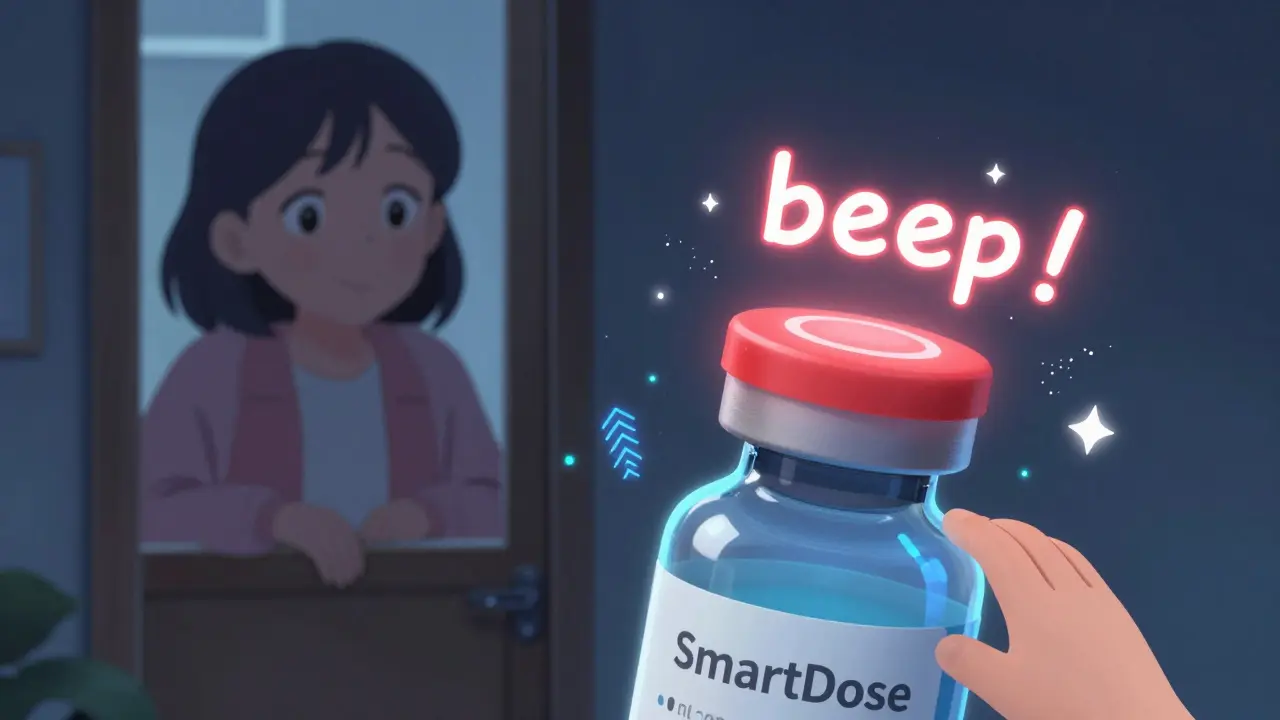
The industry is evolving. In early 2023, Aptar Pharma launched the first FDA-cleared smart CR cap: SmartDose. It looks like a regular cap - but it has Bluetooth. It records every time the bottle is opened, sends alerts if a child tries to open it, and reminds adults when it’s time to take their meds. More innovations are coming. Packaging that changes color if opened. Caps that lock if not used for 24 hours. Bottles that beep if left unattended. But the core hasn’t changed. The goal is still the same: stop a child from getting to the medicine before an adult can react. And that’s not just a regulation. It’s a promise.Frequently Asked Questions
Are child-resistant caps really effective?
Yes - but only if used correctly. Since the 1970s, child-resistant packaging has reduced pediatric poisoning deaths by 45%. It prevents an estimated 900,000 accidental ingestions each year. However, effectiveness drops by about 15% after the first opening if the cap isn’t re-closed properly. It’s not foolproof, but it’s the best tool we have.
Can I get non-child-resistant packaging if I can’t open the caps?
Yes. Pharmacists can provide non-child-resistant containers if you or a household member has difficulty opening CR caps due to arthritis, tremors, or other physical limitations. You’ll need to sign a form acknowledging the increased risk, but it’s a legal and common option. Don’t risk injury trying to force a cap open - ask for help.
Why do some medicine bottles still have easy-open caps?
Not all medications require child-resistant packaging. Only those with specific active ingredients - like aspirin, iron, or imidazoline - are legally required to have CR caps. Some liquids, nasal sprays, or topical creams may not meet the criteria, or the manufacturer hasn’t certified the packaging. Always check the label. If it doesn’t say “child-resistant,” assume it isn’t.
Is it safe to store medication in a pill organizer?
Only if the organizer itself is child-resistant. Most plastic weekly pill boxes are not. They’re easy for kids to pop open. If you use one, keep it locked away. Never leave it on a counter, even if it’s filled with vitamins. The original bottle with the CR cap is always safer.
What should I do if my child opens a medicine bottle?
Call Poison Control immediately - even if you think they didn’t swallow anything. In New Zealand, dial 0800 764 766. In the U.S., call 1-800-222-1222. Don’t wait for symptoms. Don’t try to make them vomit. Keep the bottle handy so you can tell them what was taken. Quick action saves lives.
Michael Burgess
January 2, 2026 AT 05:25CR caps saved my niece’s life. She got into my ex’s opioid bottle - push-and-turn saved her. I didn’t even know how to open it myself at first. Now I keep a bottle opener in my drawer. Worth it.
Still, I’ve seen grandparents leave caps off because they’re too hard. That’s the real danger zone.
Not the cap. The human.
Tiffany Channell
January 2, 2026 AT 09:54Let’s be real - if you can’t open your own medicine, you shouldn’t be taking it without help. This isn’t a parenting issue, it’s a healthcare failure. Pharmacies should be required to offer free easy-open alternatives on request. No forms. No guilt. Just access.
Shruti Badhwar
January 2, 2026 AT 19:49The data is clear: child-resistant packaging reduces pediatric poisonings by nearly half. Yet we still see 12,800 incidents annually - not because of defective caps, but because of human behavior. The cap is not the problem. The storage is. Leaving pills on nightstands, in purses, on countertops - that’s negligence dressed up as convenience. We need public health campaigns that don’t just preach safety but make it effortless. Lockboxes should be as common as smoke detectors.
And let’s not pretend that OTC meds are safe just because they’re ‘over the counter.’ Iron supplements are silent killers for toddlers. Aspirin can trigger Reye’s syndrome. These aren’t candy. They’re weapons in the wrong hands. The fact that some store brands fail 22% of the time is unacceptable. Testing must be randomized, independent, and published. Transparency isn’t optional - it’s ethical.
Blister packs with 15 pounds of force? Brilliant. But only if the child can’t reach them. Packaging is one layer. Education is another. Supervision is the third. All three must align. One fails, the whole system collapses. We treat car seats like gospel. Why not medicine storage?
And while we’re at it - why are veterinary clinics still handing out non-CR bags? That’s not laziness. That’s liability waiting to happen. Pets aren’t the only ones at risk. Kids eat everything. Including cat pills.
SmartDose caps with Bluetooth? Finally. Technology that doesn’t just track usage but prevents access. The future isn’t about harder caps. It’s about smarter systems. But until then, we still need to lock them up. Like guns. Like alcohol. Like poison.
Brittany Wallace
January 4, 2026 AT 02:39I’m from a rural town where people still keep meds in the bathroom cabinet. I’ve seen grandmas use butter knives to pry off caps. I’ve seen toddlers climb on counters to reach the ‘colorful pills.’
It breaks my heart.
But I also see hope - in the mom who switched to a locked cabinet after her cousin’s kid got into Advil.
And the pharmacist who gives out free easy-open caps without judgment.
Change doesn’t come from laws. It comes from quiet acts of care.
One cap. One conversation. One locked box at a time.
❤️
innocent massawe
January 5, 2026 AT 09:45Here in Nigeria, we don’t even have child-resistant caps for most meds. Kids open everything. My cousin’s son swallowed cough syrup last year. He’s fine now, but we got lucky.
It’s not about design. It’s about awareness.
Stop thinking it won’t happen to you.
It already did.
veronica guillen giles
January 6, 2026 AT 14:54Oh wow, a whole article about how adults are too lazy to close caps properly. Groundbreaking. Next up: ‘Why People Don’t Wash Their Hands After Using the Toilet.’
Let me guess - the solution is to blame the packaging, not the people who leave them open.
Classic. I’ll take my non-CR bottle and my 12-year-old who knows how to open everything anyway. Thanks for the lecture, experts.
Hank Pannell
January 8, 2026 AT 01:51The push-and-turn paradigm is a relic of 1970s ergonomics. We’re in 2024. Why not magnetic closures with haptic feedback? Or caps that auto-lock after 30 seconds of inactivity? The tech exists. The FDA’s approval process moves slower than a snail on morphine.
And let’s talk about the senior-friendly requirement - 90% success rate? That’s a minimum. It should be 98%. If a cap requires more than 3 pounds of torque, it’s not user-friendly - it’s exclusionary.
Also - why are liquid meds exempt from CR standards? That’s the #1 vector for pediatric ingestion. Dropper bottles should have child-lock valves. Period.
We’re optimizing for the lowest common denominator. We need to design for the highest standard - safety for all, regardless of age or dexterity.
It’s not just packaging. It’s a civil rights issue.
Neela Sharma
January 8, 2026 AT 10:05Children are not little thieves
They are curious souls
And we are the ones who forgot to lock the door
Not the cap
Not the bottle
But our own attention
They don’t want poison
They want to know what makes the colors glow
So we must become the guardians
Not the gatekeepers
And sometimes
That means leaving the cap off
So they can’t reach it at all
Because love is not a push-and-turn
It is a locked cabinet
And a quiet hand
That always puts it back
Palesa Makuru
January 9, 2026 AT 22:37Let’s be honest - if you’re still using a plastic pill organizer, you’re just asking for a trip to the ER. I’ve seen it. My neighbor’s kid opened hers like a Lego set. She didn’t even know it wasn’t child-resistant. And now she’s got a $20K hospital bill and a kid who thinks medicine is a snack.
Also - why are we still talking about CR caps like they’re the end-all? The real problem is that people don’t store meds properly. You think a cap matters if it’s sitting on the kitchen counter next to the cereal?
Get a lockbox. Spend $15. Save a life.
Or keep being lazy. Your choice.
Liam Tanner
January 10, 2026 AT 23:41My dad has severe arthritis. He used to leave his blood pressure pills open because he couldn’t close them. One day, my 3-year-old niece got into them. She didn’t swallow anything - but the panic? The guilt? The fear?
He switched to non-CR caps after signing the form. Now he keeps them in a locked box. No more stress.
It’s not weakness. It’s adaptation.
And it’s not rare.
It’s necessary.
Sarah Little
January 11, 2026 AT 10:40Per CPSC guidelines, CR packaging must be tested on 50 children aged 42–51 months. But what about neurodivergent kids? Kids with fine motor delays? Kids who’ve learned to open things by watching YouTube tutorials? The standard is outdated. It assumes all children are neurotypical, physically typical, and lack internet access. The testing protocol needs a 2024 overhaul - or we’re just playing whack-a-mole with safety.