Yeast Infection Risk & Prevention Planner
Select all factors that apply to you currently.
Select your factors and click calculate to see your risk profile.
Recommended Actions
Daily Schedule Example
| Time | Action |
|---|
⚠️ Critical Mistakes to Avoid
- Do not douche: It raises pH and removes protective bacteria.
- Do not use leftover antibiotics: They kill good bacteria and worsen yeast overgrowth.
- Avoid synthetic underwear: Wear 100% cotton to reduce heat/moisture.
- Cut sugar intake: Yeast feeds on glucose; avoid simple sugars while on treatment.
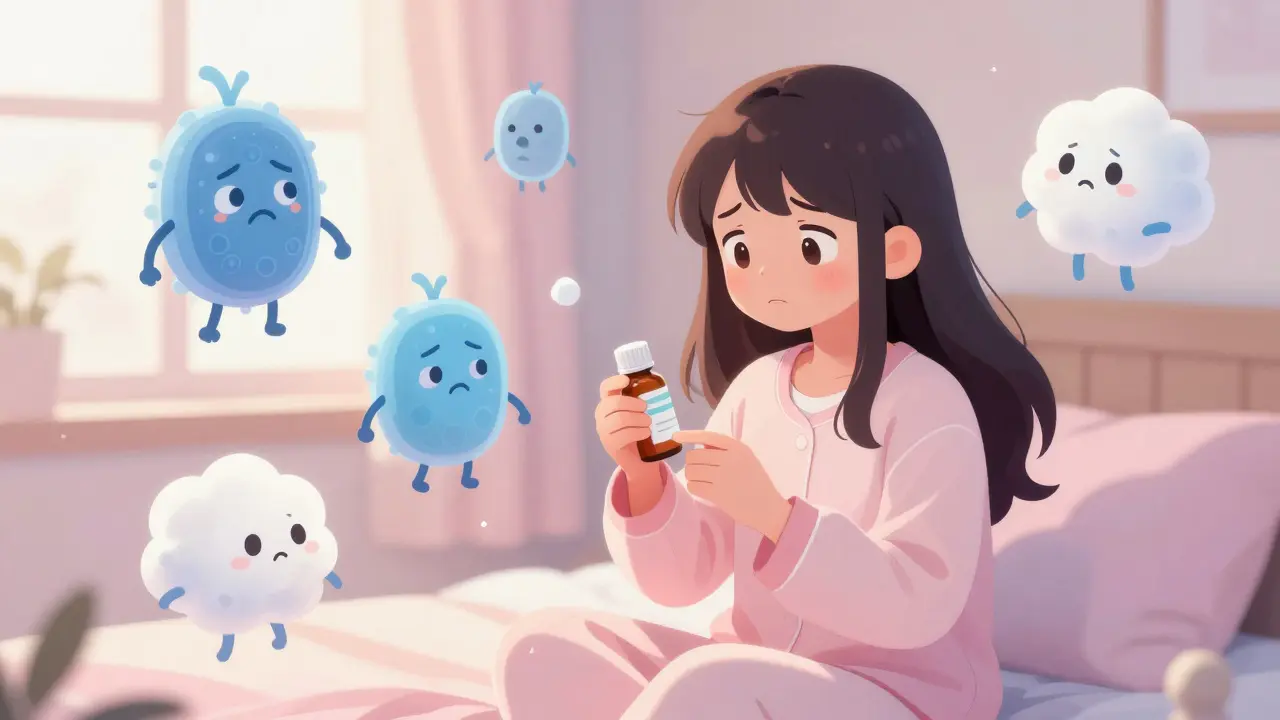
You’ve just started a course of antibiotics for a sinus infection or a UTI. The bacteria are dying off, but now you’re dealing with intense itching, burning, and that telltale thick discharge. It’s frustrating because the medicine meant to heal you is causing a new problem. This happens because antibiotic-induced yeast infections are a common side effect where broad-spectrum antibiotics disrupt the natural balance of vaginal flora, allowing Candida fungus to overgrow. Roughly 30% of people with vaginas experience this after taking antibiotics. But it doesn’t have to be your default reality. With the right strategy, you can stop these infections before they start or treat them quickly if they do.
Why Antibiotics Trigger Yeast Overgrowth
To understand why this happens, you need to look at what’s happening inside your body. Your vagina has a delicate ecosystem. Normally, good bacteria called Lactobacillus are beneficial bacteria that produce hydrogen peroxide and maintain an acidic pH (3.8-4.5) to inhibit fungal growth keep things in check. These bacteria act like security guards, keeping the environment acidic enough that fungi like Candida albicans are the primary fungal species responsible for 85-90% of vaginal yeast infections can’t take over.
When you take broad-spectrum antibiotics-like amoxicillin, tetracycline, or clindamycin-they don’t distinguish between the bad bacteria causing your infection and the good Lactobacillus protecting your microbiome. They wipe out both. Without those protective bacteria, the vaginal pH rises, creating a warm, neutral environment where Candida thrives. It’s not that the antibiotics create the yeast; the yeast is usually already there. The antibiotics just remove the competition.
This risk isn’t equal for everyone. You are more likely to develop a yeast infection if you have uncontrolled diabetes (blood glucose over 180 mg/dL), are pregnant, use hormonal birth control, or have a compromised immune system. Even medications like SGLT2 inhibitors for diabetes can increase urinary glucose, feeding yeast growth. Understanding this mechanism helps you realize that prevention is about preserving that bacterial balance, not just fighting the fungus later.
The Prevention Strategy: Proactive vs. Reactive
Most people wait until symptoms appear before doing anything. That’s the reactive approach, and it often leads to days of discomfort. A proactive approach is far more effective. Research shows that starting preventive measures on the same day you begin your antibiotic course can reduce the risk of infection significantly.
Here is how to build a solid prevention plan:
- Start Antifungals Early: If you know you get yeast infections every time you take antibiotics, ask your doctor about prescribing an antifungal medication like fluconazole is an oral antifungal medication (Diflucan) often prescribed as a single 150mg dose to prevent or treat yeast infections on day one of your antibiotic treatment. For some high-risk patients, doctors may prescribe weekly doses throughout the antibiotic course.
- Use Specific Probiotics: Not all probiotics work the same way. Look for supplements containing Lactobacillus rhamnosus GR-1 and Lactobacillus reuteri RC-14 are specific bacterial strains clinically proven to colonize the vaginal tract and reduce yeast infection incidence by up to 50%. Take at least 10 billion CFU daily. Crucially, take the probiotic two hours before or after your antibiotic dose so the antibiotic doesn’t kill the live cultures immediately.
- Dietary Adjustments: Yeast feeds on sugar. While you are on antibiotics, cut back on simple sugars (glucose, sucrose), white flour, and alcohol. Increasing low-starch vegetables and healthy fats can help lower the glucose concentration in vaginal tissues, making the environment less hospitable for Candida.
Many women report success using over-the-counter antifungal creams like miconazole (Monistat) concurrently with their antibiotics. Clinical studies suggest this concurrent use has a 60-70% efficacy rate in preventing full-blown infections. It’s a bit inconvenient to apply cream daily, but it saves you from weeks of itching later.

Treating the Infection: OTC vs. Prescription
If prevention fails and symptoms hit, speed matters. Most uncomplicated yeast infections resolve within 1 to 2 weeks with proper treatment. The key is choosing the right method based on severity and your health status.
| Treatment Type | Common Brands/Names | Efficacy Rate | Duration | Best For |
|---|---|---|---|---|
| OTC Topical Creams | Miconazole (Monistat), Clotrimazole (Gyne-Lotrimin) | 80-90% | 1-7 days | Mild to moderate cases; pregnancy-safe options |
| Oral Prescription | Fluconazole (Diflucan) | 95% | 1-3 days | Convenience; non-pregnant adults |
| Boric Acid Suppositories | Generic Boric Acid | 70% | 14 days | Recurrent infections; non-albicans Candida strains |
For most people, a single 150mg dose of fluconazole is the gold standard. It’s convenient and highly effective. However, it is not safe during pregnancy. If you are pregnant, you should avoid oral fluconazole due to potential risks of congenital malformations. Instead, use topical treatments like butoconazole or clotrimazole, which stay localized and don’t enter the bloodstream significantly.
If you suffer from recurrent infections (four or more a year), a single dose won’t cut it. Doctors often prescribe a "pulse" regimen: 150mg of fluconazole repeated every 72 hours for three total doses. For stubborn cases involving non-albicans Candida species, boric acid suppositories (600mg nightly for 14 days) can be effective, though they require careful handling and are toxic if swallowed.
Critical Mistakes to Avoid
It’s easy to make errors when you’re uncomfortable and want relief fast. Here are the biggest pitfalls that make things worse:
- Using Antibiotics for Yeast: This is a critical error. Antibiotics kill bacteria, not fungi. Taking more antibiotics will only destroy more good bacteria and worsen the yeast overgrowth. Never self-treat a suspected yeast infection with leftover antibiotics.
- Douching: Douching might feel like it’s cleaning away the discharge, but it actually strips away the remaining protective Lactobacillus and raises vaginal pH to dangerous levels (6.0-7.0). Stop douching immediately.
- Ignoring Other Conditions: Up to 64% of self-diagnosed yeast infections are actually bacterial vaginosis (BV) or other conditions. BV requires antibiotics, while yeast requires antifungals. Using the wrong treatment delays healing and can cause complications. If you aren’t sure, see a healthcare provider for a swab test.
- Wearing Synthetic Underwear: Cotton underwear allows airflow and keeps the area dry. Synthetic fabrics trap heat and moisture, raising the local temperature to 36-38°C, which accelerates yeast growth by 50%. Switch to 100% cotton or go commando at night.
When to See a Doctor
You don’t always need a prescription for a simple yeast infection, especially if you’ve had them before and know exactly what they feel like. However, certain situations require professional medical attention.
See a doctor if this is your first yeast infection, if OTC treatments fail after seven days, or if you experience severe symptoms like fever, chills, or foul-smelling discharge. Also, seek care if you are pregnant, have diabetes, or have a weakened immune system. Recurrent infections may indicate an underlying issue, such as undiagnosed diabetes or a resistant strain of Candida, requiring a tailored treatment plan.
Can I take probiotics and antibiotics at the same time?
No, you should not take them simultaneously. Antibiotics kill bacteria, including the beneficial live cultures in probiotics. To ensure the probiotics survive and colonize your gut and vaginal tract, take them at least 2 to 3 hours apart from your antibiotic dose. Ideally, take the probiotic in the morning and the antibiotic in the evening, or vice versa, depending on your prescription schedule.
Does yogurt cure antibiotic-induced yeast infections?
Yogurt containing live Lactobacillus cultures can support overall gut health and may offer mild preventive benefits, but it is not a reliable cure for an active infection. The concentration of bacteria in yogurt is generally too low to reverse significant microbial imbalance in the vaginal tract. For treatment, use proven antifungal medications like fluconazole or topical creams. Use yogurt as a complementary dietary habit, not a primary treatment.
Is fluconazole safe during breastfeeding?
Single-dose fluconazole is generally considered compatible with breastfeeding, as very small amounts pass into breast milk. However, prolonged courses or high doses may require caution. Always consult your healthcare provider before taking any medication while breastfeeding to weigh the benefits against potential risks to your infant.
How long does it take for symptoms to disappear after treatment?
With appropriate treatment, most symptoms begin to improve within 24 to 48 hours. Complete resolution typically occurs within 3 to 7 days for topical treatments and 1 to 3 days for oral fluconazole. If symptoms persist beyond one week, contact your doctor, as you may have a resistant strain or a different condition entirely.
Can men get yeast infections from their partners?
Yes, although it is less common. Men can develop balanitis (yeast infection on the penis) through sexual contact with a partner who has a yeast infection. Symptoms include redness, itching, and a rash. Treatment usually involves applying an antifungal cream to the affected area. Using condoms can help prevent transmission during active infections.