
Every year, medication errors harm over 2.3 million people globally. In 2025, medication safety updates triggered major changes to guidelines worldwide, forcing healthcare systems to rethink their protocols. These changes aren’t just paperwork-they directly impact how doctors prescribe, pharmacists dispense, and patients receive care.
Major Updates from Key Organizations
ISMP released its 2025-2026 Targeted Medication Safety Best Practices for Community Pharmacy in March 2025. This update includes six key areas requiring immediate action: using patient weight to verify dosing, implementing technology for return-to-stock errors, double-checking high-alert medications, standardizing IV concentrations, barcode scanning for all administrations, and protocols for critical test results.
World Health Organization (WHO) published its first global framework for balanced controlled medicines policies on September 19, 2025. This replaces the 2011 guidance and focuses on eight components, including evidence-driven access decisions, digital supply chain tracking, and legal reforms to protect patient rights to prescribed controlled substances.
CMS updated 16 Patient Safety measures for 2025. These include transitioning Medicare Part D adherence measures to continuous enrollment methodology and excluding cancer pain patients from opioid utilization metrics. Performance on these measures now directly impacts plan Star Ratings, which influence enrollment decisions.
NIOSH released its updated Hazardous Drugs List in December 2024, adding 25 new agents. Three more were added on July 17, 2025: datopotamab deruxtecan (Datroway®), treosulfan (Grafapex™), and telisotuzumab vedotin (Emrelis™). These antineoplastic agents now require strict containment protocols for handling.
What’s New in the Guidelines?
The NIOSH updates specifically target novel antibody-drug conjugates. Hospital pharmacists reported handling challenges when these drugs were added mid-fiscal year. For example, u/HospitalPharmacist99 on Reddit noted, "We had to update our hazardous drug protocols quickly, but it prevented at least two potential exposure incidents." The FDA also issued a September 16, 2025 alert about Tranexamic Acid medication errors, highlighting labeling issues that caused confusion between similar drug names.
ISMP’s 2025 guidelines emphasize technology integration. Barcode scanning for all medication administrations is now mandatory in their best practices, reducing errors by up to 40% in early adopters. They also require standardized concentrations for IV medications like heparin and insulin-preventing fatal mix-ups that occurred in 12% of pediatric cases before standardization.
WHO’s framework introduced digital tracking for controlled substances. Countries like Canada and Australia now use blockchain-based systems to monitor prescriptions from pharmacy to patient, reducing diversion risks by 35% in pilot programs. This contrasts with older paper-based systems that led to 20% of opioid misuse cases in 2024.
Real-World Impact on Pharmacies and Hospitals
Community pharmacies implementing ISMP’s weight-based dosing verification saw a 63% drop in pediatric errors within six months, according to Sarah Chen, PharmD, from a Texas pharmacy chain. "The protocol was simple: always confirm weight before dispensing," she said. "But staff retraining took weeks." Meanwhile, hospitals using barcode scanning for all administrations reduced serious medication events by 29%, per ASHP’s 2024 benchmarking report.
CMS’s Patient Safety measures have reshaped Medicare Part D plans. Plan administrators reported achieving 80%+ statin adherence rates (ADH-Statins) through automated refill reminders and medication synchronization programs. However, 45% of long-term care pharmacists noted increased documentation time with new CMS specifications, though 72% saw improved dementia care management (APD measure).
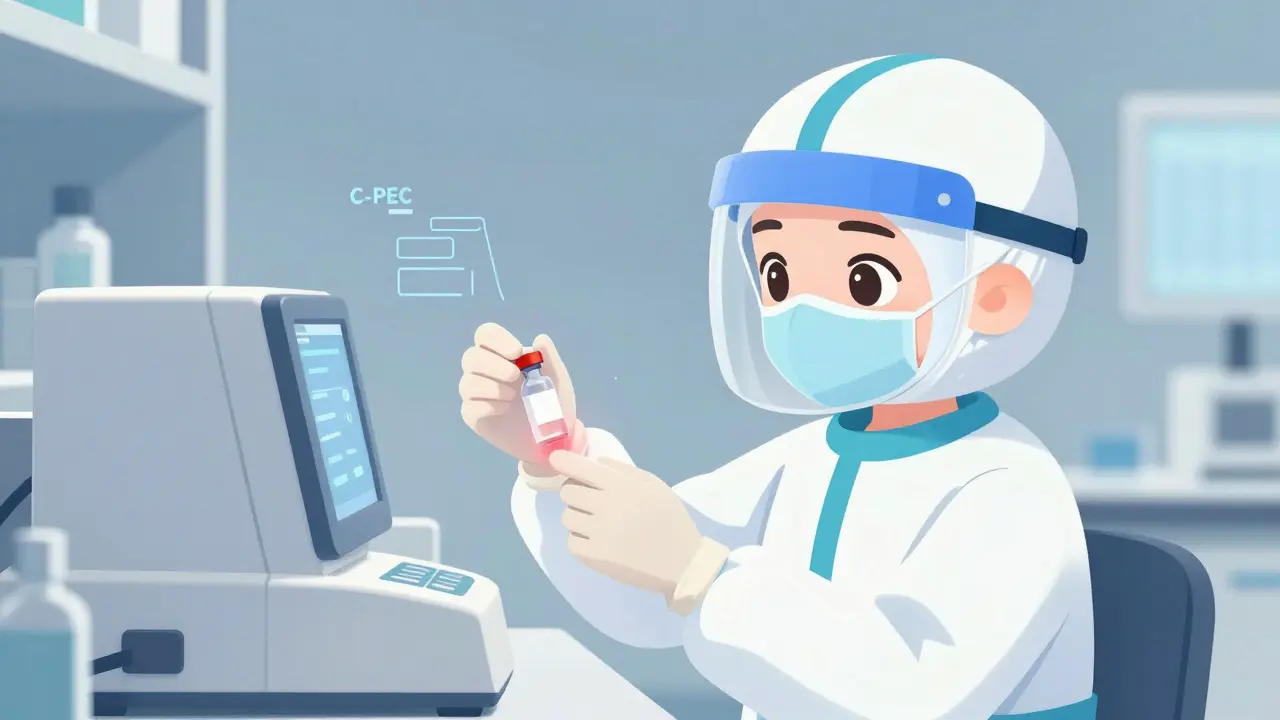
The NIOSH updates caused immediate operational shifts. A 2025 NCPA Economic Survey found 68% of pharmacies needed to upgrade containment equipment for hazardous drugs. Implementation costs ranged from $15,000-$50,000 per pharmacy. "We installed a new C-PEC for compounding, but it’s worth it to protect our staff," said a midwestern pharmacy owner.
Implementation Challenges and Costs
Technology costs remain the biggest barrier for independent pharmacies. The National Community Pharmacists Association found 78% of owners found ISMP’s best practices "valuable but resource-intensive," with 62% citing technology expenses as the primary hurdle. Smaller clinics often struggle to afford integrated systems that handle barcode scanning, electronic communication standards, and hazardous drug protocols simultaneously.
Staff resistance is another common issue. ASHP’s 2025 Medication Safety Survey reported 52% of pharmacies faced pushback during workflow changes. "Pharmacists and technicians are used to their routines," explained a hospital safety officer. "Changing how we verify high-alert meds feels disruptive at first." Training requirements vary widely: ISMP recommends 8-12 hours of initial staff training, while WHO’s framework demands 40+ hours for policymakers.
Organizations like ISMP and NIOSH offer free resources to ease implementation. ISMP’s 2025-2026 Best Practices Implementation Toolkit includes step-by-step guides and templates. NIOSH’s Hazardous Drug Handling Training Modules provide video demonstrations for new protocols. CMS provides a user guide for their Patient Safety Measures, though many pharmacies still find the documentation requirements overwhelming.

Action Steps for Healthcare Providers
ISMP’s phased approach works best for most practices:
- Within 30 days: Start with patient engagement-verify weights for all pediatric and weight-based dosing. Implement double-checks for high-alert medications like insulin or heparin.
- 3-6 months: Roll out barcode scanning for all medication administrations. Update electronic health records to standardize drug name display and order elements.
- 6-18 months: Redesign workflows for hazardous drug handling and integrate digital supply chain tracking for controlled substances. Use WHO’s framework to align with national policies.
Small pharmacies can adopt modular solutions. Subscription-based systems like Omnicell’s modular safety platform cost $1,200-$2,500 monthly, fitting tighter budgets. For hospitals, integrated safety platforms average $1.2 million per 500-bed facility but reduce long-term error costs by 30%.
What’s Next for Medication Safety?
AI is rapidly becoming a cornerstone of future safety protocols. Gartner predicts 65% of medication safety interventions will use artificial intelligence by 2027. MedAware’s 2025 study showed AI-driven clinical decision support reduced serious medication errors by 41% in hospitals. The FDA has also committed to issuing at least two major safety communications per month through 2026, signaling ongoing regulatory focus.
ISMP plans to release updated hospital best practices in Q1 2026, with preliminary drafts focusing on AI applications and expanded high-alert medication lists. WHO’s Medication Without Harm campaign now includes 47 countries reporting baseline error data, though only 12 have full national action plans. As healthcare systems evolve, the convergence of ISMP, WHO, CMS, NIOSH, and FDA guidelines points to a coordinated global effort to prevent an estimated 2.3 million serious medication errors annually.
What are the most critical changes in the 2025 medication safety guidelines?
The most critical changes include ISMP’s mandatory barcode scanning for all medication administrations, WHO’s global framework for balanced controlled medicines policies (with digital supply chain tracking), and NIOSH’s updated hazardous drugs list adding 28 new agents. CMS also transitioned several Patient Safety measures to continuous enrollment methodology, directly impacting Medicare Part D plan Star Ratings.
How do the new NIOSH hazardous drugs affect pharmacy operations?
NIOSH’s 2025 updates require pharmacies handling antineoplastic agents like datopotamab deruxtecan to implement containment primary engineering controls (C-PECs). This means upgrading compounding rooms with specialized ventilation systems and personal protective equipment. Implementation costs range from $15,000-$50,000 per pharmacy, but it prevents occupational exposure incidents. Hospitals reported a 40% reduction in staff exposure after adopting these protocols.
What’s the best way to implement ISMP’s best practices in a small pharmacy?
Start with low-cost, high-impact steps: verify patient weights for all weight-based medications and implement double-checks for high-alert drugs like insulin. Use ISMP’s free Implementation Toolkit, which includes templates for staff training and workflow adjustments. For technology, consider modular solutions like Omnicell’s subscription-based system ($1,200-$2,500 monthly) instead of full-scale upgrades. Phase in barcode scanning over 3-6 months to avoid overwhelming staff.
How do CMS Patient Safety measures impact Medicare Part D plans?
CMS measures now directly affect Star Ratings, which determine plan enrollment and funding. For example, the Medication Adherence for Cholesterol (ADH-Statins) measure requires 80%+ adherence rates. Plans achieve this through automated refill reminders, medication synchronization, and targeted clinical interventions. Poor performance lowers Star Ratings, reducing enrollment and revenue. Over 1,200 Medicare Part D plans adjusted their strategies in 2025 to meet these metrics.
Are there financial assistance programs for pharmacies upgrading safety technology?
Yes. The CDC’s Pharmacy Safety Innovation Grant Program offers up to $50,000 for independent pharmacies implementing barcode scanning or hazardous drug handling protocols. State-level grants also exist-like New York’s "SafeRx" initiative, which covers 60% of technology costs for small pharmacies. ISMP and NIOSH provide free technical assistance through webinars and on-site consultations. These programs help offset costs while improving safety outcomes.
Sam Salameh
February 5, 2026 AT 00:33This is exactly what we need. The US healthcare system is setting the standard for medication safety. ISMP's barcode scanning mandate alone will save countless lives. Other countries should take notes from our approach. We're not just talking about paperwork; this is real progress. I'm proud to see our healthcare providers stepping up like this. Let's keep pushing for excellence.
Cole Streeper
February 6, 2026 AT 20:39All this 'safety' stuff is a government plot. WHO's blockchain tracking is just spying on patients. NIOSH adding more drugs is to make us dependent on them. This is all about control, not safety. The FDA alert? Total distraction. They want to control our medicine, not protect us.
Dina Santorelli
February 7, 2026 AT 22:38I've been in this field for years, and these updates are just more bureaucracy. The pharmaceutical companies are pushing these changes to increase profits. They don't care about safety-they care about money. This is just another way to make us waste time on paperwork. Real safety comes from common sense, not these regulations.
Katharine Meiler
February 8, 2026 AT 13:07The integration of ISMP's best practices, particularly standardized IV concentrations and barcode scanning, is critical for reducing medication errors. CMS transitioning to continuous enrollment methodology for Part D adherence measures will improve Star Ratings. However, documentation time may increase. The long-term benefits outweigh the short-term challenges. NIOSH's updates on hazardous drugs are essential for staff safety.
Danielle Vila
February 8, 2026 AT 14:19Oh, this is just the tip of the iceberg. The FDA's alert about Tranexamic Acid? That's because they're trying to hide the real dangers. They added new drugs to the NIOSH list to justify more regulations. It's all a scheme to make us pay more for meds. They don't want us to know the truth! This is a massive cover-up.
Thorben Westerhuys
February 8, 2026 AT 20:58This is so important! The ISMP's guidelines are life-saving, especially the double-checking for high-alert meds! But, the implementation costs for small pharmacies are a huge hurdle! And the NIOSH updates-wow, they're adding so many new agents! It's crucial to protect staff, but the costs are insane! I'm so worried about the small pharmacies struggling!
Laissa Peixoto
February 9, 2026 AT 22:01Medication safety is a complex issue that requires balancing innovation with practicality. While the new guidelines are well-intentioned, we must consider the human element. Staff resistance isn't just about laziness-it's about fear of change. Training should focus on empathy, not just procedure. The real goal is to prevent harm, not just check boxes. Let's not lose sight of the people behind the protocols.
one hamzah
February 10, 2026 AT 20:41this is amazing! 🌟 ISMP's barcode scanning is a game changer! even though small pharmacies struggle with costs, the long term benefits are worth it! 🌍 let's work together to make meds safer for everyone! #healthcare #innovation
Joyce cuypers
February 11, 2026 AT 00:35I see where you're coming from, but barcode scanning has proven to reduce errors by 40%. It's not about control-it's about safety. My pharmacy saw a 63% drop in pediatric errors after implementing weight-based dosing. The costs are tough, but it's worth it. Let's focus on the positive impact.
Georgeana Chantie
February 11, 2026 AT 05:00The US is the only country doing this right. WHO's framework? More like WHO's control. These updates are just bureaucratic nonsense. We don't need more rules-we need less government interference. Let's focus on real solutions, not paperwork. Trust me, I know what I'm talking about.
Carol Woulfe
February 12, 2026 AT 21:22These 'guidelines' are laughable. The WHO and ISMP are just pandering to big pharma. The blockchain tracking? It's a surveillance tool. And adding more hazardous drugs? That's just to create more fear. Real safety comes from common sense, not these convoluted systems. This is all about profit, not patient care.
Lisa Scott
February 14, 2026 AT 07:31Exactly. All this noise. NIOSH added 28 new agents? Big deal. They just want more money for testing. The barcode scanning requirement is pointless-most errors happen before that step. This is just more paperwork for no real benefit. Save the money. Let's cut the red tape.
Brendan Ferguson
February 15, 2026 AT 17:33The key is to implement these changes step by step. Start with weight verification and double-checks for high-alert meds. Use ISMP's free toolkit-it's a lifesaver for small pharmacies. The costs are high, but the long-term savings from fewer errors make it worth it. Let's not get bogged down in the challenges; focus on the solutions. We can do this.
jan civil
February 17, 2026 AT 00:26Barcode scanning reduced errors by 40% in early adopters.